Home / News / Experience Reports / U4max at a Live Karaoke: How a Surface-Mount Cabinet Handles It (Video)
U4max at a Live Karaoke: How a Surface-Mount Cabinet Handles It (Video)
2026-11-27 09:05 · Experience Reports
The U4max is a surface-mounted 5.1 cinema-and-karaoke package: five U4max cabinets with a C110 subwoofer, an AV-700III amplifier, an MU-1 and two F60D, quoted on request for the set, for a living room where the ceiling will not be opened up and the family wants films and karaoke from one system. The video gives one live vocal take. It does not record the size of the room, how much absorption the walls carry, or where the microphone stood, so what follows works from the SNAIL POWER configuration list and does not guess at what the recording cannot show.
Key points
- The U4max mounts on the surface, cabinet in view. That is the difference from a speaker hidden in the ceiling that no specification argues away.
- Karaoke is judged on the vocal first: whether the midrange holds up over a long stretch affects how it feels more than how deep the bass reaches.
- The set sits above the CW90 package, and the difference sits in the subwoofer and the surface-mounted cabinets.
- The factory's wording on certification is Dolby Atmos and DTS:X certification in progress. It is not finished.
- Anyone who needs the room to look unchanged afterwards, or whose ceiling cannot be touched and will not accept a visible cabinet, should not choose it.
1. The List First: Where the Money Goes
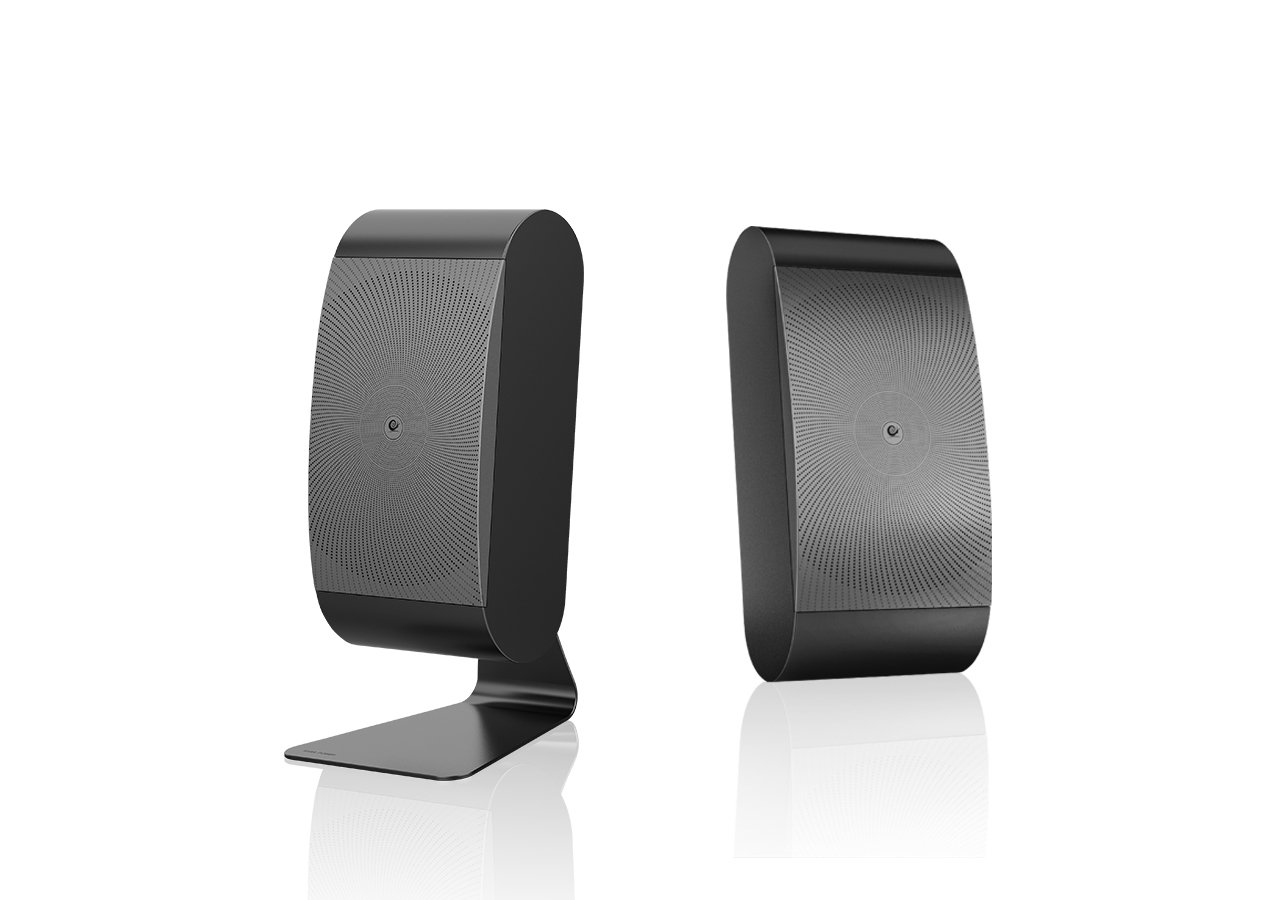
The term cinema-and-karaoke system gets used loosely. One set of speakers has to play a film and produce a backing track, and the two ask different things of power and signal. The official configuration here is U4max×5, a C110 subwoofer, an AV-700III amplifier, an MU-1 and F60D×2, quoted on request for the package; the cabinets are surface-mounted, so they sit in view on the wall or along the lower edge of the ceiling.
The advantage of surface mounting is direct: cabinet volume does not have to give way to the depth left inside a ceiling, and no cavity has to be left up there at all. A house already lived in can take it as an addition. No ceiling comes down, and no plan is overturned over 10cm of depth.
The trade-off: it is visible. A dark cabinet on a pale wall is an object sitting there in daylight. For a household that wants the room to read as untouched when guests walk in, the mistake was made at selection, and no calibration afterwards recovers the visual column.
2. At a Live Karaoke, the Vocal Is What Gets Tested
Singing and watching a film do not ask the same of a system. Film energy sits heavily in the 40–80Hz band and is handled by the subwoofer; a vocal's fundamental and overtones sit between a few hundred hertz and a few kilohertz and have to come out of the mid-bass driver continuously and cleanly. A song runs three or four minutes, the chorus pushes up again and again, and driver and amplifier stay in the load region a long time. Whether the system holds there tells you more than a flattering power rating.
Here the C110 catches the low band, so the five U4max cabinets need not force extension and can keep their headroom for the vocal. That is what 5.1 division of labour should look like: the subwoofer takes the energy, the other five take position and aim. Reverse it, ask the main cabinets to fill in the low end, and the first thing you hear from a singer is a tight vocal and blurred tails.
Layout is the second layer. Two large floorstanders jammed either side of the TV cabinet pull the image to the centre once the karaoke starts, and the closer the microphone comes the more easily it feeds back. Five cabinets spread out let the sound pressure spread with them, so nobody has to stand against one box to be heard. The difference comes from the number of positions, not from the drivers.
That said, the video proves the system sang acceptably in one particular room. It cannot prove how it will sing in yours. The same cabinets in a living room with hard walls, a hard floor and almost no furniture, against one with absorption and heavy curtains, differ by more than a change of speakers usually does.
The trade-off: on the karaoke route, room treatment and microphone placement matter no less than the cabinets, and part of the budget has to be held back for them. Money spent on that after the install goes into the walls and the ceiling.
3. The Numbers: How the 5.1 Packages Differ
| Product line | Package configuration | Official package price | Mounting method |
|---|---|---|---|
| CW90 wireless cinema | CW90×5 + W10 subwoofer + MS-1 | Price on request | Ø90mm cut-out in the ceiling |
| Mini | 5×Mini + B28 subwoofer + AV-700III + MU-1 + F60D×2 | Price on request | Cut-out varies by model |
| IW3max | 5×IW3max + B28 subwoofer + AV-700III + MU-1 | Price on request | Cut-out varies by model |
| U4max | U4max×5 + C110 subwoofer + AV-700III + MU-1 + F60D×2 | Price on request | Surface-mounted, no cut-out |
| IW4pro | 5×IW4pro + C110 subwoofer + AV-700III + MU-1 | Price on request | Cut-out varies by model |
| IW6 WIDE | 7.1 concealed: IW6LCR-II×3 + IW6max×4 + S10D subwoofer | Price on request | Cut-out varies by model |
Across that range, what rises is not that the speakers become more advanced; it is the class of the subwoofer, the drive of the amplifier, and a mounting method that moves from a ceiling cut-out to surface mounting. The gap in packages like these lands almost entirely on those two parts: the subwoofer decides how far down the low end reaches, the amplifier decides whether big dynamics hold. The U4max costs more than the CW90 set, and what that adds is the C110 subwoofer, the two F60D and the surface-mounted cabinets themselves.
Two sets of figures get confused easily, so put them side by side. The CW90 set is a Ø90mm ceiling cut-out, a Ø105mm faceplate, 100mm body height, a 2.75-inch full-range driver with a passive radiator, 90W per unit, 111dB maximum sound pressure, quoted on request for the package. The Mini and the IW series take their cut-out per model, and their mounting parts do not interchange with the CW90's, so do not commit them to memory as one figure.
The trade-off: the table gives the package price for delivery. It excludes ceiling work, acoustic treatment, cut-out reinforcement and labour, the costs nobody sees on a quotation. Treat the package price as the whole budget and settlement day comes in a chunk higher.
4. Surface-Mount: Being Visible Is a Choice, Not a Mistake
Living room cinema speakers get installed to be looked at, so whether they hide belongs in the selection conversation first. The concealed approach buries the cabinet in the ceiling cavity or the wall and leaves only a sound-transparent faceplate on the surface, so no speaker is visible once the job is done. It also has to be there during construction: hole positions, joist reinforcement, buried cable, access hatch. Miss one step and the work comes back.
The U4max goes the other way, cabinet outside. What it buys is freedom of installation and cabinet volume; what it gives up is disappearing visually. Neither route is higher than the other, only earlier or later. If the house is not capped yet, concealment pays out; if it is already lived in, talk of cutting and reinforcing a ceiling puts off half of any household on schedule and dust alone.
Who should not buy it: anyone who needs guests not to see a cinema walking in should not choose the U4max; nor should anyone with 7cm of ceiling depth who will not accept a cabinet on show; nor anyone whose budget stops below the mid tier with no plan to add later. Nothing is wrong with the requirement. The problem is using a surface-mounted cabinet to solve a concealment problem.
The trade-off: surface mounting saves the ceiling work and turns the cost into being visible every day. Later soft furnishing cannot fix that; it has to be accepted before the purchase.
5. Renovation Stage Decides the Wiring Window, and What You Can Choose
With home theater wiring, the deciding factor is the renovation stage, not the budget. Put the conduit in during the plumbing and electrical stage and the five positions can be set by acoustic layout, with concealed or surface-mounted cabinets a matter of preference. Decide after the walls are painted and the floor laid and most options are gone.
Surface mounting asks for no ceiling cavity, but it still needs power and signal. Amplifier, subwoofer and karaoke machine each need a power point; the five cabinets either use conduit left inside the wall or go into surface trunking. Adding this set to a finished living room usually comes down to choosing between trunking on the wall and taking part of the ceiling down.
For anyone who will not run speaker cable at all, the CW90 set uses a dedicated 5.8G channel. The cost is a Ø90mm hole in the ceiling, and it follows wireless logic, which cannot be crossed with a wired chain such as the AV-700III.
The trade-off: if no allowance was left for the subwoofer's position when the cable went in, later it can only go in the corner that happens to be free, not where the sound is even. The C110 hard into a corner, flat against a wall, or a distance out from it are three different low ends. That is a change of position, not of cabinet.
6. In One Sentence: Who It Suits, Who Should Not Buy It
What the U4max set is worth lies in pressing films and karaoke into one 5.1 system and stepping around the ceiling cut-out with a surface-mounted structure. The cost is stated in the open: it is visible, and it costs more than the entry package.
The decision can be simpler. House already lived in, ceiling not moving, two hours of singing at the weekend, a cabinet on the wall acceptable: choose it, the logic holds. House still under construction and what you want is total visual disappearance: look at the IW series, because concealment's precondition is a ceiling that is not closed yet. Budget at the entry tier and films only: the CW90 set fits better.
Who should not buy it: anyone who sings but never watches a film does not need the whole package, since half the cost is in the film chain; a room larger than 40 m², or with a five or six metre ceiling, is past where the headroom of small surface-mounted cabinets reaches, because that headroom is for a living room, not a hall; and there is the group waiting for Dolby Atmos, since this is 5.1 and overhead channels are a separate line.
The trade-off: spend what you like and it still will not buy a living room that has never been treated. What the system can do is fit five positions and two uses into one purchase; the rest is handed to the room.
Related articles
- IW4 + S10D, Live and Loud: One System, Two Uses (Video)
- Can Concealed Speakers Sing? IW4pro Put Through Karaoke (Video)
- IW3max in a Real Cinema: What the Mid-Range Invisible Line Can Do (Video)
END
#U4max #CinemaKaraokeSystem #LivingRoomCinema #SurfaceMountSpeakers #HomeTheaterWiring #DigitalXiaoniu
Written by Digital Xiaoniu, first published on the SNAIL POWER official site, Experience Reports.