Home / News / Product News / B28, C110, S10D or X135: Picking the Subwoofer by Room Size
B28, C110, S10D or X135: Picking the Subwoofer by Room Size
2026-11-25 12:05 · Product News
SNAIL POWER sells four subwoofers: B28, C110, S10D and X135. Drivers run 8 inches to 13.5 inches, rated power 400W to 1000W, and package prices from the CW90 set at the bottom up to the custom X series, serving living rooms and dedicated media rooms from 20 m² to 50 m². Which one you buy is decided by the volume of the room and by the band of low end that subwoofer has to catch; the top of your budget has little to do with it.
Key points
- The four differ in three places: driver size, cabinet type and power headroom. Price is only what those three convert into.
- The B28 is a sealed dual 8-inch, from 30Hz, for a living room around 20 m².
- The C110 is a 10-inch ported box at 500W for 25–35 m²; the S10D a sealed dual 10-inch at 1000W for 35 m² and up.
- The X135 is 13.5 inches, priced on request each, and belongs to the custom X-series configurations.
- A wrong subwoofer costs more than wrong speakers: a speaker that is too small is merely too quiet; a subwoofer that is too big booms in one band all night.
1. Three Main Subwoofers: Where the Specifications Part Company
Start with the numbers that can be checked; every judgment below rests on this table.
| Model | Driver | Rated power | Max SPL | Cabinet | Dimensions |
|---|---|---|---|---|---|
| B28 | Dual 8-inch (1 active + 1 passive radiator) | 400W (500W short-term) | — | Sealed | Φ274×335mm |
| C110 | 10-inch | 500W | 114dB | Ported | 350×420×345mm |
| S10D | Dual 10-inch | 1000W | 119dB | Sealed | 295×295×405mm |
The B28 maximum-SPL cell is blank: the official page gives no figure, and this article will not make one up.
The columns have to be read together: driver size decides how much air gets moved, cabinet type how the low end starts and stops, power how much headroom is left. Read any one alone and the choice goes wrong — the B28 and the C110 are barely an inch apart on paper, yet one is sealed and one ported, and the audible gap is far wider than that inch.
A sealed box has no port: the low end stops fast and clean, and the cost is efficiency, recovered with power and a passive radiator. A ported box uses the tube as acoustic gain — efficiency is high and output generous, at the cost of sensitivity to placement.
In living room cinema the low-frequency problem is often the position, not the model, and none of that shows on a specification sheet.
The short version: measure the room, then the floor space that can stay free beside the cabinet and in the corner, and take those two numbers to the table. More use than sorting by price.
The trade-off: every line in that table trades one thing for another — driver size for extension, a sealed cabinet for efficiency, power for weight. None of it is free.
2. B28: Enough for a 20 m² Living Room, and the Line Is 30Hz
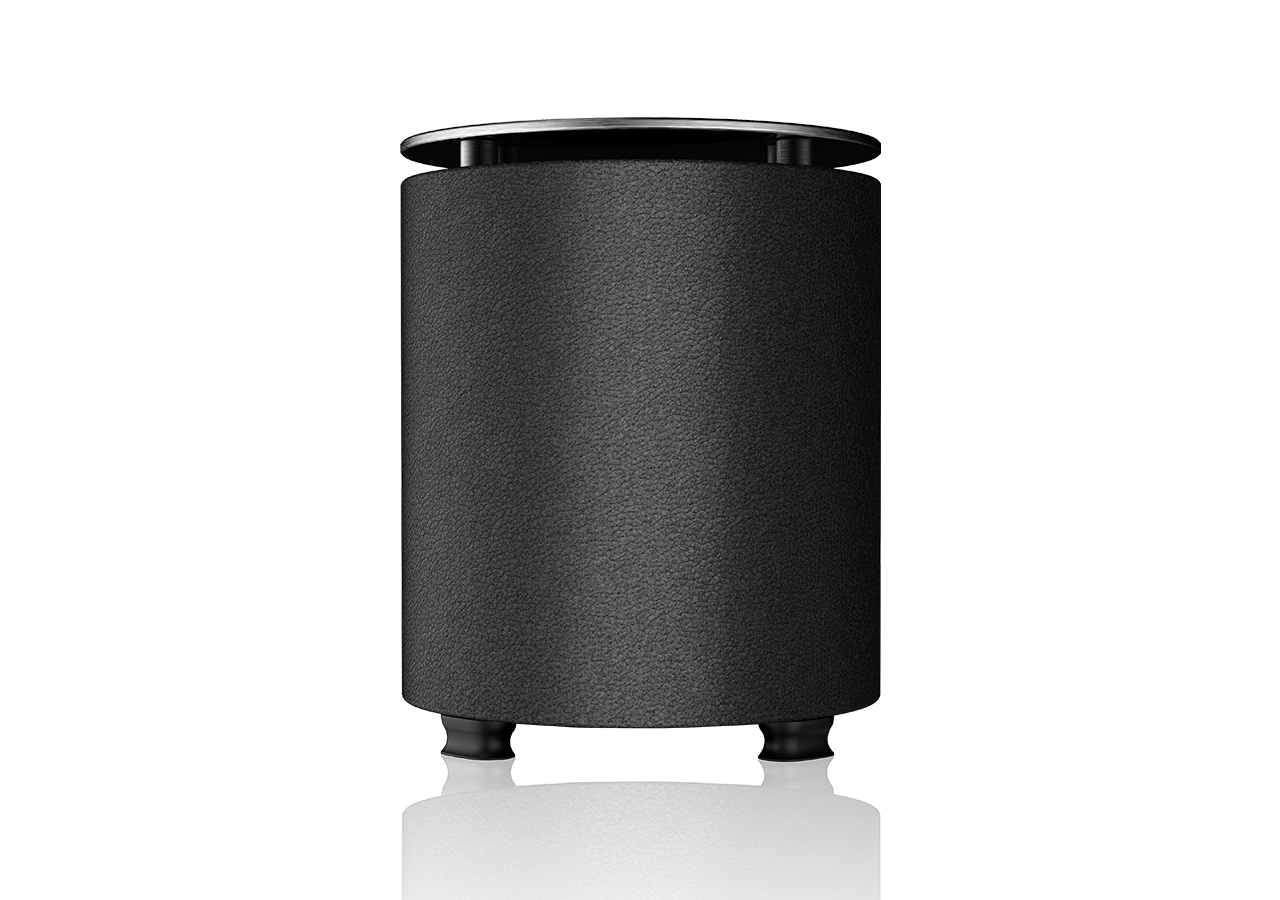
The B28 is a dual 8-inch design — one active driver, one passive radiator — 400W rated, 500W short-term, sealed, from 30Hz, in a Φ274×335mm cabinet. Its place is unambiguous: a living room around 20 m², three or four metres from sofa to TV.
It is specified with three packages: the U3 5.1, the Mini 5.1 and the IW3max 5.1, each quoted on request — all on the same skeleton of five speakers plus the AV-700III and the MU-1. Across that band the subwoofer is the same unit; the money goes into the cabinets.
400W rated and 500W short-term out of dual 8-inch drivers while holding 30Hz is peak management, not a bigger amplifier. Managed well, the sound starts and stays together; managed badly, a small driver has nothing left but boom.
Who should not buy it: a room above 35 m², or anyone who has heard a sealed dual 10-inch elsewhere. Either way the B28 is swapped within a month — not because it is bad, but because that band of low end is not its job.
The trade-off: below 30Hz the B28 is empty: the bottom of an organ, the infrasonic layer in some electronic music, the part of an explosion that presses on your chest — none of it is available, and tuning cannot bring it back. Only a larger driver can.
3. C110: A 10-Inch Ported Box for the 25–35 m² Band
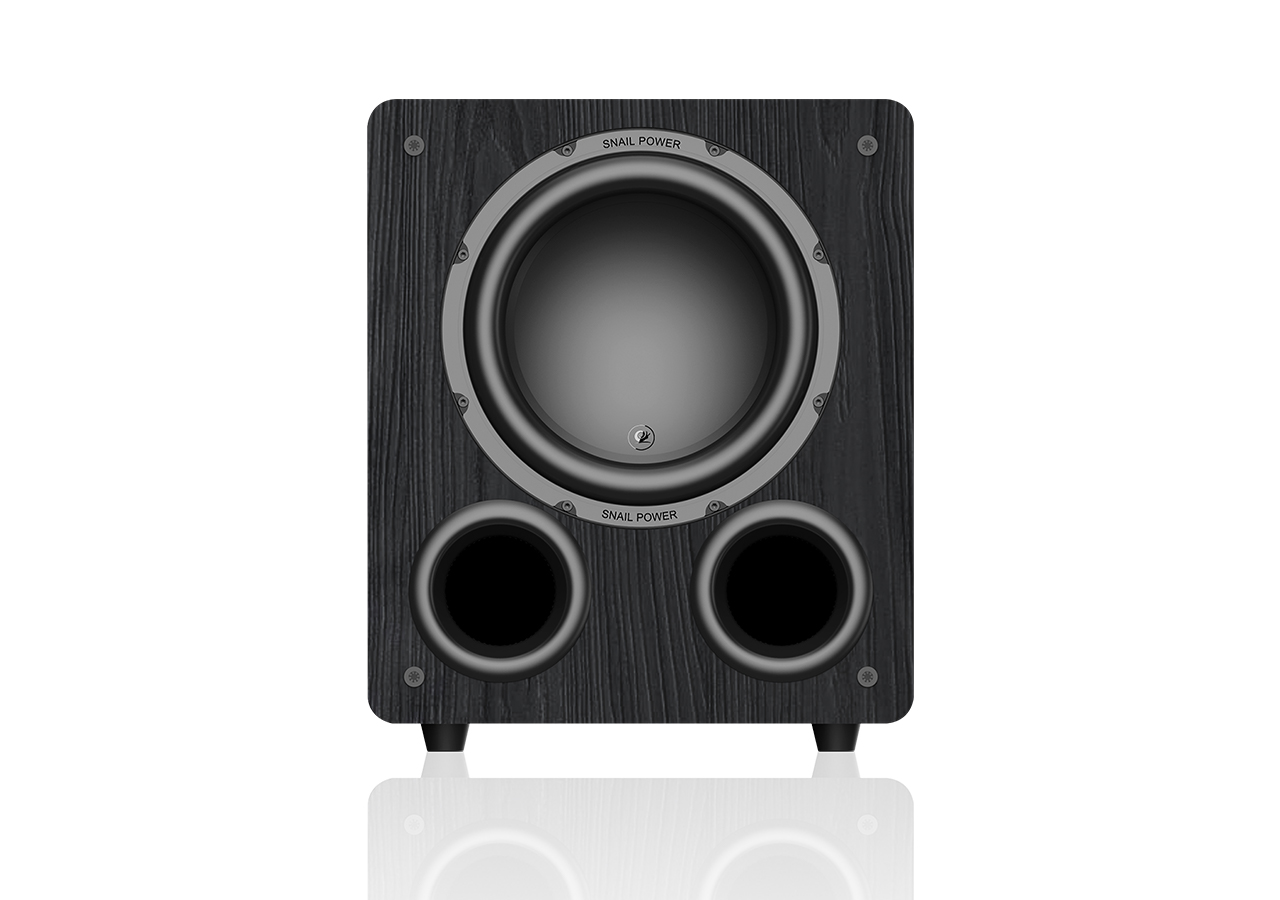
The C110 is 10-inch, 500W, 114dB maximum SPL, ported, in a 350×420×345mm cabinet. Officially it is specified with the U4max 5.1 and the IW4pro 5.1, both quoted on request.
Its place in the X series is more telling: the X-series 5.1.2 for 10–25 m² also uses the C110, at a price quoted on request for the set. The same subwoofer in a mid-tier package and a top-tier custom system says plainly that it is matched to room volume, not to the total price.
The efficiency advantage of a ported cabinet shows here: on the same 500W, the C110 gives more output and more extension than a sealed box of equal power, and the low end that pushes the sofa along in an action film comes out more directly than from the B28.
The short version: if you can leave 30–40cm behind the cabinet and keep it out of furniture, the step to the C110 is worth taking; if the only space left is beside a cabinet, its advantage never shows and the B28 is steadier.
The trade-off: a port has to breathe. Too close to the wall, pushed into a TV cabinet, cluttered alongside, and the low end smears into one lump: output still there, layers gone. The cabinet is also a size larger than the B28, so the room gives up real floor space, not just a corner.
4. S10D and X135: A Big Room Changes the Subwoofer, Not Only the Speakers
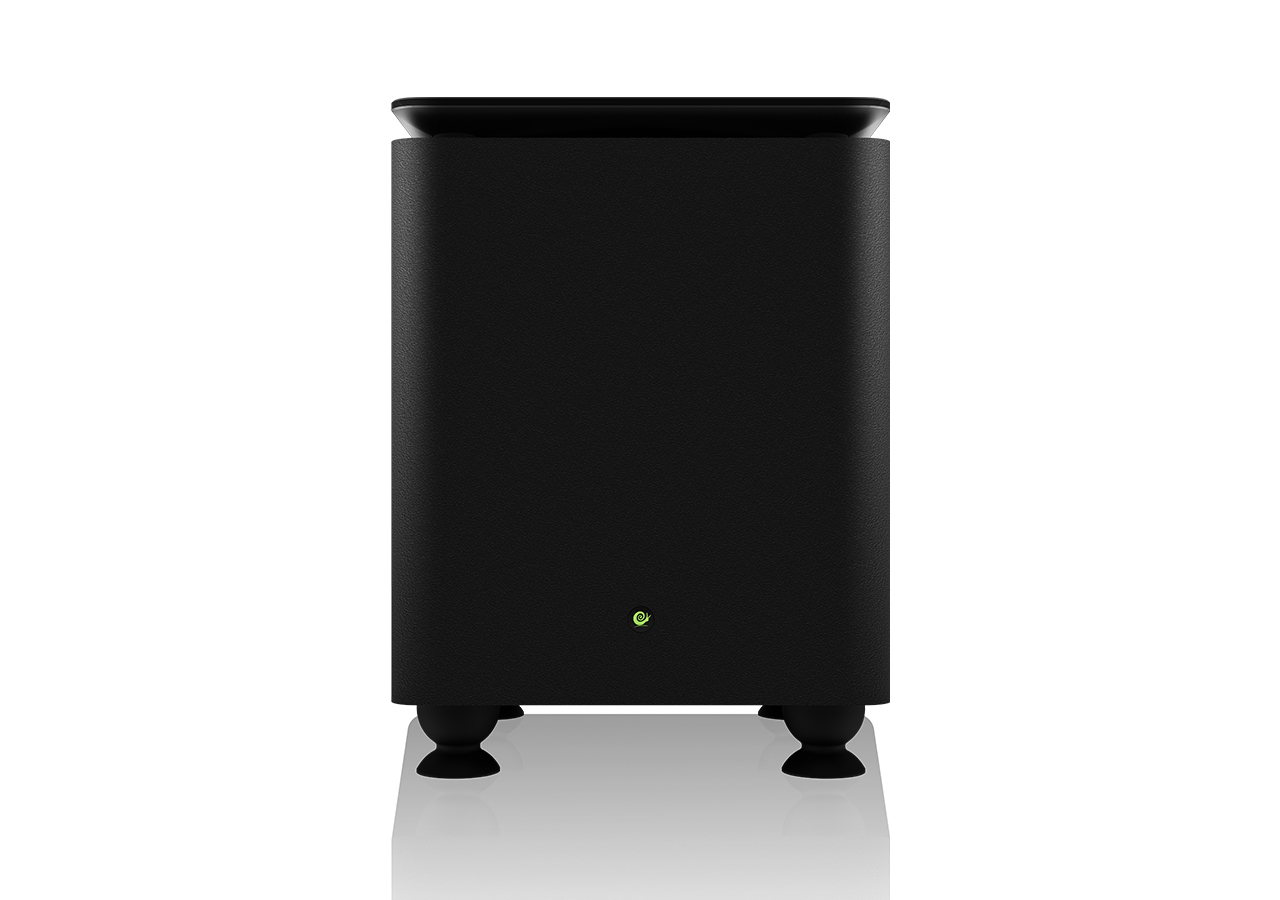
The S10D is dual 10-inch, 1000W, 119dB maximum SPL, sealed, in a 295×295×405mm cabinet. Narrow and tall: easier to place than a wide box, but 405mm will not go into an ordinary TV cabinet.
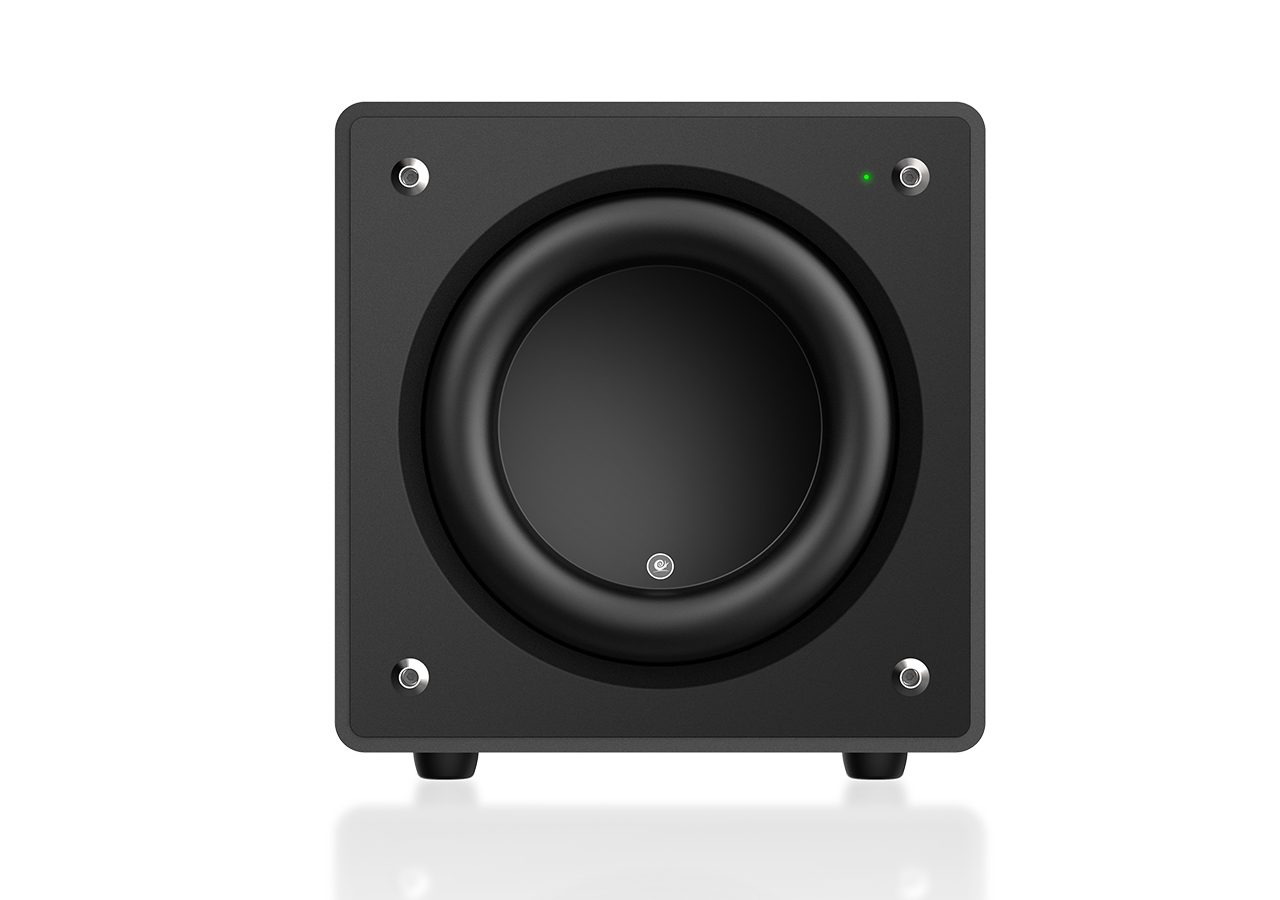
The X135 is 13.5 inches, priced on request each, specified in the X-series 5.1.2 for 20–35 m², a set quoted on request. In that tier the subwoofer and the amplification carry much of the price: two systems both called 5.1 can differ by half, and the difference lands on the subwoofer and the AV receiver, not the five cabinets.
Above that come the dual-subwoofer systems: the X-series 7.2.4 for 30–50 m², price on request. Two subwoofers do not solve "not enough output"; they solve "this seat booms and that seat is empty". A single subwoofer excites the room modes at one position only, and 10dB or more between seats is common; two of them, set apart, even it out. Side by side and touching, the money is wasted.
Who should not buy it: a room under 20 m² with no low-frequency treatment planned does not need the S10D or the X135; the B28 plus one careful placement is the better spend. A big subwoofer in the wrong place sounds worse than a small one in the right place.
The trade-off: a bigger subwoofer hits a small room first. Force a 13.5-inch into under 20 m² and the standing-wave peak between 40Hz and 60Hz is pushed harder; you hear boom, not depth. A 1000W subwoofer also needs checking against the power circuit and cable headroom — in an older flat, do not share a circuit with the air conditioner.
5. Four of Them Need an AV Receiver, the W10 Does Not: The Other Fork
All four are active subwoofers, amplifier inside the cabinet, and still need an AV receiver to join the system: the AV-700III for the entry to mid-tier packages, the AV-900III above that, the X series with a separate processor and power amps. If the receiver has no drive to spare, the subwoofer's headroom never arrives — crossover, level and phase are set on the receiver, so the subwoofer is only half of it.
The other fork is the CW90 wireless line. The W10 is a 10-inch, 500W, 114dB wireless subwoofer on a dedicated 5.8GHz channel with the MS-1 player, and the set needs no AV receiver. The CW90 is 90W per unit, 111dB maximum SPL, a 2.75-inch full-range driver plus a passive radiator, a Ø90mm cut-out, a Ø105mm faceplate and a 100mm cabinet height; five go into the ceiling. The full CW90 set is quoted on request, at the entry line. For walls already closed, this is the route that needs no further work on the ceiling.
Dolby Atmos and DTS:X certification in progress on this system. Buy on the configuration in front of you, not on what is expected of it.
The short version: ceiling closed and no appetite for building work, take the wireless route — the one that can be delivered. At bare-shell stage the wired route has the higher ceiling, and no wireless premium to pay.
The trade-off: wireless removes the cable and hands the choice of amplifier back to the factory — you cannot bring in a different receiver to drive it. The four wired subwoofers are the reverse: free to change subwoofer, free to change receiver, if the cable is run before the boards close.
6. Matching the Room: One Subwoofer per Size and Budget
The judgments above in one table. The areas are rules of thumb, not promises.
| Room size | Subwoofer | Package | Package price |
|---|---|---|---|
| Around 20 m² | B28 | Mini 5.1 cinema and karaoke | Price on request |
| 20–25 m² | B28 | IW3max 5.1 cinema and karaoke | Price on request |
| 25–35 m² | C110 | IW4pro 5.1 cinema and karaoke | Price on request |
| 35 m² and up / large flat | S10D | IW6 WIDE 7.1 concealed | Price on request |
| 20–35 m², dedicated media room | X135 | X series 5.1.2 | Price on request |
| 30–50 m², media room | Dual subwoofers | X series 7.2.4 | Price on request |
Concealed cinema speakers put five cabinets into the ceiling and leave one subwoofer on the floor, so its size is conspicuous. Plenty of people go a size down for that reason: to keep the floor clear.
In home theater design the subwoofer position is usually settled last: sofa first, then television, then the cabinet, and whatever corner is left takes the subwoofer. Reverse that order: fix the subwoofer position with the sofa, and even low-frequency coverage becomes something worth discussing.
Who should not buy on this basis: anyone hoping one subwoofer will solve every low-frequency problem. Evenness comes from position and a second subwoofer, not from driver size.
The trade-off: this table is a starting point, not an answer. Ceiling height, an open kitchen and a full glass wall rewrite the result; the same 30 m² open plan and closed square room ask for different subwoofers. If you remember one sentence, make it this: the subwoofer to choose is not the expensive one but the one just not straining in your room's volume — around 20 m² the B28 is enough, 25–35 m² goes to the C110, and only past 35 m² do the S10D and the X135 come into the conversation. An oversized subwoofer is harder to listen to than an undersized one.
Related articles
- U3 vs Other Speakers: What Only a Live Comparison Shows (Video)
- CW90 Wireless vs Wired In-Ceiling: Where the Money Goes
- Soundbar or Concealed Cinema? Ask the House Before the Speakers
END
#B28 #C110 #S10D #X135 #SubwooferSelection #ConcealedCinema #HomeCinemaKaraoke
Written by Digital Xiaoniu, first published on the SNAIL POWER official site, Product News.