Home / News / Product News / CW90 vs Mini vs IW3max: Which Concealed Cinema Line to Choose
CW90 vs Mini vs IW3max: Which Concealed Cinema Line to Choose
2026-11-21 18:05 · Product News
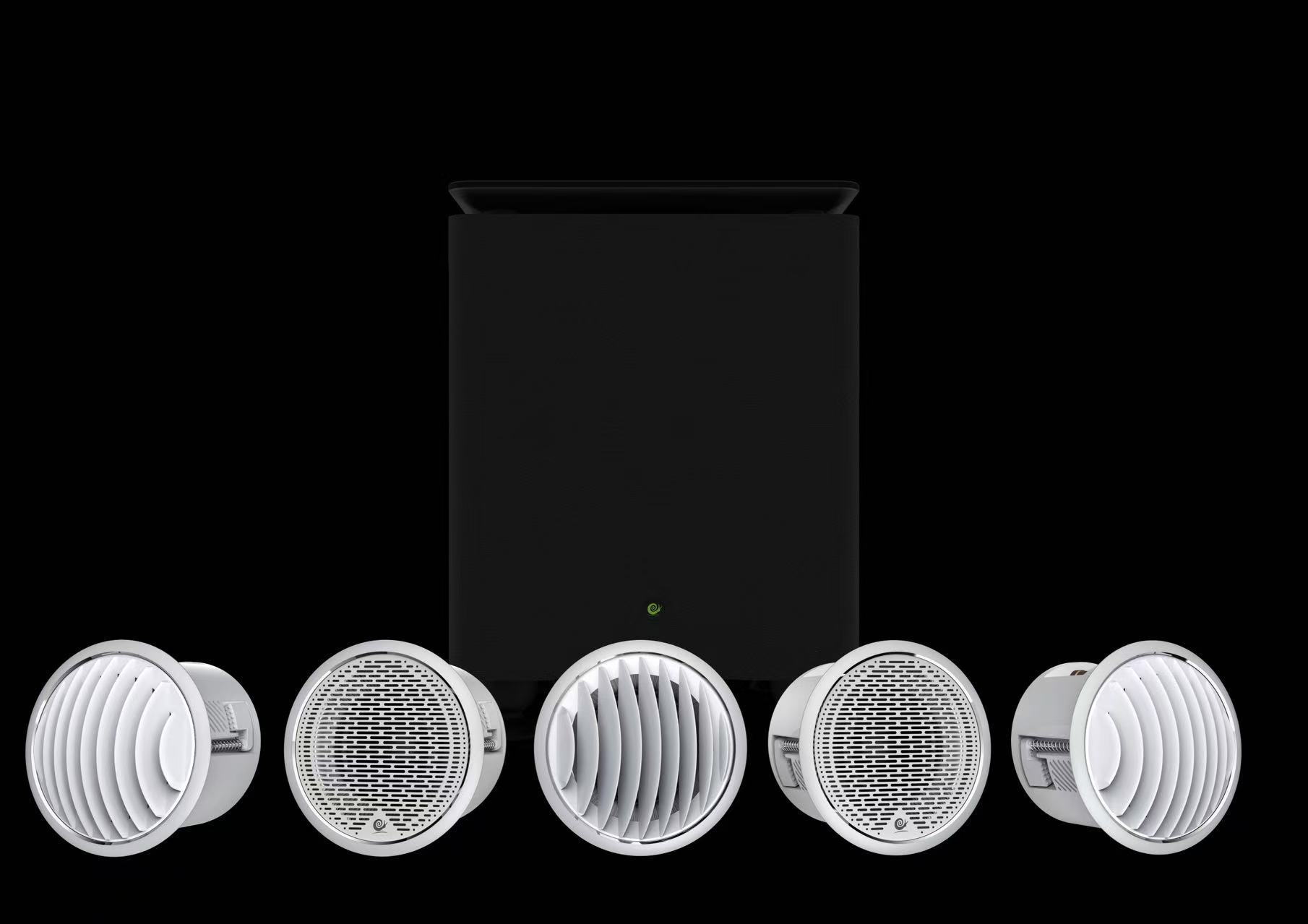
CW90, Mini and IW3max are the three concealed cinema speaker lines from SNAIL POWER: Ø90mm and Ø85mm cut-outs, with the full 5.1 cinema-and-karaoke packages starting at the entry tier (the CW90 package) — a fit for renovation plans where nobody wants to see a speaker in the living room.
The three packages sit a clear step apart, and the gaps do not rank by how good they sound. They rank by three things: whether the ceiling is already closed, what size the holes were cut to, and whether there is room for an outboard amplifier. Get that order right and there is not much suspense left in the choice.
Key points
- The dividing line is the cut-out, not the price: Ø90mm on the CW90, Ø85mm on the Mini and the IW3max.
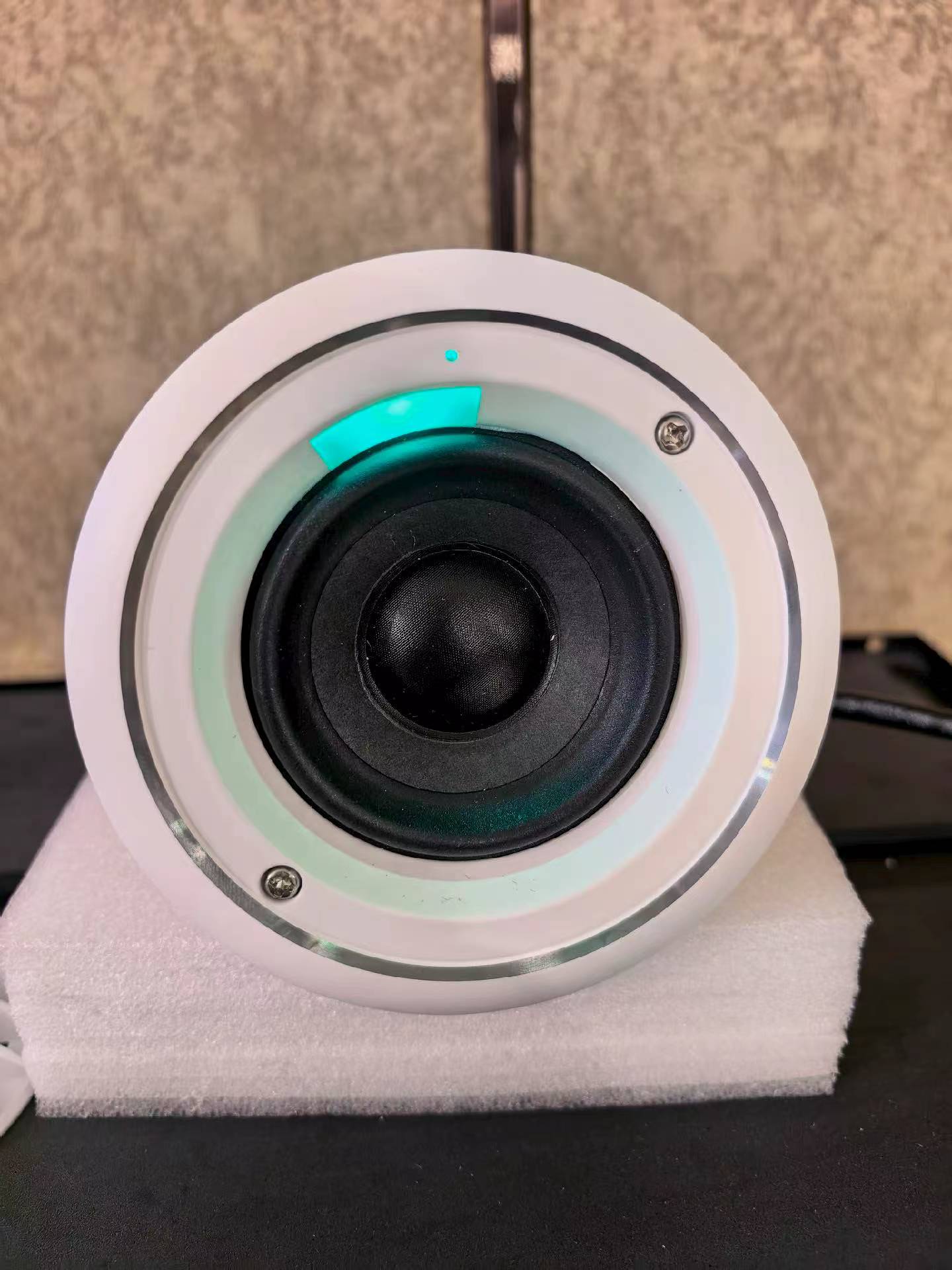
- The CW90 hands the low end to the W10 subwoofer; a 2.75-inch full-range driver with a passive radiator reaches 110dB at 90W per unit on a Ø105mm faceplate.
- The CW90 runs a dedicated 5.8GHz channel with no wiring; the other two ship with the B28 subwoofer and the AV-700III.
- The IW3max costs a little more than the Mini, and the Mini package includes two F60D wireless microphones.
- Dolby Atmos and DTS:X certification in progress; where the licence stands is whatever the store tells you on the day.
1. The Cut-out Comes Before the Price
The installation crew drills to millimetres, not to model names. The CW90 takes a Ø90mm cut-out behind a Ø105mm faceplate, so once it is up it reads as one size over a downlight; the Mini and the IW3max both take Ø85mm. One millimetre means nothing on paper and a great deal on site: a hole already cut at Ø85mm will not hold a CW90 — it has to be patched, or the cabinet shimmed.
The faceplate is the ring that is wider than the hole and sits on the face of the plasterboard, covering the raw edge. Cut the hole off centre and that ring cannot cover it, and filler will not bring the surface back flat. This is the step where in-ceiling work gets redone most often.
It is also the step that home theater design usually skips: the drawing says "ceiling speaker position", the carpenter cuts where he always cuts, and the mismatch only shows up when the boxes arrive on site and the dimensions have to be changed on the spot.
The trade-off: all three lines need a cavity above the ceiling. The CW90 is 100mm tall, so a plasterboard ceiling has to give up at least that depth, plus allowance for cable, furring and decoupling. A living room with the slab painted and no ceiling at all rules out all three — not because they install badly, but because there is nowhere to put them.
2. CW90: Where 110dB Comes From in a Ø90mm Hole
The CW90's figures are: a 2.75-inch full-range driver plus a passive radiator, 90W per unit, 110dB maximum SPL, a Ø90mm cut-out, a Ø105mm faceplate and 100mm height. A 2.75-inch driver cannot make very low bass, so the low end is handed to the subwoofer — the W10 in the package catches that part while the full-range unit concentrates on the midrange and the voice.
With that division, a small driver no longer has to force bass out of a very small box, and 110dB becomes possible on a Ø105mm faceplate. The energy is topped up by the passive radiator; the control comes from the 90W of headroom. The dedicated 5.8GHz channel then decides the scenario: a house whose ceiling is already closed and will not be opened again — the cabinets go up and the job is done.
The 90W per unit figure has to be read with the rest. A small driver trades excursion for sound pressure, and once the excursion runs out the distortion arrives before the loudness does; 110dB is a ceiling the system produces together, not a number one cabinet forces out on its own. Leave the amplifier enough headroom and the peaks stay controlled — what muddies first under big dynamics is the midrange, and the midrange is where the dialogue lives.
One line on the brand: SNAIL POWER was founded in Milan in 1995, developed its variable waveguide in 2016 and introduced the IW3 in 2018. What that adds up to sits in details you never see once the job is finished — cut-out tolerances, the edge of the faceplate, the waveguide angle.
The trade-off: the bottom does not go very low. Use it as a pure two-channel system and organ, double bass and electronic sub-bass will tell you the low end was handed off; at low volume the passive radiator does not add much either. The CW90's sweet spot is film and karaoke, not audiophile records.
3. Mini and IW3max: The Same Ø85mm, and Where the Money Goes
Both packages take a Ø85mm cut-out and their accessory lists are close: B28 subwoofer, AV-700III amplifier, MU-1 wireless microphone. The difference lands on the cabinets themselves, and on those two in-ceiling speakers.
| Product line | Cut-out | 5.1 cinema and karaoke configuration | Price |
|---|---|---|---|
| CW90 wireless cinema | Ø90mm | CW90×5 + W10 subwoofer + MS-1 | Price on request |
| Mini | Ø85mm | 5×Mini + B28 subwoofer + AV-700III + MU-1 + F60D×2 | Price on request |
| IW3max | Ø85mm | 5×IW3max + B28 subwoofer + AV-700III + MU-1 | Price on request |
Two things can be read off the table. First, the CW90 builds the wireless link into the package, so one quoted package delivers a complete 5.1 system. Second, the IW3max costs a little more than the Mini while the Mini package includes two F60D wireless microphones; compare the cabinets alone and the gap between those two packages is wider than that step suggests.
While we are here, one clarification: the "IW3max for a low single-cabinet figure" seen online is not the official package price. That is a single cabinet or an unofficial old price; the full 5.1 cinema-and-karaoke package is quoted on request, subwoofer, amplifier and microphone included.
Buying single units and building the system yourself is the step where these three lines most often go wrong. Peak management, the split of low frequencies and the wireless channel are all calculated for the package; take out one cabinet on its own and the specifications are still there while the result is not. When you buy a home theater package, the subwoofer and the amplifier on the configuration sheet decide more about the sound than the model name does.
The trade-off: the Mini and the IW3max are half a system — beyond the five cabinets there is a subwoofer, an amplifier and a microphone set, and they take up floor and power on one side of the TV cabinet. Packages like this save trouble, not space; order after the sofa and the cabinet are settled, or the subwoofer ends up on the floor and the look of the living room system suffers with it.
4. Who Should Not Buy These Three Lines
Writing the limitations down first is more useful than listing the advantages.
Anyone who only wants "loud and cheap". A soundbar is the better answer; it solves the same need cheaply, and paying concealed workmanship for "loud" does not add up.
Anyone with no ceiling, or no cavity in it. The CW90 is 100mm tall, and the other two also need cabinet volume and cooling clearance; an exposed slab gives them nowhere to go.
Anyone with a sensitive room downstairs. An in-ceiling speaker drives energy into the slab, and there is no physical way to make it inaudible below. If the floor below is sensitive, a floating floor does more than changing speakers — that holds whatever the brand, and it is a condition of every in-ceiling design.
Anyone with a dedicated room over 30 m². The CW90's 110dB and 2.75-inch driver are sized for a living room of around 20 m²; for a bigger room look at the X series, quoted on request.
Anyone whose budget stops below the entry tier. The three lines share one entry point and there is no matching concealed 5.1 below it. Reserve the positions and the power now and come back in the next round — better than a half-finished hard fit-out.
The trade-off: these three lines solve being invisible, not being louder. If louder is what you need, the selection went the wrong way from the start.
5. Decide by Renovation Stage, Not by Budget
Turn the order around: ask whether the ceiling is closed first, and ask about the budget second.
Ceiling closed, no more mess wanted. Take the CW90. The dedicated 5.8GHz channel needs no wiring, so the work left is essentially drilling and hanging the cabinets, and the package price is quoted on request.
Renovating, carpenter not on site yet. Take the Mini or the IW3max. You set the cut-out size and Ø85mm is drilled once, correctly; if you want karaoke and the package's two F60D wireless microphones, go Mini; if you would rather move the budget into the cabinets themselves, go IW3max.
Do not skip the area step. A living room of around 20 m² is covered by the CW90 with the W10; above 35 m² with a high ceiling, sound pressure needs headroom, so look at the IW3max. The larger the room, the more the difference between packages concentrates in the subwoofer and the amplifier rather than in the five small cabinets.
One more step is the handover check. After installation, measure whether the cut-outs sit on the same level, then listen for whether the five cabinets are matched in level; where the ceiling carries cupboards or cove lighting, move a position and the soundstage moves with it. Money spent on calibration is worth more than money spent on the model name.
The trade-off: wireless saves cable, not power. Every CW90 cabinet needs a supply, so sockets have to be reserved in the ceiling; miss that and the wireless route ends up with a surface-mounted power line anyway, and the saving made early is given back.
6. In One Sentence
The dividing line falls on two things: a Ø90mm cut-out or a Ø85mm one, and a package at the entry tier or at the two tiers above it. Ceiling already closed and the budget held below the mid tier — the CW90. Still renovating and the ceiling needs fill — the Mini. The same Ø85mm with the budget pushed into the cabinets — the IW3max.
The trade-off: the same two as before — the low end is handed to the subwoofer, and the positions are handed to the ceiling.
None of the three promises "louder". What they promise is that nothing shows once the job is finished, and that they fit. That is what concealed cinema speakers have always been for: what the client wants is not the word cinema, it is a cinema you cannot see. Dolby Atmos and DTS:X certification in progress; the licence paperwork can be requested from the store, and the contract signed once the approval is in hand.
The order of exit is simple: measure the ceiling void and the furring first, settle the sofa and the TV wall second, talk models third. A plan that follows that order needs no explanation once the job is done.
Related articles
- CW90 Cabinet Materials: Why Chipboard Is Not Enough
- IW4pro Soundstage Demo: Hearing Directivity in 30 Seconds (Video)
- 111dB, 114dB, 116dB: Sizing a Living Room Cinema by Floor Area
END
#CW90 #ConcealedSpeakers #SnailPower #LivingRoomCinema #HomeTheaterPackage #InCeilingSpeakers #WirelessCinema
Written by Digital Xiaoniu, first published on the SNAIL POWER official site, Product News.