5.1.2 is one channel layout in a Dolby Atmos home cinema: five ear-level speakers, one low-frequency effects channel and two overhead speakers, from ¥17,200 a set — for people who want something overhead in the living room without seeing a speaker. What decides whether it fits is not the budget; it is whether the ceiling can take two more holes.
This article answers one thing: what that ".2" is, and what the extra money buys. The conclusion first: the .2 is the two overhead cabinets in the ceiling, and it has nothing to do with the number of subwoofers. I have seen more than one quotation that read .2 as two subwoofers, and that is where a budget goes wrong.
All the figures at once: the CW90 from SNAIL POWER is a 5.1 wireless cinema system — Ø90mm ceiling cut-out, Ø105mm faceplate, 100mm cabinet height, 90W per unit, 111dB maximum SPL, ¥17,200 for the complete set. It delivers the 5.1 layer. Whether to add .2 depends on the ceiling and the source, not the budget.
Key points
- Each of the three numbers governs something different: bed channels, the low-frequency effects channel, overhead channels.
- The .2 is two overhead cabinets, front-top above the main listening seat, at roughly 45 degrees of elevation.
- A 5.1 soundtrack with no height information will not use the two overhead cabinets even after they are installed.
- Overhead cabinets need a hole, a fixing and clearance inside the ceiling void. A wireless system saves the signal cable, not the hole.
- ¥17,200 is the price of the 5.1 set. In the official price list the 5.1.2 packages start with the X series.
1. Three Numbers, Three Separate Jobs, and They Should Not Be Read Together
The notation runs in three segments: bed, low frequency, height. It carries over from the 5.1 era; Atmos simply filled in the third segment.
5 is the five at ear level: left, centre, right, left surround, right surround. Everything on screen belongs to them — dialogue out of the left and centre, a car passing on the right. 1 is LFE, a separate low-frequency effects channel capped at 120Hz, carrying explosions and low-end beds recorded on their own and handed to the subwoofer. 2 is overhead: two cabinets, in the ceiling.
So a 5.1.2 system is seven cabinets plus one subwoofer, not five cabinets plus two subwoofers. Above that line sit 5.1.4 and 7.1.4, which change the last two numbers; change the first and the whole layout is redrawn.
The trade-off: the naming is ambiguous, and the bill is real. Read .2 as two subwoofers and you buy one too many, then wire a subwoofer into a height output; with the channel assignment scrambled, the whole soundstage comes apart. Before buying, counting height outputs beats memorising figures.
2. What the Ears Actually Hear Up There
Atmos is object-based. In the mix every sound object carries three-dimensional coordinates; on playback the renderer assigns it according to your speaker positions. The overhead segment is that z axis.
What you can pick out is concrete: rain on the roof, a helicopter pressing in from behind and above, footsteps upstairs making the ceiling creak, someone in the corridor outside. In 5.1 none of those has a dedicated channel; the mixer pushes them into the surrounds and the ear guesses the height. A .2 gives them somewhere to sit.
Dolby's installation guidance puts the two overhead cabinets of a 5.1.2 layout front-top above the main listening seat, at roughly 45 degrees of elevation, laterally aligned with the left and right main cabinets. Set them accurately and the sound overhead is "there"; set them crooked and it becomes a smear on the ceiling.
That is also the watershed between Atmos and 5.1: not that the sound is louder, but that a vertical layer now exists with room in it to place things.
The trade-off is the source material. An ordinary 5.1 mix has no height information, so the two overhead cabinets get guesses from an upmixing algorithm — usually "the dialogue pulled up too", which does not sound natural. To cash in the .2 the source must be native Atmos: a streaming Atmos track, a 4K disc, a local library. If it cannot keep up, leave the money unspent.
3. The Spec Table: What Changes from 5.1 to 5.1.2
| Configuration | Cabinets | Overhead cabinets | Subwoofers | Typical room |
|---|---|---|---|---|
| 5.1 | 5 | 0 | 1 | 20–30 m² living room |
| 5.1.2 | 7 | 2 | 1 | 20–35 m² living room |
| 5.1.4 | 9 | 4 | 1 | 30–45 m² |
| 7.1.4 | 11 | 4 | 1 | Dedicated cinema room |
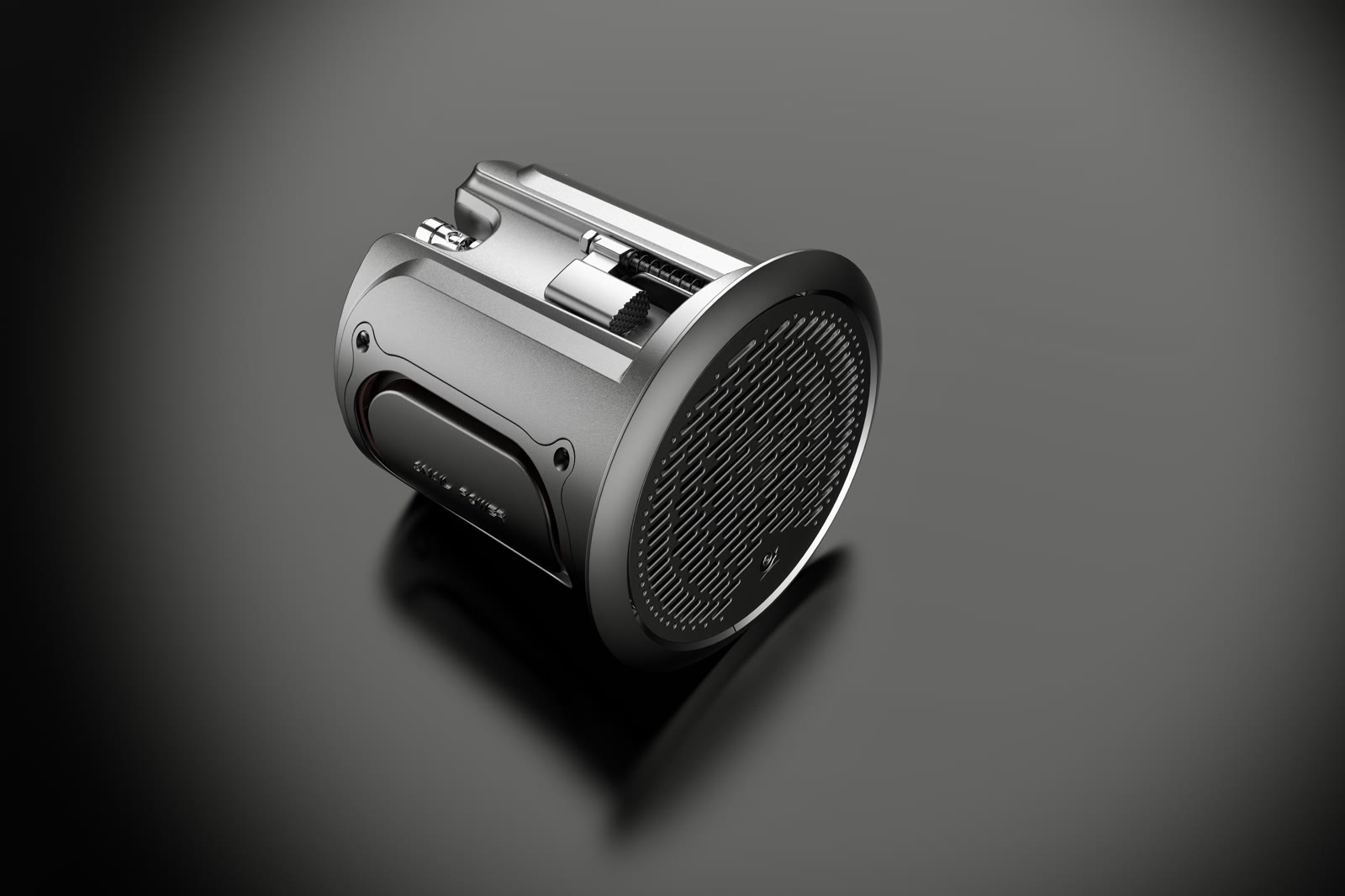
What those two extra cabinets look like decides whether the .2 can hide in the ceiling at all:
| Item | CW90 figure |
|---|---|
| Ceiling cut-out | Ø90mm |
| Faceplate size | Ø105mm |
| Cabinet height | 100mm |
| Driver | 2.75-inch full-range + passive radiator |
| Rated power | 90W per unit |
| Maximum SPL | 111dB |
| Wireless link | 5.8G dedicated channel |
| Package configuration | 5.1 wireless cinema and karaoke: CW90×5 + W10 subwoofer + MS-1 |
| Package price | ¥17,200 |
| Immersive formats | Dolby Atmos and DTS:X certification in progress |
Read the price column carefully: the ¥17,200 set is the 5.1 wireless cinema and karaoke build, and its five cabinets do not include the two overhead units. In the official price list 5.1.2 packages start with the X series, where 10–25 m² with the C110 subwoofer is ¥79,900; a CW90 plus overhead cabinets is an up-configure, quoted against the actual build. Do not apply the 5.1 price to a 5.1.2.
The trade-off is that every layer added has to be recalculated. Two more overhead cabinets mean two more holes, two more cable runs, two more amplified channels, and clearance in the ceiling. Between two systems both called 5.1.2, the price gap lands on the subwoofer and the amplifier first, not on those two small cabinets: watch the unit price alone and the budget comes out backwards.
4. The Ceiling Has to Pass Three Gates: Clearance, Joists, Cable Runs
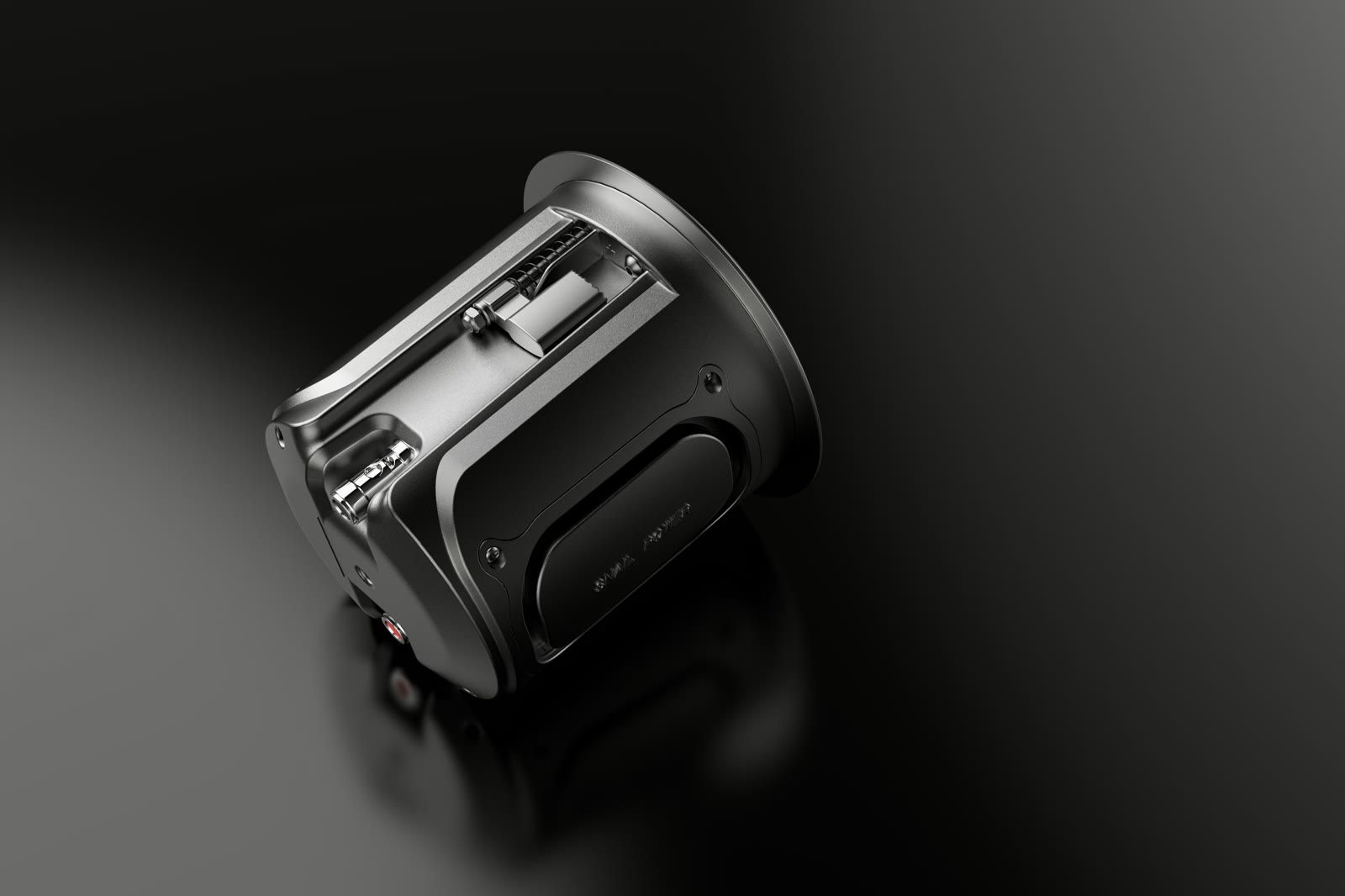
What a flush-mount cabinet buys is taking the box out of the room layer: only a Ø105mm faceplate remains in the living room. The CW90 cabinet is 100mm high, so the ceiling void must leave at least that much, and joists, ducts, downlight circuits and smoke-detector wiring must be routed around it.
Overhead positions also run into reality. If a main joist sits directly above the sofa, the position moves forward; if a central air-conditioning duct runs through one side of the ceiling, that side can barely be cut. These belong on the layout drawing at the home theater design stage, not in a discussion after the ceiling is boarded.
Cable runs are two different jobs depending on timing. Buried conduit during renovation puts the cable inside the ceiling, at the cost of fixing model, positions and cut-out size before the boards go on. Added afterwards, a CW90 on its 5.8GHz dedicated channel removes the signal cable from processor to speaker, but the hole, the fixing and the touch-up paint stay either way.
The trade-off is time and dust. Retro-fitting an overhead pair means half a day on dust sheets and touch-up paint; the same job during renovation costs only the drawing time. Whether living room cinema speakers can reach .2 is usually not a question of money but of when the decision gets made.
5. Who Should Add .2, and Who Should Not Buy It
Start with who it suits: a 20–35 m² living room, a ceiling that can take a Ø90mm hole, native Atmos in the sources, and the wish to hear something overhead during a film. Take the CW90's 5.1 as the base and complete it with two overhead units — small cut-out, small faceplate, and once installed you cannot tell where the cabinets are. That is what concealed cinema speakers mean in a living room: friends come over and cannot find the speakers.
In these cases I would hold off:
- The ceiling cannot be touched, or the floor-to-ceiling height is short and the void is packed with ducts. If no hole can be cut, .2 exists only on paper.
- You mostly watch ordinary online series with no Atmos source. Their value has to be cashed in by the source material.
- The budget stops at ¥17,200. That price is the complete 5.1 set; forcing it into a 5.1.2 cuts the subwoofer and the amplifier first, and the loss of low end and dynamics is more obvious than the two sounds overhead.
- The sofa is against the wall and the walkway runs directly under the overhead position. With people moving below, the image drifts with them, which distracts rather than adds.
- You have a dedicated cinema room and can accept surface-mounted or floorstanding cabinets. At the same budget a large cabinet is more relaxed, and there is no reason to pay a premium for the word "invisible".
On "will it disturb the neighbours downstairs", the honest answer: there is no way to make it inaudible below. Low frequencies have long wavelengths, a concrete slab's isolation at 40–80Hz is limited, and energy travels down through the structure. A waveguide pressing energy towards the sofa, plus a full-range driver with a passive radiator keeping air movement inside the cabinet, lightens what the floor above receives; but if the people downstairs are sensitive, a floating floor beats better speakers.
The trade-off is that the money goes where you cannot see it. A floating floor consumes a few centimetres of height, a civil-works budget and a stretch of schedule. Only those willing to do it get a quiet result above and below; if not, accept that low frequencies travel, and moving the subwoofer off the slab centre towards a wall or beam is the cheap mitigation.
6. In One Sentence
Back to the start: the ".2" in 5.1.2 is two overhead cabinets, and what it buys is not volume; it is that the layer overhead moves from "the algorithm guesses" to "there is a place to put it".
In one sentence: if the ceiling can give you a Ø90mm hole and the sources include native Atmos, the .2 is worth adding; if either one is missing, put that money into the subwoofer and the amplifier first, where the return is more obvious.
The trade-off and the exit condition, written together: if the ceiling void is under 100mm, if joists and ducts cover the area above the sofa, or if you are moving house within three years, stop at 5.1 and do not pay for a 5.1.2 that exists only on paper.
Related articles
- From a Downlight: How SNAIL POWER Is Reshaping the Living-Room Cinema
- Why a 5.1 Subwoofer Has to Be Powered
- Invisible Speaker Installation: 8 Steps from Layout to Tuning
END
#DolbyAtmosHomeCinema #HomeCinema512 #HomeTheaterDesign #LivingRoomCinema #ConcealedCinemaSpeakers #OverheadSpeakers #CW90
Written by Digital Xiaoniu, first published on the SNAIL POWER official site, Other.