Ten years ago, putting a cinema into a living room began with accepting three things. You cut a 27cm hole in the ceiling. You stood two floor-standing speakers on either side of the TV wall. You ran a room's worth of visible cable behind the sofa. A lot of people stopped right there — not because they did not want the room, but because they did not want to redo the decoration in order to have it. The objection was rarely about sound. It was about everything the room would have to become before any sound arrived.
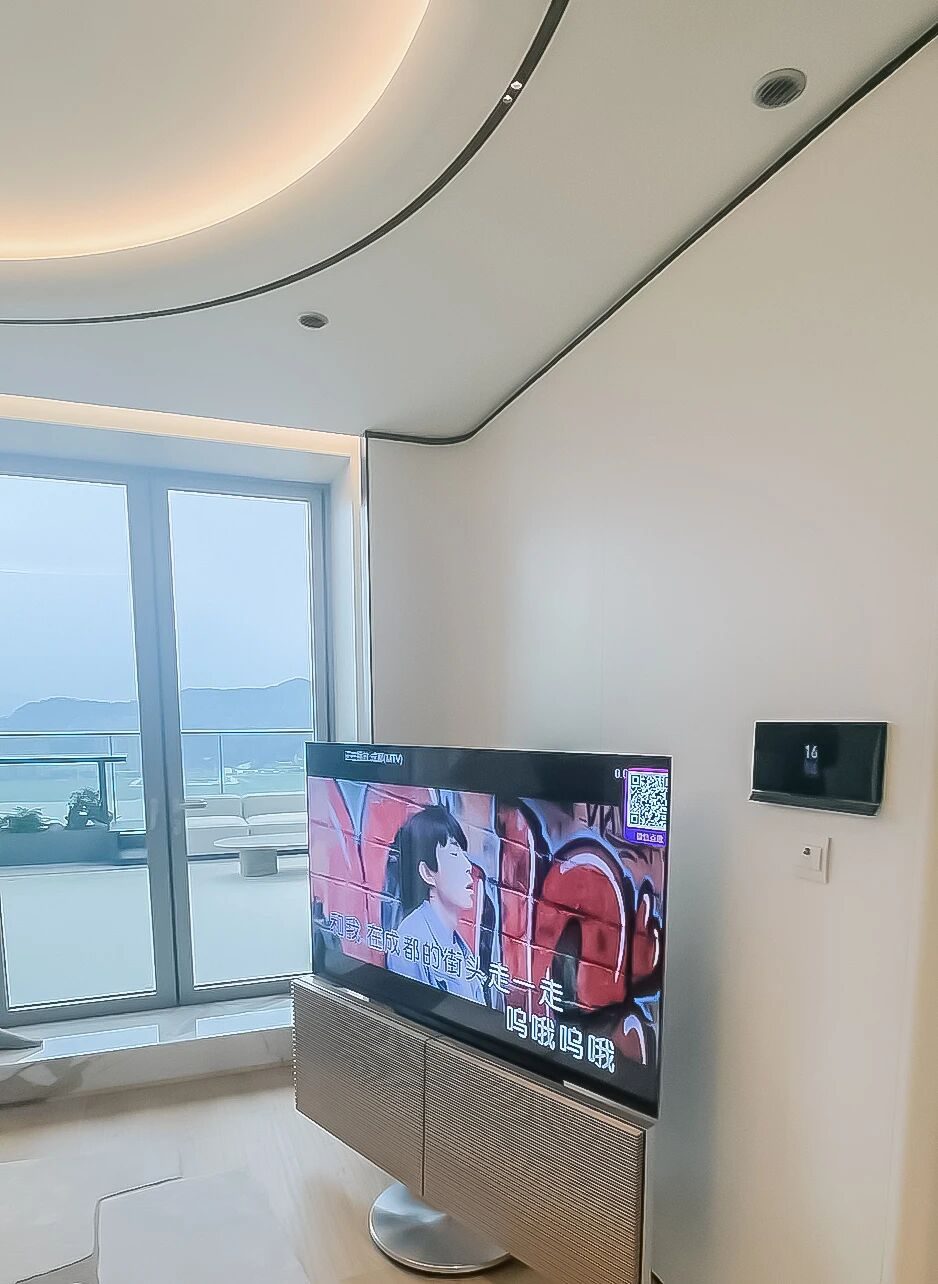
By 2026 that calculation has changed. When the five speakers of a 5.1 system need five holes 9cm across, a cinema stops being "a set of equipment you buy" and becomes "a decision you make while renovating". The meaning of that shift is far larger than a few dB on a specification sheet. A purchase can be put off for years; a decision taken during renovation is built into the room and stays there.
1. Seventeen years on this road
In 2005 Snail made the IW1: an 11cm driver, no bigger than a living-room downlight, with the speaker pushed up into the ceiling. In 2015 the IW3, the ancestor of the IW3max, brought the aperture down to 8.6cm and the power handling up to 200W. In 2017 the IW6LCR and in 2018 the IW3LCR introduced variable waveguides, so that one enclosure could aim its acoustic radiation to suit the room it was fitted into. Once the ceiling is closed you cannot move the box; what you can still move is where the sound goes.
Seventeen years, one job: turn a speaker from furniture into building material. Furniture has to be seen, has to be placed, has to take up space. Building material needs a specification — how big the opening, how deep the mounting, how much cable to leave behind. Once a speaker can be written down that way, it can be handed to a carpenter instead of being argued over by an enthusiast.
2. It pulls three industries onto one drawing
What is genuinely interesting about the downlight-style cinema is not progress inside the audio industry. It is that the format stands on the crossing point of three industries at the same time:
- Lighting: an Ø85–90mm cutout follows the same installation standard as a living-room downlight, so the carpenter does not need to learn a separate craft for the cinema.
- Smart control: SNAIL POWER is a Mijia ecosystem partner and a Xiaodu ecosystem partner, and the MU-1 Mijia edition can be added directly in the Mijia app, and a control system can switch it, change sources and call scenes; on the amplification side, see the AV-700 III.
- Audio: waveguides, sealed cabinets, wireless transmission — these are still acoustic problems, merely hidden in the ceiling plane.
In the past those three things belonged to three suppliers and three drawings, and the coordination between them landed on the homeowner. Now they are settled together, in the same ceiling installation, before the boards go up.
3. Four dimensions that decide how far it can go
| Dimension | The answer today | Why it matters |
|---|---|---|
| Invisible and spare | Ø85–90mm cutout, the face sits flush with the ceiling | Ceiling design does not have to give way to the cinema |
| Smart ecosystem | The MU-1 Mi Home edition can be added in the Mi Home app | The cinema becomes one scene inside the smart home |
| High-speed IoT | CW90 runs on a dedicated 5.8GHz channel, latency 10–20ms | It does not take up the home Wi-Fi and it does not fear walls |
| Online content | 8K player plus streaming and a music library | Content is no longer the bottleneck; hardware is the doorway |
Of these four, "invisible" is the easiest to reach and "smart" the hardest — because smart does not mean adding an app, it means letting the cinema be called by other systems. Whether Mi Home, a control system or a scene automation can call it decides whether it is "a set of speakers" or "a function of the room". The hardware in the ceiling is the easy part; the interface that lets the rest of the house treat it as a device is the part that takes years.
3.5 The protocol layer is the real dividing line
Ecosystem partnerships answer one question: can this system be called by another system today? Protocols answer a bigger one: can anyone call it tomorrow? SNAIL POWER is walking both legs: the first is integration with existing ecosystems such as Mijia, Xiaodu and KEEY Lighting; the second is the underlying standard — CSA Matter and MFi AirPlay2 are both in the application process.
The two mean different things. Ecosystem integration is usable now; Matter and AirPlay2 are "usable by anyone later". The first decides whether the system sells today; the second decides whether it can still join someone else's scene five years from now. Applications are applications — the date it is granted is whatever the official announcement says.
4. Where the ceiling of this road sits
The judgment stands up as long as the cost is stated plainly:
- The cutout is a one-time decision. Move it after the boards are sealed and you are partly rebuilding the ceiling.
- Wireless is not installation-free. Every enclosure still needs power close by; what you save is the signal cable.
- Skim-coat invisibility is the hardest to service. The surface is one continuous plane, so maintenance means damaging the finish.
- Big rooms still need big drivers. For a double-height living room of 300m³ the subwoofer specification cannot be economised; the 13.5-inch X135 is built for exactly that kind of volume.
5. My judgment
In the next three to five years, the living-room cinema will appear in the initial revision of the renovation drawings the way central air conditioning does, rather than as an add-on after moving in. The reason is not that the speakers have got better, but that the category can finally be described by cutout size and power points instead of by where you put it. When the electrician and the ceiling contractor can carry it in their own language, it stops being a specialist purchase and becomes part of the plan.
When a product can be described in the language of construction, it moves from consumer good to infrastructure. That is what the downlight-style cinema is doing, and it is why the change will look quiet from the outside.
Related articles
- Why a 5.1 Subwoofer Has to Be Powered
- Invisible Speaker Installation: 8 Steps from Layout to Tuning
- Built-In vs Invisible Speakers: Two Different Kinds of Hidden
END
#LivingRoomCinema #InvisibleSpeakers #DownlightCinema #SmartHome #WirelessCinema #SnailPower
Written by Digital Xiaoniu, first published on the SNAIL POWER official site, Other.