"Built-in" and "invisible" are often treated as the same thing, yet the two ways of being unseen differ a lot: one sits flush with the wall or ceiling surface and leaves a ring of grille showing; the other is plastered over or veneered so that even the grille is gone. Choose wrongly here and the result ranges from a loss of performance to a rebuilt ceiling.
The term "invisible speaker" is used loosely in the trade: sometimes it means in-wall or in-ceiling with a flush faceplate, sometimes it means a plastered surface that disappears completely. This article separates the two approaches and then gives the selection test.
1. Three approaches, sorted out
| Common name | What you see once installed | Installation requirement |
|---|---|---|
| Surface-mounted / on-wall | The whole cabinet | Fixed to the wall or ceiling, can be added afterwards |
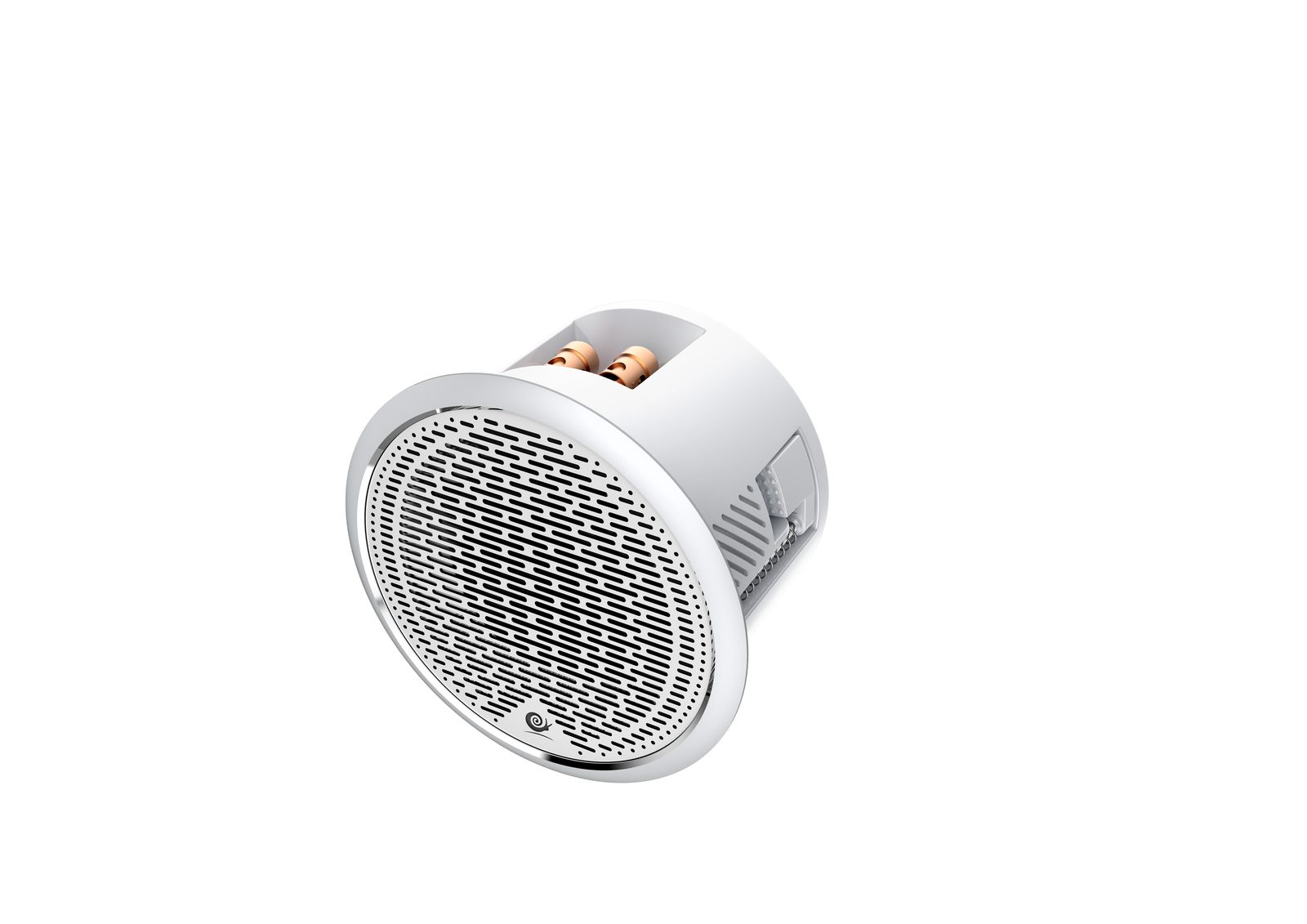
| Built-in (in-wall / in-ceiling) | A ring of grille, flush with the surface | Cut the opening and run the cables before the panels close |
| Plaster-over invisible | Nothing at all | Purpose-built cabinet plus plaster or veneer, the heaviest sequence |
What the market calls an "invisible speaker" is mostly the second type (built-in, flush); what can genuinely be covered in plaster is a purpose-built product, one step higher in both price and installation work.
2. Opening and sequence: the difference is who does the finishing
| Built-in | Plaster-over invisible | |
|---|---|---|
| Opening | Ø85–191mm, depending on the model | Reserved as one whole block for the cabinet, larger in size |
| Finishing | Faceplate clamps over the edge, grille attaches to it | Plaster, sanding, paint, the same colour as the wall |
| Who finishes | The speaker installer | The painter (needs a briefing) |
| Cost of rework | Take the grille off | Chip the plaster layer away |
The biggest risk with plaster-over is not acoustic, it is that the finishing is handed to a different crew: the painter does not know how much sanding the cabinet edge can take, and one careless pass can push through the diaphragm.
3. Acoustic difference: plaster changes the high frequencies
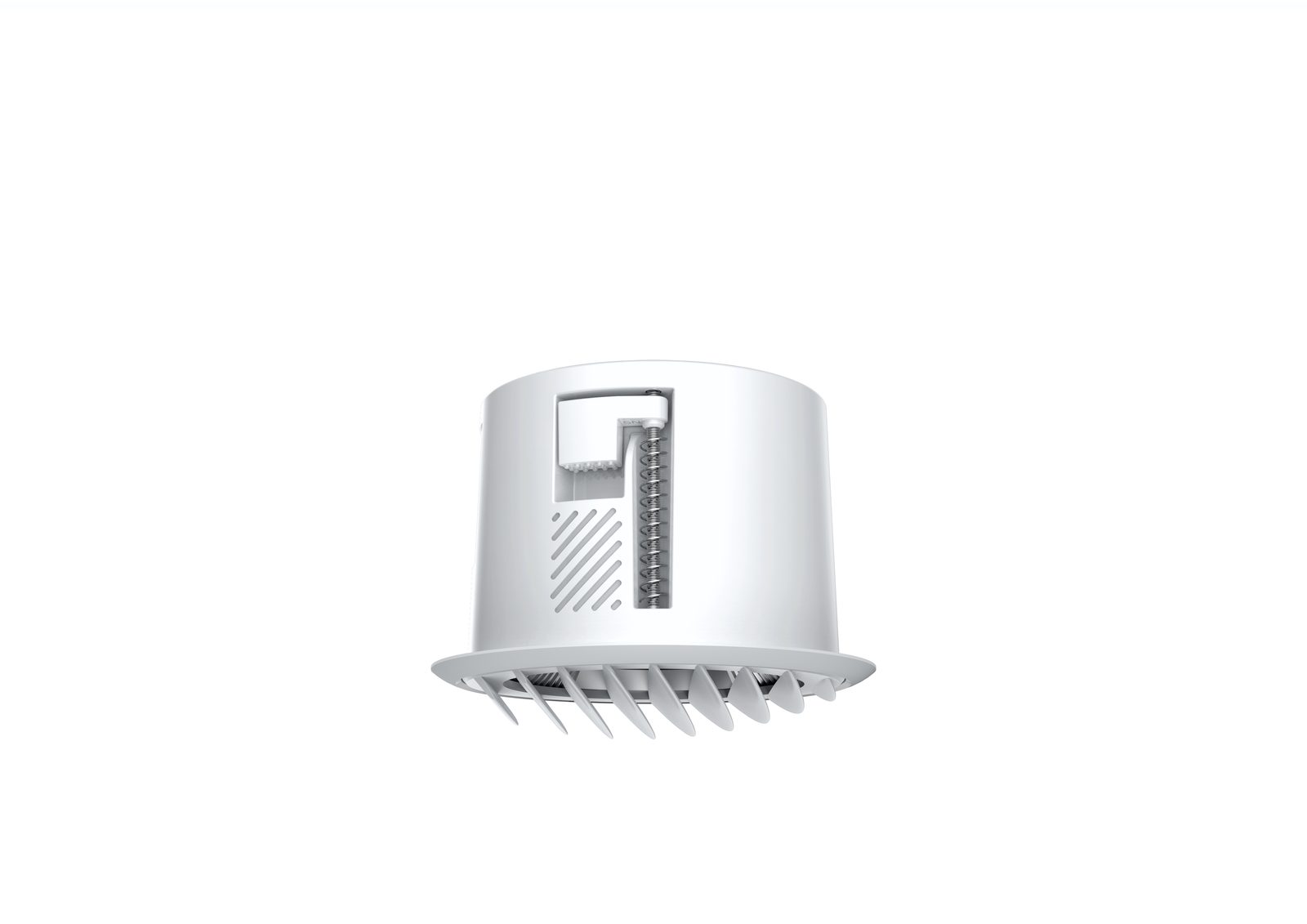
- Built-in: the grille attenuates high frequencies slightly, this is already compensated in the design, and the result is close to a surface-mounted cabinet.
- Plaster-over: an extra layer of filler and paint on the surface attenuates highs more noticeably, so a cabinet with purpose-made compensation is required, otherwise the sound turns dull.
- Directivity: both are affected by the angle of the mounting surface; the flatter the ceiling, the more an adjustable tweeter or careful placement has to make up for it.
4. Cost and maintenance
| Item | Built-in | Plaster-over invisible |
|---|---|---|
| Cabinet cost | Standard | Higher (purpose-built structure) |
| Installation cost | Opening plus wiring | Opening plus plaster plus paint |
| Maintenance | Grille comes off for access | The surface has to be broken |
| Suits | The great majority of living-room home theaters | Extreme aesthetics, with a sufficient budget |
5. How to choose: can you accept seeing a grille
- A ring of grille is acceptable: choose built-in, which is friendlier in both cost and maintenance, and this is the answer for most people.
- Nothing may be visible at all: choose plaster-over, but bring the painter into the briefing and accept the later maintenance cost.
- The room is already decorated: neither suits, so go surface-mounted or wireless.
6. Who should not choose plaster-over
- A tight budget: the cost of plaster-over sits in the process, not in the cabinet itself.
- The crew has never done it: the chance of a failed finish is high, and rework means stripping the wall.
- The layout may change later: once plaster-over is sealed, the position is fixed for good.
- High sonic demands plus a wish for convenience: built-in is more dependable, and the visual impact of a grille is usually smaller than people imagine.
7. Common questions
Q: Are invisible speakers all invisible?
No. Most "invisible speakers" in the trade mean built-in and flush, and the grille is still visible; what is completely unseen is the plaster-over type.
Q: Does plaster-over hurt the sound?
It attenuates high frequencies, so a purpose-built cabinet with compensation is required; a standard cabinet turns dull once it is plastered.
Q: Can a built-in be changed to plaster-over later?
In theory yes, but the plaster and paint have to be redone, which amounts to local rework, and it is not advisable.
Q: Can it be installed in a rental or a finished room?
Go surface-mounted or wireless; any solution that needs an opening has to be settled at the decoration stage.
8. The matching models
Built-in (flush, grille visible): IW3max (Ø85mm opening), IW4pro (Ø105mm), IW6 WIDE (186–191mm); for a finished room, look at CW90 wireless (Ø90mm).
The test in one line
Start by asking yourself whether you can accept "seeing a ring of grille". If you can, choose built-in; if not, choose plaster-over and accept the higher cost and the harder maintenance. Both are called "invisible", but the price is completely different.
Related reading
- What Are Invisible Speakers? A Guide to Concealed Home Cinema
- Built-in Speakers: In-Wall, In-Ceiling and Surface-Mount Explained
- Invisible Speaker Installation: 8 Steps from Layout to Tuning
END
#BuiltInSpeakers #InvisibleSpeakers #InWallSpeakers #InCeilingSpeakers #HomeTheater #SnailPower
Written by Digital Xiaoniu, first published on the SNAIL POWER official site, Other.