Home / News / Product News / CW90 Speaker Power: What 90W per Unit and 111dB Actually Mean
CW90 Speaker Power: What 90W per Unit and 111dB Actually Mean
2026-11-18 12:05 · Product News
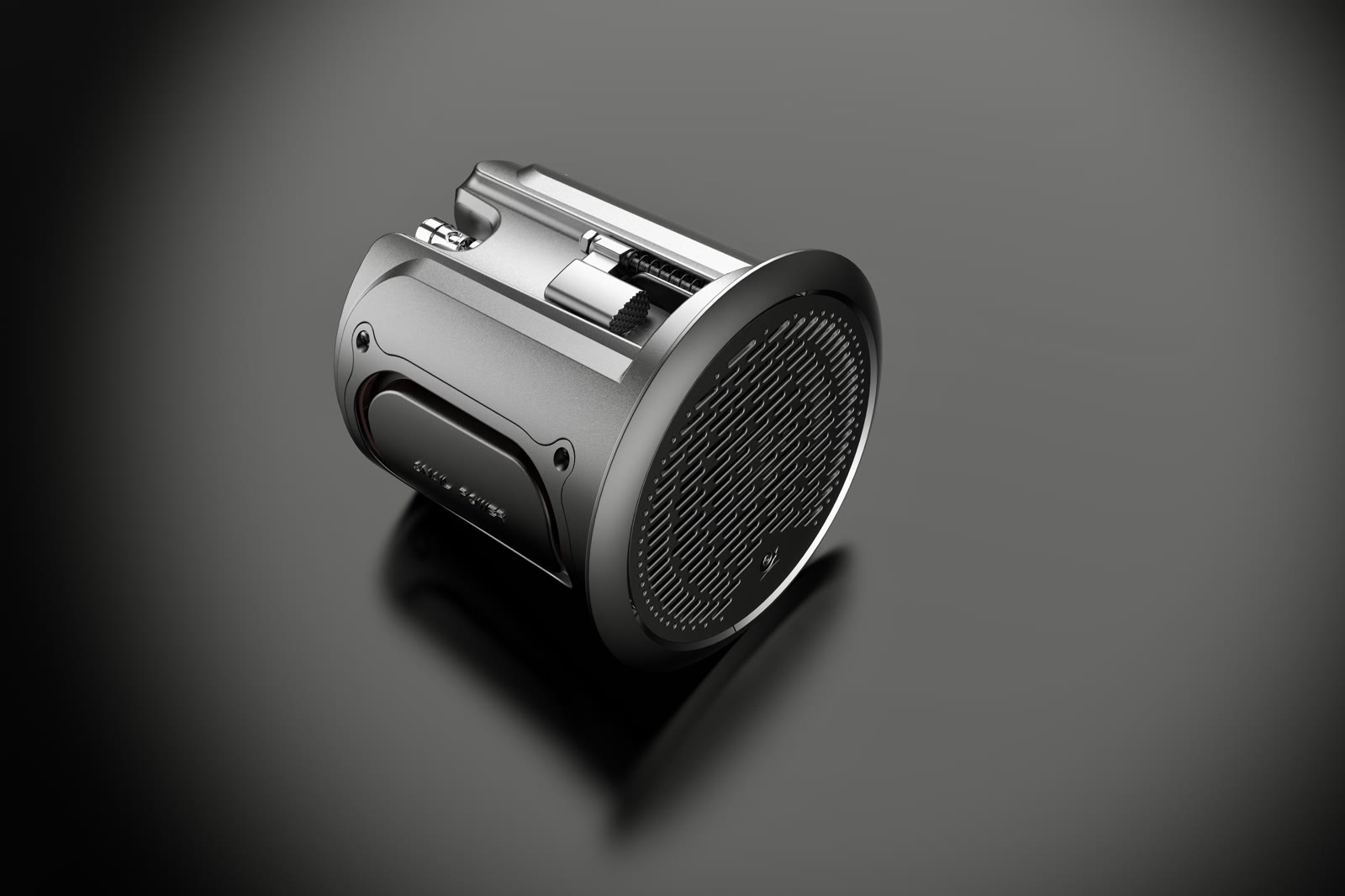
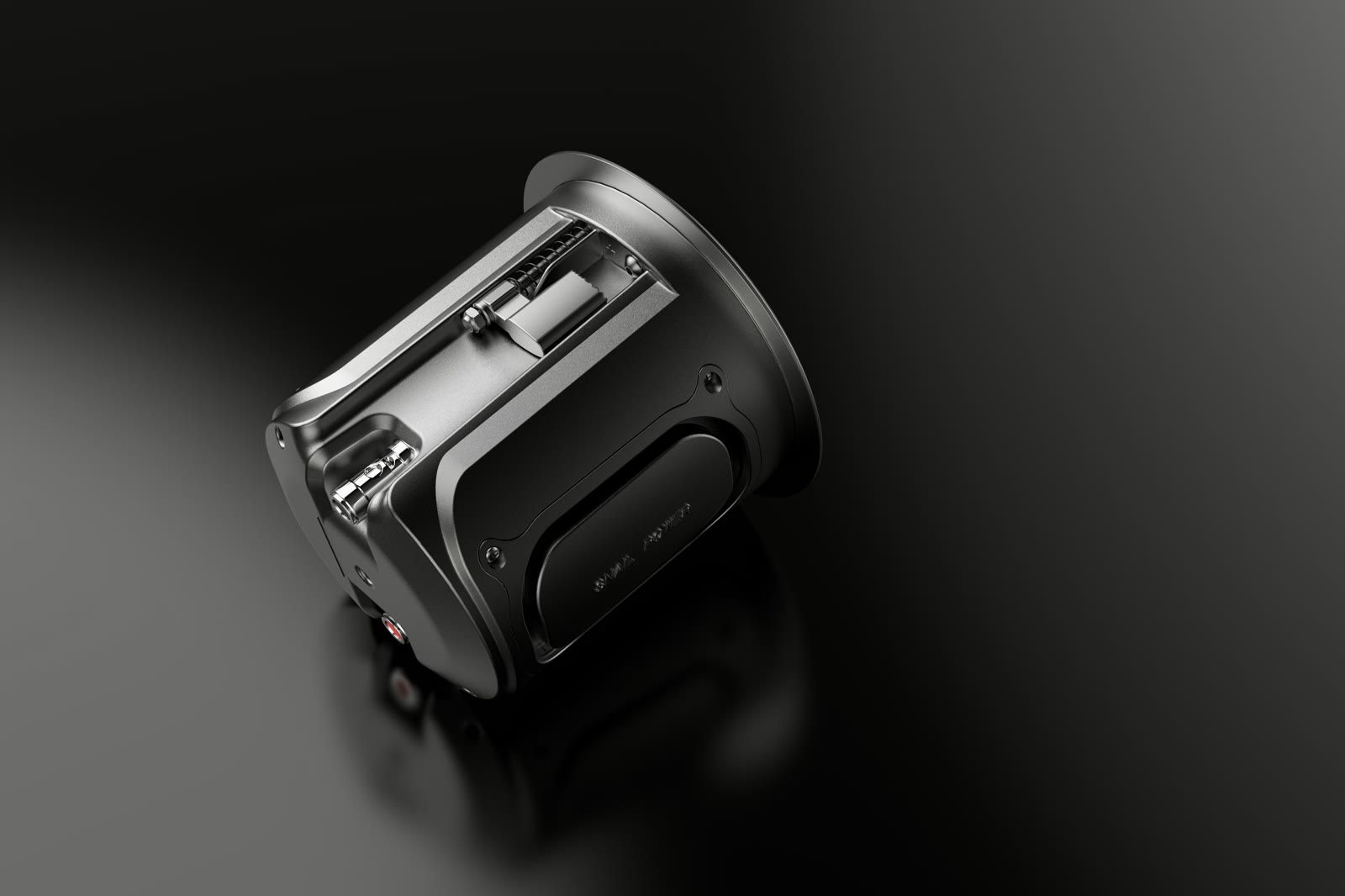
Choosing a power rating for a concealed speaker means taking nominal figures such as 90W per unit and 111dB maximum SPL and checking them against the actual listening distance and room area. The SNAIL POWER CW90 uses a Ø90mm cut-out, a Ø105mm faceplate and 100mm height, with a 2.75-inch full-range driver plus a passive radiator; the full 5.1 wireless cinema package is ¥17,200, and it corresponds to living rooms of 20–35 m².
Key points
- Power ratings come in two versions, rated and peak. The 90W per unit here is the rated figure, not a short-term maximum.
- 111dB is the maximum SPL at 1 metre. Stretch the listening distance to 3 metres and roughly 101dB arrives at the ear.
- In a living room of 20–35 m² the headroom at 90W per unit is enough; above 50 m², or at a listening distance past 4 metres, it gets tight.
- Power has to be worked out together with the amplifier. Drive several channels at once and a receiver's rated output is discounted in practice.
1. 90W Is a Rated Figure, Not a Peak
Ask whether 90W is enough and the first thing to settle is which kind of 90W is meant. The trade reports power in two common ways: rated power, the continuous power a driver can take for long periods without obvious dynamic compression; and peak or music power, what it can absorb for a very short moment, which usually comes out several times larger. Either figure stands up on its own. Mixed together in a comparison, neither does.
The 90W per unit on the SNAIL POWER CW90 is the rated kind. What it states is not how loud the thing will play but how much headroom the voice coil and the suspension of that 2.75-inch full-range driver still have when it runs loud for a long stretch. The same cabinet could print 300W as a peak figure without lying, so two cabinets both stamped 100W should not be read as the same standard.
The trade-off: if your habit is to compare prices across power figures, that road is closed. Inconsistent rating standards are simply how the trade works, but they do leave the question "is 90W weaker than 120W" without an answer; the real judgement goes back to sensitivity, driver size, cabinet construction and room area.
2. The CW90 Numbers, Laid Out in One Table
| Item | Figure | Note |
|---|---|---|
| Cut-out diameter | Ø90mm | The ceiling hole is set from this |
| Faceplate diameter | Ø105mm | The visible face that covers the cut-out |
| Cabinet height | 100mm | Clearance needed inside the ceiling |
| Driver | 2.75-inch full-range + passive radiator | The radiator adds efficiency low down |
| Rated power | 90W per unit | Rated, not peak |
| Maximum SPL | 111dB | Measured at 1 metre |
| Wireless | 5.8G dedicated channel | With the MS-1 wireless module |
| Package price | ¥17,200 | CW90×5 + W10 subwoofer + MS-1 |
In this table the first three rows are what actually decide whether it can be installed at all. Once a home cinema design reaches the in-ceiling stage, where the holes sit and how the joists are dodged matter more than another 10W of power. A Ø90mm cut-out does not take much room in a ceiling, but not every ceiling can give up 100mm of cabinet height: a central-air duct, an insulation layer, a main joist, any one of them pressing down and the cabinet will not go in.
The trade-off: a spec sheet does not list installation conditions. A Ø90mm cut-out means a small tolerance on site; 5mm off and the edge of the faceplate may no longer cover the hole. In a home whose ceiling void is under 100mm this scheme simply does not stand: change the structure or change the product line, there is no third route.
3. How Much of 111dB Reaches the Ear
Sound pressure falls with distance by the inverse square law: double the distance and 6dB goes. 111dB is the reading at 1 metre; at 2 metres it is about 105dB, at 3 metres about 101dB, at 4 metres about 99dB. That is physics, not a difference between products.
The usual cinema estimate takes 85dB as the reference and leaves 20dB of dynamic headroom on top, which means peaks have to reach around 105dB. On that arithmetic, living-room cinema speakers at a listening distance of 2.5–3 metres have enough headroom at 90W per unit; stretch the distance to 3.5 metres and the margin starts to close; past 4 metres, if the plan is to make up the difference by turning it up, distortion will arrive before sound pressure does.
That is why home cinema design measures the listening distance first and discusses power second. In a living room of 20–35 m² the sofa generally sits 2.5–3.5 metres from the screen, and the CW90 slots inside that window.
The trade-off: in a room over 50 m², or with the sofa pushed back beyond 4 metres, 90W per unit stops being generous, and the shortfall has to be covered by more units or a larger product line, with the budget climbing after it.
4. The Other Half of Power Sits in the AV Receiver
A cabinet is rated for how much it can take; an AV receiver is rated for how much it can give. Home cinema receiver output is usually measured at 8Ω, 1kHz, one channel driven. Drive five or six channels at once and the power supply and the heatsink are both under strain, so what each channel actually delivers is a step lower. So "100W×7" does not mean 100W is there on every channel whenever you want it.
Harder to deal with than too little power is clipping. Push an amplifier to its limit and the tops of the waveform get flattened, and high-frequency harmonics flood into the tweeter. Where drivers actually burn out, too much power is rarely the cause; too little power, pushed hard anyway, is. That is also why small cabinets with an amplifier that has headroom are safer than large cabinets with one that only just keeps up.
The CW90 package runs on the 5.8G dedicated channel with the MS-1 wireless module, and the chain comes as a set, so there is no separate amplifier to choose for driving five cabinets. For a home that is already finished and does not want walls opened for cable, that is where the effort is saved.
The trade-off: if you already own a good amplifier and accept running cable, the bundled wireless part is money you do not need to spend. Between two systems both called 5.1, the price gap usually sits in the subwoofer and the amplifier, not in the speakers; take stock of the equipment you already have before deciding between a full package and cabinets on their own.
5. The Physical Floor of a Small Driver, and What It Buys
The floor of a 2.75-inch full-range driver is where it is. Without the passive radiator it falls away quickly below 100Hz; with the radiator some of the low end comes back, but what comes back is efficiency, not driver area. The CW90 divides the work plainly: everything above 80Hz belongs to it, everything below 80Hz goes to the W10 subwoofer. That division of low frequency is exactly what it sounds like, with the subwoofer catching the bottom, the full-range driver no longer forced to squeeze bass out of a small cabinet, and the midrange coming out looser.
Seen as concealed cinema speakers, a second point matters more: an in-ceiling cabinet fires downwards, and reflections off the ceiling and the opposite wall come with it. The waveguide presses the directivity onto the listening position; the full-range radiator cone, the bass radiator and the absorption cone sort out the energy inside the cabinet. Only together do those add up to leaving the neighbours alone, because what the floor below hears should not be the same portion you hear.
The trade-off: making the floor below hear nothing at all is not physically achievable. The low end of an in-ceiling cabinet travels down through the structure, and if the people downstairs are sensitive even to footsteps, a floating floor or vibration-isolating hangers will do far more than a different set of speakers; on a limited budget that money belongs ahead of new cabinets.
6. Who Should Not Buy This 90W Package
Put the points above together and four groups fall out:
- A dedicated media room over 50 m² with a listening distance beyond 4 metres: headroom is tight, and the IW6 WIDE (¥44,800) or the X series is where to look.
- A ceiling void that cannot give 100mm, or an older home where a Ø90mm hole cannot be cut: this package will not go in, and the structure should not be forced to accept it.
- A budget that stops below ¥17,000: fixing the ceiling and the cable route first works out better than a set of cabinets bought to make do.
- Long karaoke sessions at high volume: choose a cinema-and-karaoke package with the AV-700III, the U3 at ¥19,600 or the Mini at ¥21,000, because a cinema-only configuration was not designed for that.
The trade-off: if any one of those applies, a package starting at ¥17,000 should not be your starting point, and the money for alterations, reinforcement and rewiring has to be in the budget beforehand rather than discovered once the ceiling is closed. One point to state plainly: Dolby Atmos and DTS:X certification in progress for the CW90 line. That affects the confirmation process when matching source formats; it does not affect how the 90W figure itself should be judged.
In one sentence: choosing power for concealed speakers means checking nominal figures against listening distance and room area, and the CW90's 90W per unit with 111dB corresponds to a living room of 20–35 m² at a listening distance of around 3 metres, in the tier that starts at ¥17,000; outside that range the problem is usually not too little power but the wrong product line.
The exit condition, stated just as plainly: measure the listening distance, and if the sofa turns out to be under 2 metres from the screen, or the room under 10 m², cut the number of cabinets first and find the subwoofer's position before coming back to power. Do it in the other order and the money tends to end up somewhere else.
Related articles
- What a Passive Radiator Is, and Why a 100mm Cabinet Needs One
- CW90: How a Ø90mm Hole Produces 111dB, and What It Costs
- IW3mini + B28: The Smallest 5.1 Package for a Small Living Room (Video)
END
#CW90 #ConcealedSpeakers #SpeakerPowerRating #InCeilingInstallation #PassiveRadiator #HomeCinema
Written by Digital Xiaoniu, first published on the SNAIL POWER official site, Product News.