Home / News / Product News / Cinema and Karaoke in One System: Where ¥17,200 Starts
Cinema and Karaoke in One System: Where ¥17,200 Starts
2026-11-18 18:05 · Product News
An integrated cinema-and-karaoke system is a home cinema in which one set of speakers and one preamp carry both film and karaoke, and entry starts at ¥17,000, with the full CW90 package at ¥17,200, for homes that cannot give up a second room to karaoke. What it saves is wall and socket: speakers go in once, cable is run once.
Key points
- "Integrated" means the preamp and amplifier are one box, not that the speakers do anything clever: the microphone input, the feedback suppression and the song library connection all live in the preamp.
- Cinema leans on the subwoofer for the division of labour, karaoke on midrange density, and the same cabinets need two EQ presets.
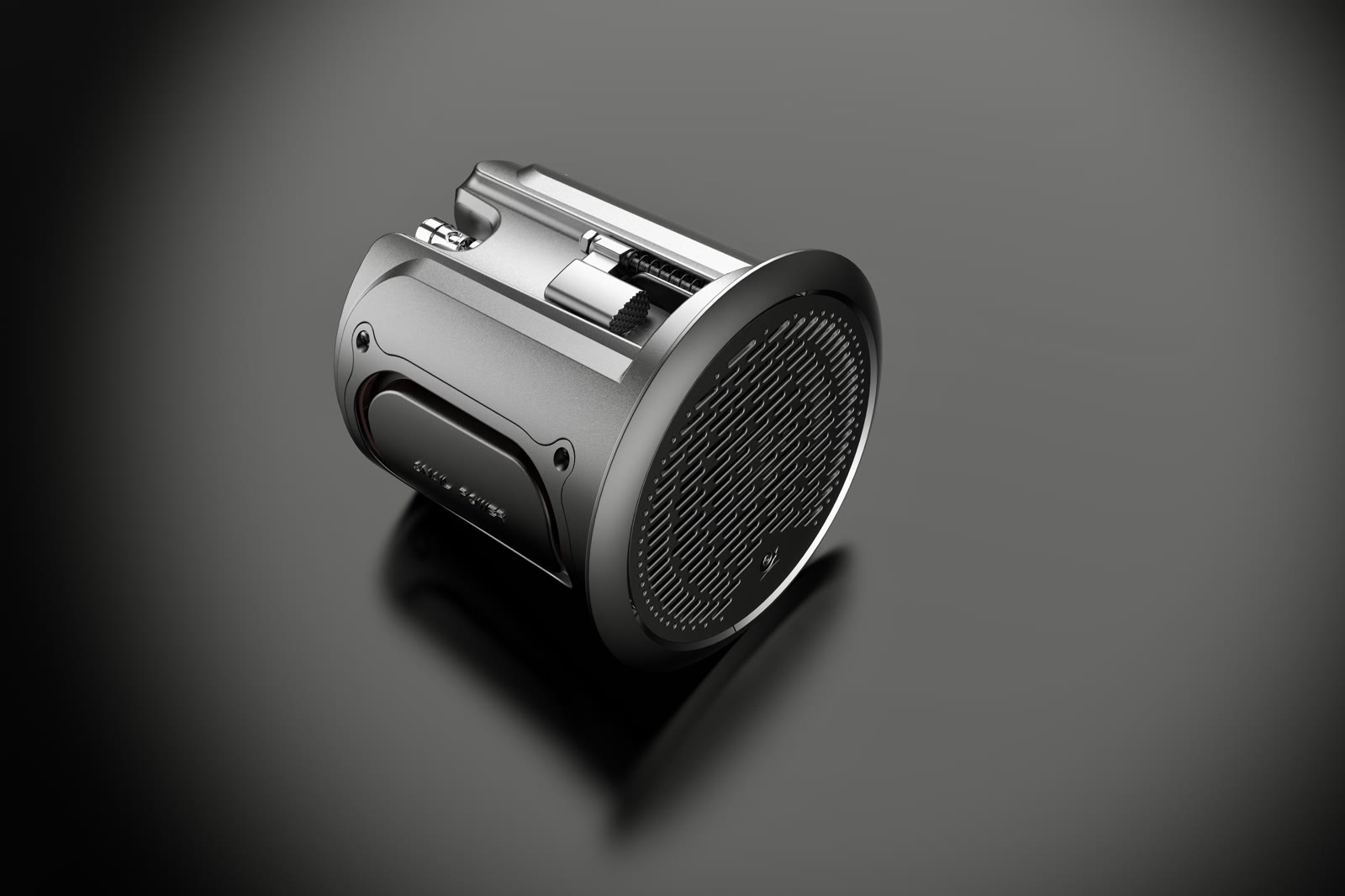
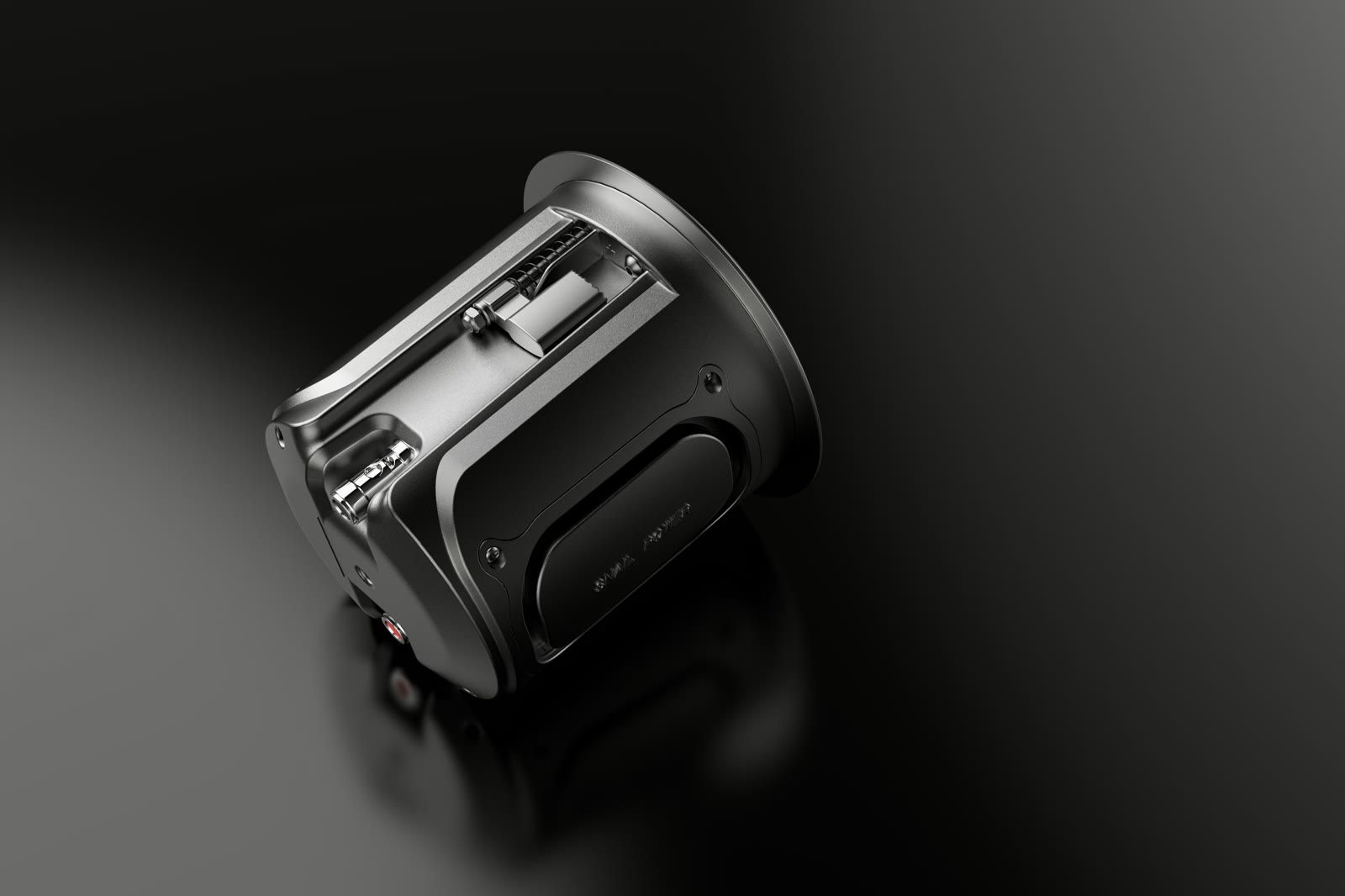
- The CW90 has a Ø90mm cut-out, a Ø105mm faceplate and 100mm height, a 2.75-inch full-range driver plus a passive radiator, 90W per unit and 111dB maximum SPL.
- CW90 package ¥17,200, U3 ¥19,600, Mini ¥21,000, IW3max ¥23,600 — the difference lands in the subwoofer and the preamp.
- Karaoke reaches the flat below more easily than film; with a weak slab, fix the slab before discussing speakers.
1. "Integrated" Refers to the Preamp, Not the Speakers
Film and karaoke travel two signal paths. Film leaves the player, is decoded into 5.1 channels, and the level was fixed at the recording stage; the amplifier only scales it up. Karaoke comes in from a microphone, which is an open input: bring a hand close and it howls, push the gain and it feeds back.
Whether one system can do both depends on the box in the middle: a dedicated microphone input channel, automatic feedback suppression, and a way to take a karaoke source. Here the song library runs through Yinchuang, film sources can be a 4K Blu-ray player, a NAS or Yingniuniu, and the control side offers Mijia / Xiao Ai scenes plus TCP/IP and serial interfaces.
Why a channel of its own? The five film channels are level-aligned on the mixing desk, so one master volume is enough. Two people sing in turn, one on the capsule and one two metres away, and the level reaching the preamp can differ by a dozen dB. So the microphone channel needs its own gain, adjustable on its own, not a knob shared with the film side.
The speakers barely take part; they reproduce what the preamp has processed.
The trade-off: plenty of packages just add a 6.35mm microphone socket to the amplifier — that is "takes a microphone", not an integrated cinema-and-karaoke system. Reverb comes from one knob, and feedback suppression means listening by ear and winding the volume back. Ask before buying: is the feedback suppression on the microphone channel automatic or manual? If the answer does not come, the karaoke half is half-finished.
2. Where Cinema and Karaoke Ask Different Things of One Cabinet
Film hands the low frequencies to the subwoofer; that is the division of labour. The CW90 is a 2.75-inch full-range unit and its lower limit does not go very low, so below 80Hz the W10 catches it. Running only above 80Hz keeps the excursion short and distortion low, and that is where the headroom for 111dB comes from. Ask the same driver to carry the low end too and it goes hollow even on dialogue.
Karaoke is another matter. A vocal fundamental sits between 100 and 400Hz, overtones run past 4kHz, and what arrives is not a three-second explosion but three minutes of unbroken energy. At 90W per unit the CW90 suits a living room of around 20 m²; from 35 m² up the karaoke side feels tight.
Choosing living room cinema speakers is the search for the intersection between "cinema wants the low end divided off" and "karaoke wants midrange density".
The trade-off: a small diameter has a physical boundary no argument gets around. Two hours of continuous singing tires any 2.75-inch driver more than two hours of film. For long sessions at high volume, move to the IW4pro line, ¥33,200 for the package.
3. Specifications and Prices: the Difference Lands in the Subwoofer and the Preamp
Start with the CW90's figures. It is the entry model of the line and the foundation of the system at the ¥17,000 level.
| Item | Figure |
|---|---|
| Cut-out diameter | Ø90mm |
| Faceplate diameter | Ø105mm |
| Cabinet height | 100mm |
| Driver complement | 2.75-inch full-range + passive radiator |
| Rated power | 90W per unit |
| Maximum SPL | 111dB |
| Wireless transmission | 5.8GHz dedicated channel |
| Certification status | Dolby Atmos and DTS:X certification in progress |
The certification row says "in progress". The approval letter has not arrived; ask customer service directly, not a retelling.
The tiers are below. All are delivered package prices, subwoofer, amplifier, preamp and accessories included — not a quotation for a single speaker.
| Product line | 5.1 cinema and karaoke configuration | Price |
|---|---|---|
| CW90 wireless cinema | CW90×5 + W10 subwoofer + MS-1 | ¥17,200 |
| U3 | U3×5 + B28 subwoofer + AV-700III + MU-1 + F60D×2 | ¥19,600 |
| Mini | 5×Mini + B28 subwoofer + AV-700III + MU-1 + F60D×2 | ¥21,000 |
| IW3max | 5×IW3max + B28 subwoofer + AV-700III + MU-1 | ¥23,600 |
| U4max | U4max×5 + C110 subwoofer + AV-700III + MU-1 + F60D×2 | ¥31,800 |
| IW4pro | 5×IW4pro + C110 subwoofer + AV-700III + MU-1 | ¥33,200 |
From ¥17,200 to ¥33,200 the difference is 16,000 yuan, and most of it is not in the cabinets. The CW90 package is the wireless route on a 5.8GHz dedicated channel, which removes the chasing of walls and pulling of cable; the IW4pro swaps the B28 for a C110 and the preamp for an AV-700III plus MU-1. One figure not to mix up: the CW90 is Ø90mm while the Mini's cut-out differs by model, and one millimetre means a different hole saw.
One claim online deserves clearing up: the "IW3max for just over nine thousand" is a single-unit price or an unofficial old price. The official 5.1 cinema-and-karaoke package is ¥23,600. The difference sits in the subwoofer and the amplifier, not the speakers.
The trade-off: every figure is a delivered package price, and nothing is sold in pieces. Build your own subwoofer and amplifier and the money saved is usually given back in low-frequency integration and calibration — crossover points, level calibration for each channel, two EQ presets; having someone do that properly is another bill.
4. Trade-off One: One Set of EQ for Two Uses Leaves One End Short
Cinema calibration wants a flat response, matched levels across channels, and the whole low end routed to the subwoofer. Karaoke is close to the opposite: lift the midrange, cut the low end, add reverb.
Store one set of parameters and both ends fall short. Tune flat for cinema and karaoke sounds thin and hard work. Lift the midrange for karaoke and film dialogue pushes forward and sibilance gets heavy. So two presets are stored in the preamp, switched with one key.
Buying an integrated system and running a single set of parameters is like buying a twin socket and plugging into one side.
The trade-off: two presets mean twice the calibration work, and switching still depends on a remote or a phone. With elderly people and children in the house, switching has to come down to one button, or karaoke gets used a few times a year. Settle it at the home cinema design stage; adding it after the ceiling is closed costs a ceiling.
5. Trade-off Two: Karaoke Reaches the Downstairs Neighbour More Easily Than Film
Film carries plenty of low-frequency energy, but it arrives in pulses — an explosion is over in three seconds. A karaoke vocal is continuous midrange, three minutes without a break, and the singer pushes the volume up without noticing.
A fair share of the energy from an in-ceiling speaker goes straight into the slab. For apartment clients the slab is often the first question. These concealed cinema speakers get into an apartment living room by using a variable waveguide to press energy towards the sofa area, plus full-range passive radiators, bass passive radiators and absorbers, so what crosses to the floor above is a dull thud rather than words anyone can follow.
But one thing should be said plainly: physics will not make the system inaudible downstairs. These measures reduce the problem; they are not a switch. If the neighbour is unusually sensitive, a floating floor first is more effective than more expensive speakers, and may cost less.
Slab transmission takes two routes: airborne sound through windows and doors, structure-borne through slab and walls. Closing the windows and heavier door curtains deal with the first for a few hundred yuan; a floating floor and a resilient ceiling deal with the second, and those are renovation money. To tell which one your home has, play something with plenty of low end and stand in the corridor.
The trade-off: with karaoke, the nuisance risk can only be pressed down so far by equipment. Late at night, at the volume that feels good, no system should be run — this one included.
6. Who Should Not Buy, and One Sentence to Decide By
Three kinds of buyers should hold off.
Those who sing twice a year. The premium sits in the microphone preamp, the feedback suppression and the song library connection. If you never intend to pick up a microphone, that share of the money buys nothing; the same budget on a cinema-only setup returns deeper extension.
A living room under 15 m² with the sofa against the wall. Five in-ceiling cabinets and one subwoofer do not fit that scale. The surrounds have nowhere to go, and no soundstage can be built. At that size a soundbar or a 2.1 system is the better answer.
A weak slab and a firm intention to sing at night. Fix the slab first, then the system. Elsewhere that line is advice; here it is because doing the work twice costs too much.
One sentence to decide by: the value of an integrated cinema-and-karaoke system is that it compresses two sets of equipment into one and two installations into one; the price is accepting one set of cabinets compromised between two uses.
Back to the opening definition: one set of speakers plus one preamp managing both jobs at once, from ¥17,000. It solves the space problem first; sound quality comes after that.
The trade-off: what it offers is a "good enough" answer. At this price a cinema-only system has a larger midrange driver in the centre and a deeper subwoofer, and a dedicated KTV system has a beefier microphone preamp. What you get in exchange is the wall, the sockets and one installation.
Related articles
- ST2 Multi-Zone System Launched: One House, Every Room Its Own Music (Video)
- CW90 Speaker Power: What 90W per Unit and 111dB Actually Mean
- What a Passive Radiator Is, and Why a 100mm Cabinet Needs One
END
#CinemaKaraokeCombo #CW90 #SnailPower #LivingRoomCinema #ConcealedSpeakers #HomeKaraoke #CeilingSpeakers
Written by Digital Xiaoniu, first published on the SNAIL POWER official site, Product News.