Home / News / Product News / CW90 Cabinet Materials: Why Chipboard Is Not Enough
CW90 Cabinet Materials: Why Chipboard Is Not Enough
2026-11-21 12:05 · Product News
The CW90 is SNAIL POWER's flush-mount full-range speaker: a Ø90mm cut-out, a Ø105mm faceplate, 100mm height, 90W per unit, 111dB maximum SPL, and price on request for the full 5.1 wireless cinema package, set into a living-room ceiling or side wall. Its cabinet cannot be made from chipboard. The reason is specific: a 100mm-thin cabinet, 90W of input power, a 2.75-inch full-range driver with a passive radiator — stack those and chipboard is stretched on density uniformity, screw-holding and stability under damp.
Key points
- Chipboard is an engineered board of wood fragments hot-pressed with glue. The cost advantage is real; the price is uneven density, weak screw-holding and swelling when damp.
- A flush cabinet is buried in the ceiling. When its panel vibrates it takes the plasterboard with it, and the structure magnifies whatever the material lacks.
- The CW90 cabinet is 100mm high and takes 90W per unit. Thin walls plus high power leave less margin than a floorstander has.
- Cabinet failure comes in three forms: cabinet colouration, screws working loose, seams opening. All three trace back to the board.
- If the ceiling is already boarded, if the budget is tighter than the entry tier, or if you need to move the speakers after the job, do not buy it.
1. What Chipboard Is, and Where the Cheapness Comes From
Chipboard is the trade name for a board made by breaking log offcuts and branches into flakes and hot-pressing them with adhesive. The advantages are concrete: cheap raw material, a flat face, stable supply. It suits furniture carcasses, partitions and substrate boards.
The problem is structural. Pressed fragments cannot give an even density — fine at the surface, coarse in the core — cut edges chip easily, and a screw holds only by biting into flakes. In a dry room none of that matters. A cabinet is not in a dry room: it sits in a ceiling or a wall and sees temperature and humidity swings all year.
The trade-off: chipboard's cost advantage is bought with dimensional stability and structural strength. For furniture substrate those two can be compromised; for a cabinet the panel then vibrates with the music, and two or three years later the seams start to make themselves heard.
2. A Flush Cabinet Is Harder Than a Floorstander, Because It Is Buried
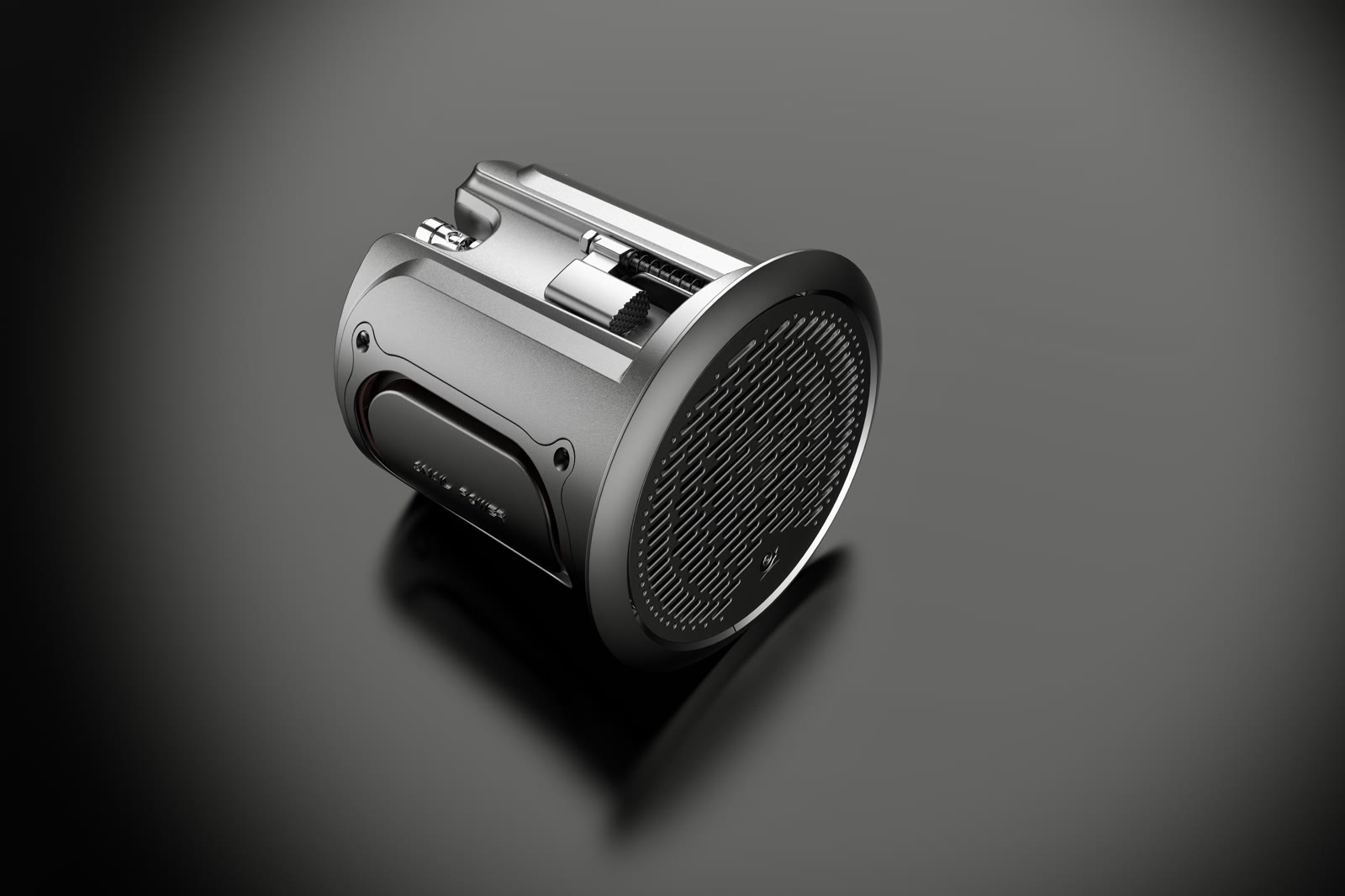
A floorstander is a separate object: its vibration has to travel out through spikes and air. A cabinet in the ceiling is embedded in plasterboard and joists, and when its panel vibrates, the plasterboard pressed against it vibrates too. Large area, low mass — a large extra diaphragm with no crossover in front of it.
That is the physical difficulty with concealed cinema speakers: the cabinet is moved out of the room as a layer, yet still has to push sound into it. The CW90 cabinet is 100mm high, Ø105mm faceplate, Ø90mm cut-out, and those dimensions leave no space for a thick multi-layer composite wall.
The Mini and IW series use a different cut-out per model, with different cabinet sizes and mounting methods, but the material logic is the same: thin walls, small volume, tight against the building structure — any weakness is amplified.
The trade-off: tolerance for error. Add too much bass from a floorstander and you turn the subwoofer down; get the placement wrong and you move the sofa. A cabinet in the ceiling that vibrates means taking the ceiling down. That is why the material decision is not one to gamble on.
3. Common Cabinet Boards, Parameters Side by Side
The table below gives typical ranges for boards common in the trade, not published figures for any one product. Density, screw-holding and dimensional change after damp map onto the cabinet's three failure modes: vibration, loose screws, open seams.
| Board | Typical density (kg/m³) | Internal damping | Screw-holding | Dimensional stability when damp | Suitability for a flush cabinet |
|---|---|---|---|---|---|
| Chipboard (pressed fragments) | 600–700 | Average | Average; strips out after repeated assembly | Poor; swells noticeably once it takes water | Not recommended |
| Medium-density fibreboard (MDF) | 700–800 | Good | Good | Average; cut edges need sealing against damp | Usable, with damp-proofing |
| High-density fibreboard (HDF) | 800–900 | Good | Good | Average to good | Usable |
| Plywood, multi-layer | 550–700 | Good | Good; takes embedded nuts well | Good | Usable, at a higher cost |
| Die-cast aluminium cabinet | approx. 2700 (aluminium) | Needs an internal damping coating | Good; takes machine threads | Good | Usable, expensive |
Set the CW90's hard figures beside them and it is clear why not one item can be skipped:
| Item | Figure |
|---|---|
| Cut-out | Ø90mm |
| Faceplate | Ø105mm |
| Cabinet height | 100mm |
| Driver | 2.75-inch full-range plus passive radiator |
| Rated power | 90W per unit |
| Maximum SPL | 111dB |
| Wireless transmission | 5.8G dedicated channel |
| Full 5.1 wireless cinema package | Price on request |
The trade-off: margin. Every line in that table is pushed small — 100mm high, Ø90mm cut-out, a 2.75-inch driver — while carrying 90W and 111dB. With those three stacked, the margin in the cabinet material is thin, and swapping in chipboard hands the money saved back as cabinet noise.
4. 90W Into 2.75 Inches: Power Can Be Controlled, the Cabinet Has to Hold First
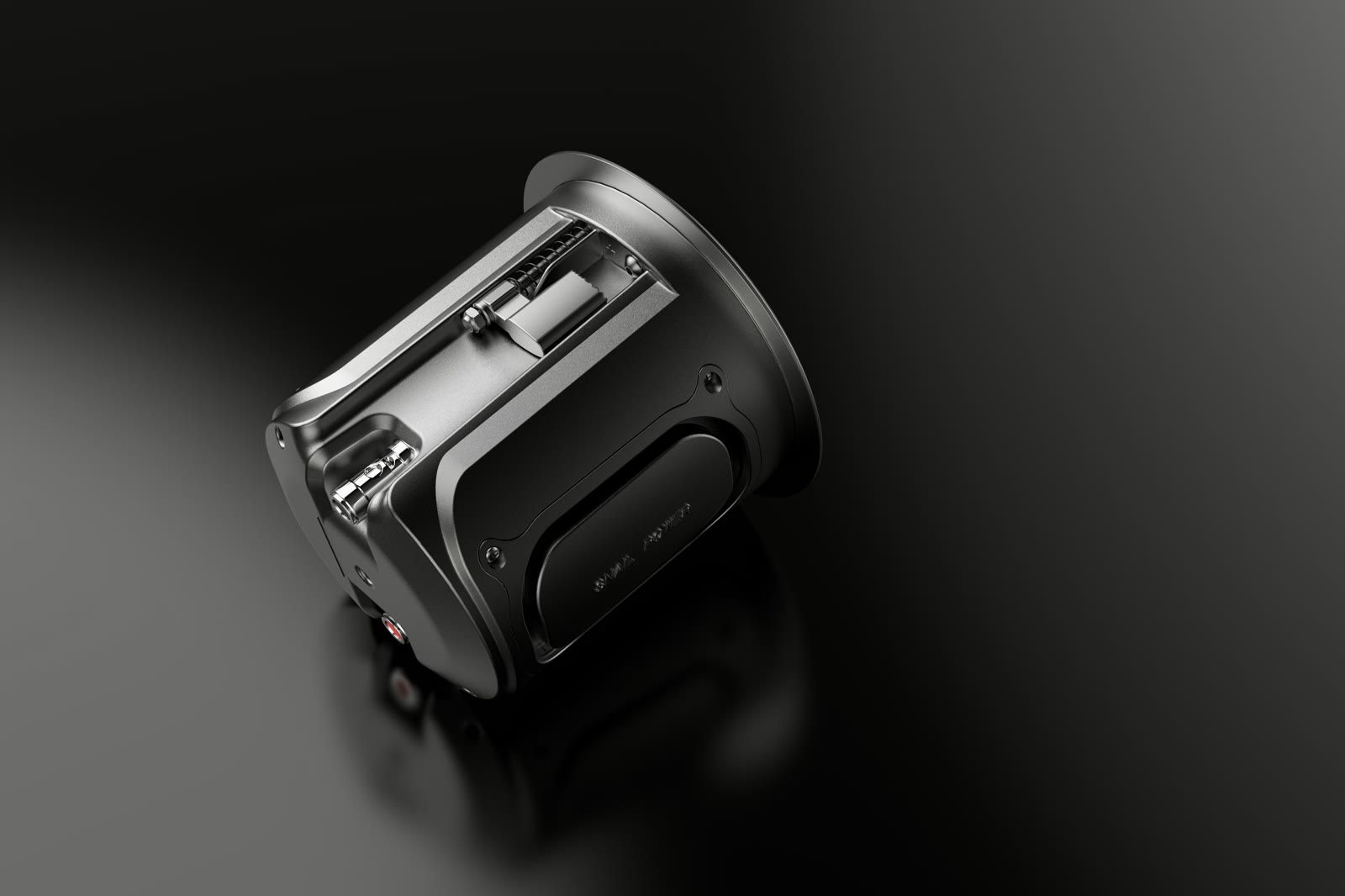
A 2.75-inch driver has to reach 111dB on power and excursion. Feed 90W in and, as the diaphragm pushes forward, it pushes back on the cabinet, and that force lands on the panels. Stiff and well damped, the energy is absorbed; not stiff enough, and the panel vibrates along in some band and tints the driver's sound with cabinet colouration.
A thin cabinet carries a second load. Small internal volume means low acoustic compliance, so the pressure inside swings harder than in a large cabinet, working on the walls again and again. It is choosier about its board than a conventional cabinet — there is no room for "close enough".
In home theater design, ceiling reinforcement and cabinet material sit on one schedule: fix the cabinet positions first, then the conversion layer or joist reinforcement, and close the boards last. Reverse that order and even good material cannot make it back.
The trade-off: weight and install conditions. Thicker board and a damping layer mean a heavier cabinet the plasterboard ceiling will not carry: it needs a built-in conversion layer or reinforced main joists, and in an older flat on a light-gauge steel ceiling, often a stand-alone frame first. That money is not on the speaker quotation, but it is in the budget. And 111dB is the maximum SPL, not a listening level — a small room never gets to that position.
5. The Trade-off and the Limits: Who Should Not Buy It
Start with the cases it does not suit, then ask whether it is worth it. The CW90 full 5.1 wireless cinema package is quoted on request: CW90×5 with the W10 subwoofer and the MS-1, the brand's entry point. What you buy is a concealed in-ceiling solution, not a speaker you can move whenever you like; concealed cinema speakers carry more preconditions than floorstanders.
- If the ceiling is already boarded and you will not accept an access hatch, do not buy it. The cabinet has to be sunk in and the cable run in the ceiling; adding either after the boards go up is a second round of construction.
- If the budget is tighter than the entry point, do not buy it. That figure is the price of the system delivered; ceiling reinforcement and installation are charged separately, and neither costs less than the speakers.
- If you want to hear the result before deciding, do not buy it. A flush speaker can only be heard once it is installed, and the sound in a demo room and the sound under your own ceiling were never the same thing.
- If the flat downstairs is particularly sensitive, put the money into a floating floor first. Physics will not make the room below completely inaudible: low frequencies travel through structure, and a soundproofed floor does far more than changing speakers.
- An open ceiling with no boards, an industrial-style living room, does not support this approach. With no cavity to sink into, the cabinet's advantage has nowhere to sit.
One point that gets missed: half of what a living-room cinema sounds like depends on the room, half on the installation. The same equipment in a reinforced ceiling and in hollow plasterboard gives two different results. That is not the equipment's fault; it is the order of work.
The trade-off: in one sentence, this system moves the choice forward. Before you buy, the ceiling, joists, cabinet positions and cable routes have to be fixed at once; afterwards there is essentially no room to adjust. Accept that and it fits; if you cannot, a soundbar or surface-mounted speakers are less trouble.
6. In One Sentence
Back to the opening: the CW90 is a flush-mount full-range speaker with a Ø90mm cut-out, a Ø105mm faceplate, 100mm height, 90W per unit and 111dB maximum SPL, and the full package price is quoted on request. Chipboard is out because its density uniformity, screw-holding and damp stability land exactly on the three failure points of a flush cabinet, and a 100mm-thin cabinet has no margin left to absorb them.
The judgement is short: if the renovation is still at the wiring stage, if the ceiling can be reinforced, and if the budget is above the entry tier, it belongs on the shortlist; if the ceiling is already boarded, if the budget is tighter than the entry point, or if the speakers have to be movable afterwards, it does not. That is also where the standard for living-room cinema speakers sits: after the work is finished, what you hear is the sound and what you cannot see is the cabinet. Dolby Atmos and DTS:X certification in progress.
The trade-off, one last time: there is only one chance to choose, and it falls during the renovation. In home theater design there are no surprises in material selection, only order: cabinet positions and structure first, then the board and the driver. Get the order right and the material is one line in a spec table; get it wrong and it is the first line of a rework order.
Related articles
- IW4pro Soundstage Demo: Hearing Directivity in 30 Seconds (Video)
- 111dB, 114dB, 116dB: Sizing a Living Room Cinema by Floor Area
- Sharing Speakers Between Cinema and Background Music: What It Costs
END
#CW90 #SnailPower #ConcealedSpeakers #CabinetMaterials #Chipboard #CeilingReinforcement #HomeCinemaKaraoke
Written by Digital Xiaoniu, first published on the SNAIL POWER official site, Product News.