Home / News / Product News / 111dB, 114dB, 116dB: Sizing a Living Room Cinema by Floor Area
111dB, 114dB, 116dB: Sizing a Living Room Cinema by Floor Area
2026-11-20 18:05 · Product News
Sound pressure in a home cinema is worked out from floor area: 20 m² needs 111dB, 35 m² 114dB, 50 m² 116dB, priced from the complete CW90 package to the complete IW4pro package.
Which tier you need follows from the sofa-to-ceiling distance first and the brand second. These are not the nominal figures on a product page. They come from the Dolby reference peak of 105dB, minus distance loss, plus about 3dB of room gain, worked back to 1m. Every step is below, so you can redo the sum with a tape measure.
Key points
- The reference ceiling is 105dB peak per channel, 115dB for low-frequency effects. Not "loud enough to my ear".
- Double the distance, lose 6dB: about 2.8m at 20 m², 3.8m at 35 m², 4.8m at 50 m².
- Worked back to 1m: 111dB, 114dB, 116dB.
- The CW90 is rated 111dB at 90W per unit: exactly the 20 m² tier, enough with no headroom.
- From 35 m² up, the Mini and IW series, whose cut-outs vary by model; at 50 m², the IW4pro.
1. Fix the Baseline First: 105dB Is a Peak, Not an Average
A cinema mixing stage sets every channel to 85dB average at the listening position and leaves 20dB of headroom, so the peak is 105dB. The low-frequency effects channel gets 10dB more, for 115dB. Home cinema takes that arrangement home, so whether a system is enough is a calculation, not an argument.
Watch the peak: explosions and impacts last a few hundred milliseconds, which is where you find out whether a driver holds together and whether an amplifier can push it. A receiver relaxed at 85dB can go soft at the instant it must deliver 105dB.
Read the conditions behind any nominal figure: 1m, one cabinet, short term. Change one and the number changes.
The nominal figure is the ceiling at 1m; the sound pressure at the seat is the room's answer, and between the two sits a distance.
The trade-off: a manufacturer writing 111dB is not lying. It describes 1m, not what you get on the sofa. The usual mistake is reading the 1m number as a 3m number, and you find out when big passages go thin and the ceiling is already closed.
2. Distance Takes Its Cut First: Double It, Lose 6dB
A point source in a free field loses 6dB per doubling: 1m to 2m is −6dB, to 4m −12dB, to 8m −18dB. A living room is not a free field, but across 3m to 5m the rule holds.
The other half is room gain: wall reflections fill part of the low end back in, usually around 3dB. It acts on low frequencies and barely reaches the mids and highs, so counting +3dB at the low end only is the conservative way to do the arithmetic.
Main-seat distance from typical plans: 2.6–3.0m at 20 m², 3.6–4.0m at 35 m², 4.5–5.0m at 50 m². The middle of each gives the table below.
| Floor area | Typical dimensions | Main-seat listening distance | Distance loss | 1m sound pressure required |
|---|---|---|---|---|
| 20 m² | 5.0 × 4.0m | about 2.8m | −9dB | ≈111dB |
| 35 m² | 6.5 × 5.4m | about 3.8m | −12dB | ≈114dB |
| 50 m² | 7.5 × 6.7m | about 4.8m | −14dB | ≈116dB |
The formula is one line: 1m sound pressure required = 105dB + distance loss − 3dB room gain. The 20 m² row is 105 + 9 − 3 = 111; the same sum gives 114 and 116.
The trade-off: it lies in the timing. Moving the sofa half a metre forward saves about 1.5dB, but in most flats that position is fixed by the circulation route, the TV wall and how the household lives; deciding it later moves sockets, rugs and lighting. The sum is worth doing before work starts, and designs that skip it get argued over twice.
3. 20 m²: 111dB on the Line, Enough and Nothing More
20 m² asks for 111dB and the CW90 is rated 111dB. Same number: enough, no headroom.
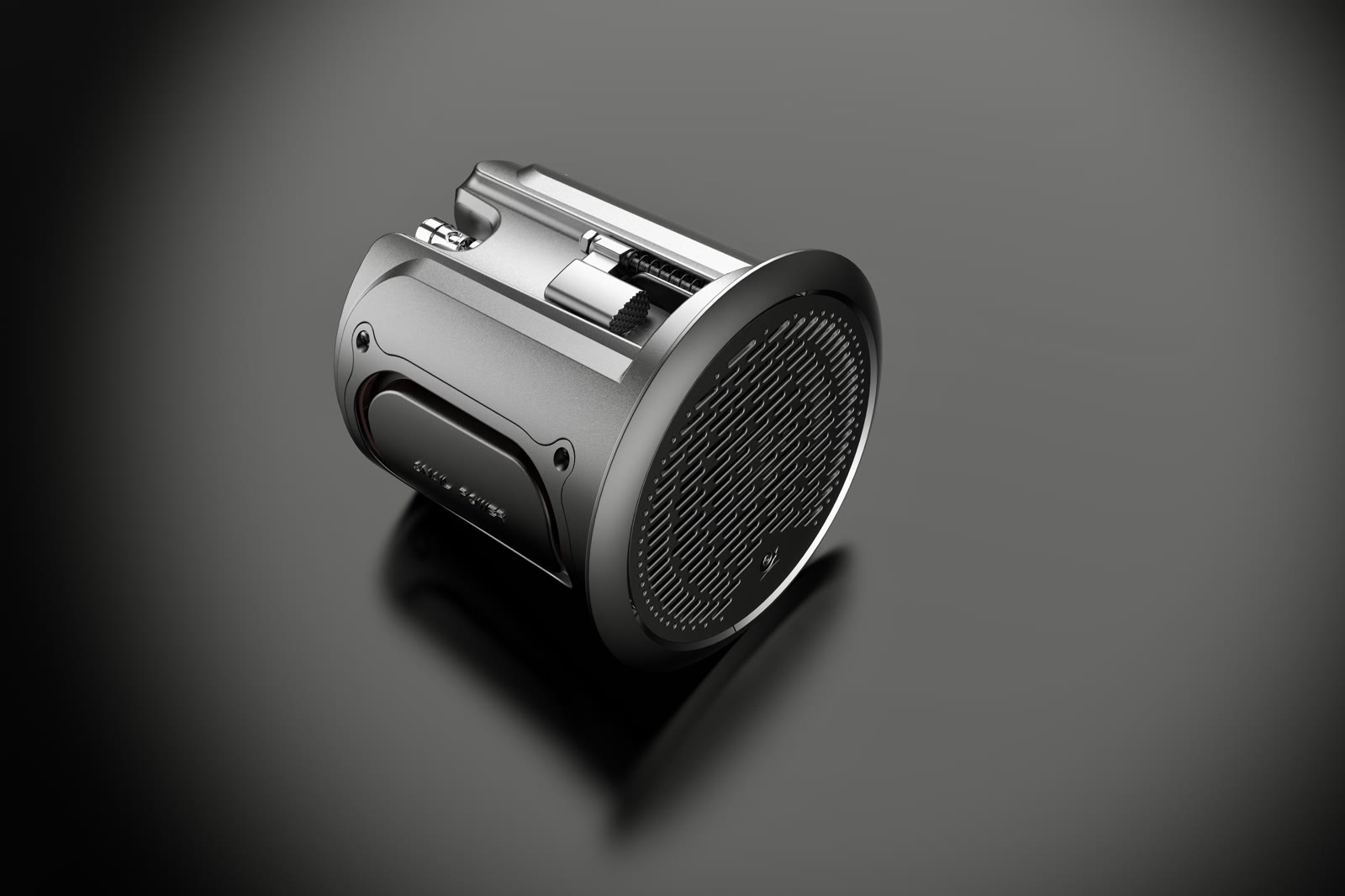
The SNAIL POWER CW90 figures: Ø90mm cut-out, Ø105mm faceplate, 100mm cabinet height, 90W per unit, 111dB nominal, signal on a dedicated 5.8G channel, a 2.75-inch full-range driver with one passive radiator. Complete 5.1 wireless cinema package, quoted on request.
That 100mm deserves its own paragraph. After main joists, cross joists, plasterboard and skim coat, the clear space left is often under 12cm. A Ø90mm cut-out behind a Ø105mm faceplate leaves a circle the size of a downlight.
Several channels at once add a few dB, so a reference-level system in 20 m² is not unlistenable; the headroom is thin, though, and long sessions at high volume are not where it is comfortable.
Who should not buy this tier: a 20 m² room wide and shallow with over 3.2m from sofa to TV, or a household running above reference level through two hours of action film. Pull the distance inside 3m, or look at the 35 m² tier.
The trade-off: two. The low end: a 2.75-inch driver does not reach very low, and below 80Hz the W10 subwoofer has to catch it. With crossover and level set wrong, the system sounds hollow at low volume and owners blame the cabinets when the subwoofer was never brought in. The wireless side: 5.8G solves the signal cable, not ceiling reinforcement, the access hatch or power; retrofitting an older flat saves the chasing of walls, not the installation.
4. 35 m²: From Enough to Tight, and the Cut-Out Has to Change
35 m² asks for 114dB, 3dB more than 111dB. In power terms 3dB is a doubling: 3dB more at the same distance needs twice the amplifier output. Being 3dB short is not a gap past the decimal point, it is the gap between one class of equipment and the next.
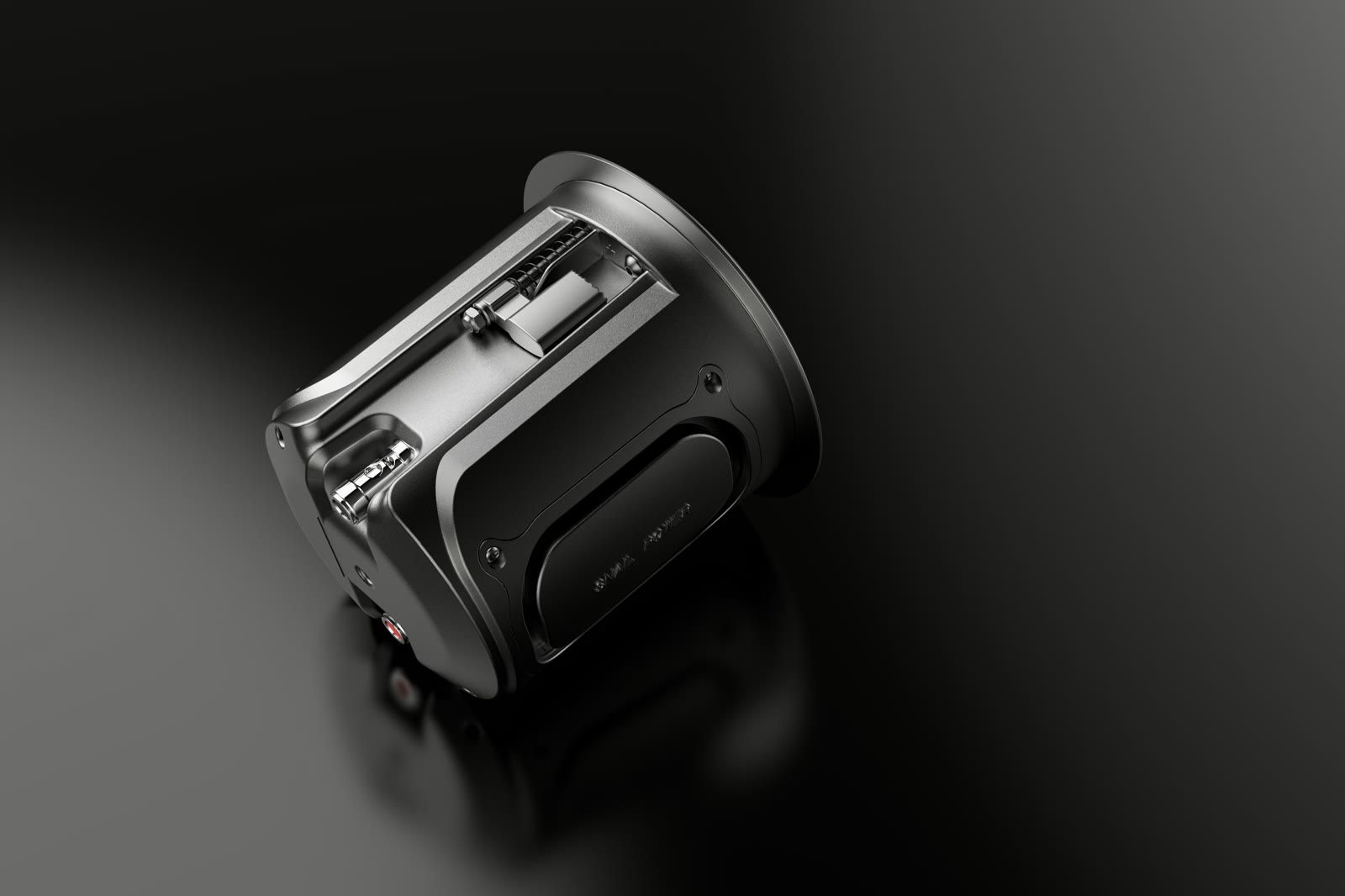
What changes here is the model. The Mini and IW series have cut-outs that vary by model; the CW90 is Ø90mm. A millimetre is invisible in a ceiling, but a cut-out is one of the few irreversible moves in a renovation: a Ø90mm hole will not take a cabinet with a different cut-out, and the reverse holds too. Cut the wrong hole and you are patching board, redoing the skim and repainting, at more cost than changing cabinets, with the schedule back at the start.
The complete IW3max 5.1 cinema-and-karaoke package is quoted on request: five IW3max, the B28 subwoofer, the AV-700III receiver, the MU-1. Where the difference goes: two systems both called 5.1 can sit a good distance apart, and most of that distance is the subwoofer and the receiver, not the five cabinets.
What this trade fears is not a specification shortfall, it is those 10cm in the ceiling. One size up and the cabinet usually needs a step more depth, and clear space and joist spacing change with it. Fix the model at the drawing stage, not after the ceiling closes.
The nominal sound pressure of these models is whatever the official pages state; this article does not quote figures for them. What can be confirmed: cut-outs that vary by model, a larger driver, and a package price quoted on request.
The trade-off: it changes shape here. At 20 m², a new model means new cabinets; from 35 m² up it means new holes and the schedule run again, so once decided, leave it.
5. 50 m²: Pick the Subwoofer First, the Speakers Second
50 m² asks for 116dB, the main seat around 4.8m out. At this level the problem is not the mids and highs, it is the low end.
Diameter decides how much air moves. The floor area is up 2.5 times, the air volume needed for the same pressure goes with it, and a subwoofer has few places to stand: a corner, the side of the TV cabinet, beside the sofa, all clear of the circulation route.
The complete IW4pro 5.1 cinema-and-karaoke package is quoted on request: five IW4pro, the C110 subwoofer, the AV-700III receiver, the MU-1. Fix the subwoofer first and the speakers second; reversed, no speaker choice gets the low end back.
One point on decoding: the system's decoding runs on Dolby Atmos and DTS:X certification in progress. The process is still running, the approval has not come through, and a specification sheet cannot be written as though it were done. Certification matters because Atmos height channels have their signals allocated by the decoder, and whether that logic is right is two sides of the same thing.
The trade-off: two layers. Reverb first: a 50 m² living room is rarely only a cinema: there is the TV wall, the sofa, the circulation route, the stair opening. Raise the pressure and the reverb rises with it, and the same equipment differs more between a hard-finished and a treated room than between two models. Standing waves second: low-frequency modes are set by the geometry, and the peak around 40Hz is not fixed by a cabinet, it takes placement and DSP. So the order here is absorption and low-frequency treatment first, upgrading second.
6. Three Tiers in One Table, and Who Should Not Buy Now
Put the results together; read the table off the page before quoting.
| Floor area | 1m sound pressure required | Matching configuration | Package price | The trade-off at this tier |
|---|---|---|---|---|
| 20 m² | ≈111dB | CW90 × 5 + W10 subwoofer + MS-1 | price on request | On the line, no headroom; the low end rests entirely on the subwoofer |
| 35 m² | ≈114dB | IW3max × 5 + B28 subwoofer + AV-700III + MU-1 | price on request | The cut-out size has to change; a wrong hole cannot be undone |
| 50 m² | ≈116dB | IW4pro × 5 + C110 subwoofer + AV-700III + MU-1 | price on request | Reverb and standing waves have to be dealt with separately |
The judgement is blunt: at 20 m² it sits on the line, at 35 m² it crosses one, at 50 m² it changes system. A self-check before quoting: measure the distance, then match the tier.
Who should not buy now, in four kinds.
The first is anyone whose sofa position is not settled; without the distance the sum cannot be done and any model is a guess. The second is anyone who only watches streaming below −20dB: the entry system runs more than half unused, and the money went into headroom that never gets spent.
The third has a sensitive neighbour downstairs; a floating floor first beats changing speakers, the honest answer even though it makes no cabinet look more worth buying. The fourth is 20 m² and wants 7.1.4: four height channels plus side surrounds fight for position there, and forcing them in makes every one a compromise.
The exit condition is one line: if the measured distance to the main seat comes out past 4m, skip the 20 m² tier, and do not economise on the quotation.
The trade-off: 111, 114 and 116 are not selling points, they are the quotient of one division sum: the reference peak divided by the distance, reduced by the low-frequency gain the room gives back. Do the division first and the order stops going wrong.
Related articles
- Sharing Speakers Between Cinema and Background Music: What It Costs
- ST2 Multi-Zone System Launched: One House, Every Room Its Own Music (Video)
- Cinema and Karaoke in One System: The Trade-offs
END
#SoundPressureLevel #LivingRoomCinema #HomeCinemaSpeakers #CW90 #IW4pro #ConcealedSpeakers #DolbyAtmos
Written by Digital Xiaoniu, first published on the SNAIL POWER official site, Product News.