Home / News / Experience Reports / Can Concealed Speakers Sing? IW4pro Put Through Karaoke (Video)
Can Concealed Speakers Sing? IW4pro Put Through Karaoke (Video)
2026-11-20 09:05 · Experience Reports
Yes, a concealed speaker can sing, and the headroom comes from how the system is divided up rather than from the cabinet getting bigger. The IW4pro is SNAIL POWER's flush-mounted concealed speaker: a 105mm cut-out, a cabinet buried inside the ceiling or wall, and a full 5.1 cinema-and-karaoke package at ¥33,200. It is built for the living room where the family watches films and also sings at home.
Key points
- The headroom comes from the system's division of labour, not from the cabinet growing larger.
- The IW4pro cut-out is 105mm. That is a small aperture, so the low end is handed to the C110 subwoofer.
- One set of cabinets, two uses, which saves the floor space a second karaoke rig would have taken.
- Concealed speakers need pre-installing, and the cost of changing your mind after the decoration is done has to be counted up front.
- Where the flat downstairs is unusually sensitive, a floating floor pays back more than a change of speakers.
1. Whether a Concealed Speaker Can Sing Comes Down to Three Things
Home karaoke asks something different of a voice than a film does. The vocal sits in the midrange, and the higher a singer goes the more density that band needs, with a little headroom left to push into. A flush-mounted cabinet's volume is not in your hands: it is decided by the cavity in the ceiling or the wall. Its depth, and whether the backing is concrete or plasterboard, decides how far down the low end reaches. The IW4pro belongs to this family, and its sound is made by the cabinet and the structure of the house together.
The limit there is structural. If the cavity is too shallow, or the wall is thin plasterboard, the midrange sounds tight when someone sings. The building hands you that, and tuning cannot fill it back in.
So the question cannot be answered by looking at the speaker alone. It depends on three things: whether the drivers have headroom, whether the amplifier can keep them under control, and whether anything is taking the low end. Where living-room cinema audio goes wrong is usually not in the cabinet, but in the position and the division of labour.
The trade-off: all three have to be right at once, and missing one is heard at the microphone. No driver headroom, no amplifier grip and no one taking the low end arrive as one complaint, and a pricier cabinet fixes none of them.
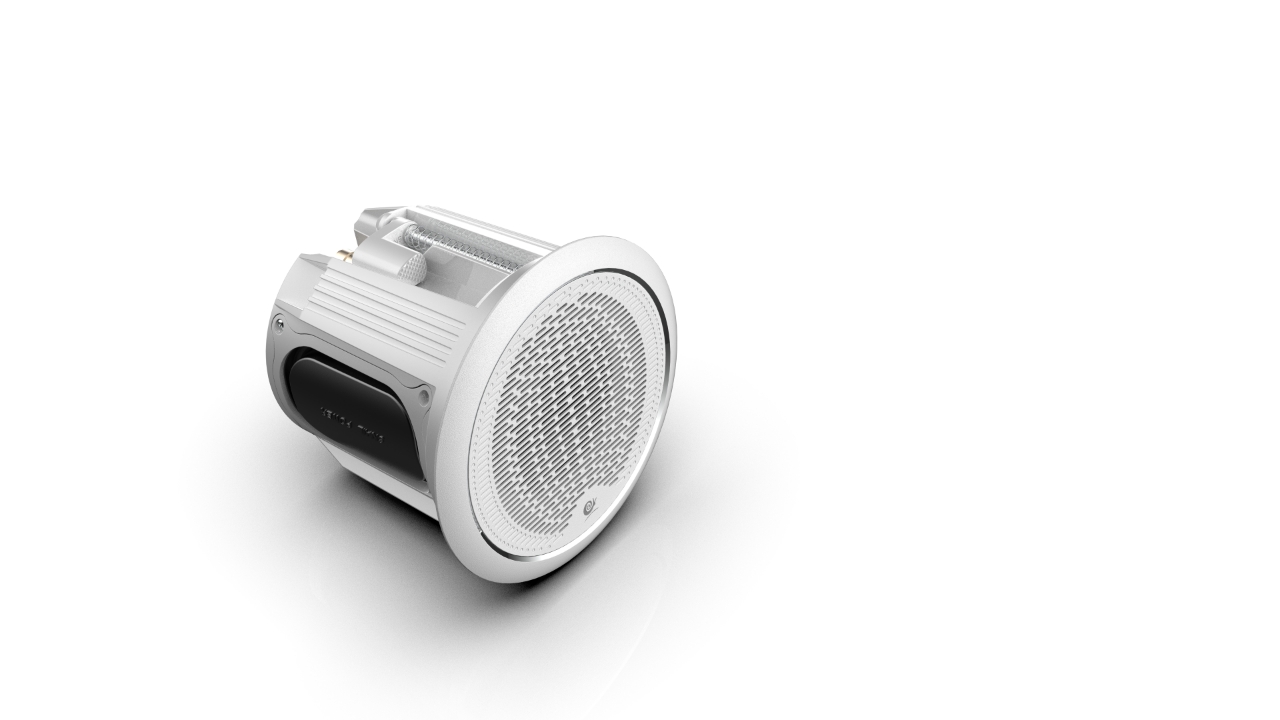
2. A 105mm Cut-out Buys the Right to Disappear
105mm is the IW4pro cut-out size. Among in-wall products that aperture is on the small side, and the advantage is that it disappears: the damage to the ceiling or wall is small, the joists barely have to move, and the faceplate left on the finished surface is close to the circle a downlight leaves. An ordinary living-room ceiling already carries light positions, an access panel and air-conditioning vents; a smaller hole makes those easier to work around.
The cost lands on the low end. A 105mm hole will not take a large driver, so the energy density through the mid-bass is limited. In this system the low end is largely taken over by the C110 subwoofer. That is a division of labour, not a rescue.
The division of labour is plainer still when someone sings. A vocal fundamental falls between tens and hundreds of Hz, and part of a male voice's lower register sits exactly on the handover between subwoofer and full-range cabinets. Handle that badly and singing sounds muffled, or hollow. That is the physical limit of a concealed cinema speaker: it can hide in the ceiling, but it cannot hide the question of cabinet volume.
While we are on it, get this column right. Mix up the aperture and the hole saw is bought wrong:
| Model | Cut-out | Other figures to check |
|---|---|---|
| CW90 | Ø90mm | Faceplate Ø105mm, height 100mm, 90W per unit, maximum SPL 110dB |
| IW3max | 105mm diameter | IW-series aperture, flush-mounted |
| IW3mini | 105mm diameter | IW-series aperture, flush-mounted |
| IW4pro | 105mm diameter | IW-series aperture, paired with the C110 subwoofer |
| Mini | 105mm diameter | Same aperture class, concealed in the ceiling |
The trade-off: the 105mm hole is what lets the system disappear, and it is also what caps the low end. What goes into a hole that size is a small driver, and five small cabinets will not produce the bottom on their own, which is why the C110 is in the package. This tier buys the flat ceiling, not floorstander bass.
3. The Karaoke Half Comes From the System, Not the Cabinet
One system with two uses is the core of the cinema-and-karaoke route. For a film, five IW4pro cabinets plus the C110 carry the soundstage and the low end; for karaoke the same cabinets switch to karaoke mode, with the reverb, the delay and the vocal lift handled at the MU-1. The living room ends up one device lighter, and one set of cabinets and a bundle of cable lighter. The video shows a finished living room, and that is what to look at in a job like this: whether you can point at a speaker at a glance.
On the amplifier side, Dolby Atmos and DTS:X certification in progress. Certification follows the batch approval letter: we say which step it has reached and no more, and do not announce it ahead of the letter.
| Product line | 5.1 package contents | Official price |
|---|---|---|
| CW90 wireless cinema | 5.1 wireless cinema and karaoke: CW90×5 + W10 subwoofer + MS-1, on a dedicated 5.8G channel | ¥17,200 |
| Mini | 5.1 cinema and karaoke: 5×Mini + B28 subwoofer + AV-700III + MU-1 + F60D×2 | ¥21,000 |
| IW3max | 5.1 cinema and karaoke: 5×IW3max + B28 subwoofer + AV-700III + MU-1 | ¥23,600 |
| IW4pro | 5.1 cinema and karaoke: 5×IW4pro + C110 subwoofer + AV-700III + MU-1 | ¥33,200 |
Read it like this: from ¥17,200 to ¥33,200, the extra money goes mainly into driver size, the class of subwoofer and being built into the ceiling, not into whether it can sing. Every tier can sing.
The trade-off: one set of cabinets doing two jobs asks both to give a little. The headroom karaoke wants and the dynamics a film wants are not the same tuning, and both have to stay listenable in one room, so calibration takes time. Microphone feedback depends on how close the mic sits to a cabinet and how it is aimed, and it will not vanish because the speakers were changed.
4. Before Installation, the Wiring Question Cannot Be Avoided
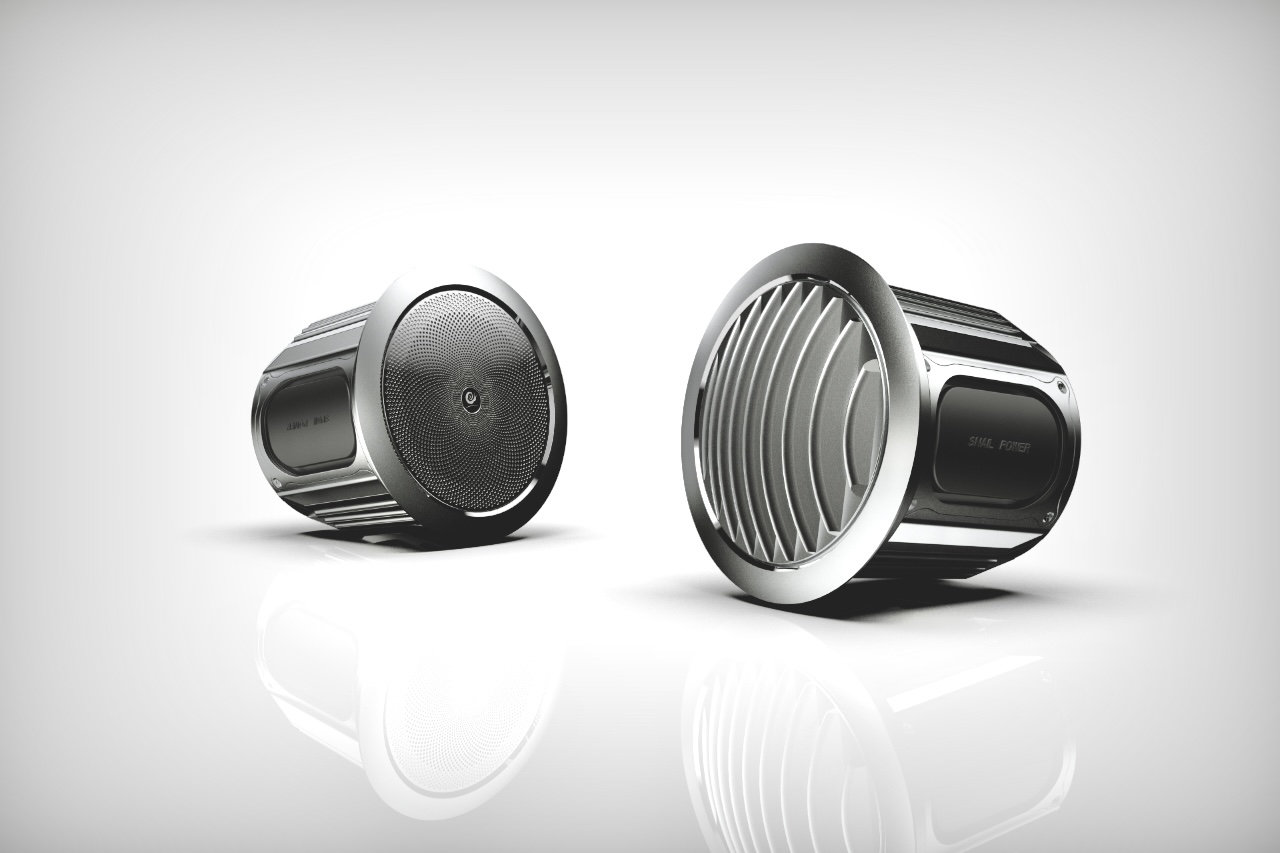
The IW4pro is flush-mounted, so before it goes into a ceiling or wall the cable has to be buried and the cavity left ready. At shell stage, or while the ceiling is going up, that costs less. In a house already lived in, with the ceiling closed, it means taking a section down and making it good again, with schedule and bill recalculated.
The CW90 line is prepared for a different schedule. It runs on a dedicated 5.8GHz channel with no cabling at all, so it can go into a living room already decorated: a Ø90mm cut-out, a Ø105mm faceplate, 100mm height, 90W per unit, maximum SPL 110dB, a 2.75-inch full-range driver with a passive radiator, the whole package at ¥17,200, entry from ¥17,000. Wired sets the performance ceiling; wireless sets the installation window. Each line handles one thing.
The trade-off: wireless solves "no cabling". It does not solve the cavity, the placement or the room itself. If the home theater wiring has been done but not done properly, speaker cable sharing a conduit with the mains, whatever is swapped in later will feel wrong, and that rework bill has nothing to do with the speakers.
5. Keeping the Sound in the Room: What It Can and Cannot Do
A flush-mounted speaker has one advantage built in: the emitting surface sits level with the ceiling and wall, with no cabinet standing proud. Directivity is set by the waveguide structure on the faceplate, so the service area can be kept over the sofa, and a cabinet flat to ceiling and wall is less likely to be blocked by furniture or knocked by someone walking past. What reaches the flat downstairs comes mainly from low frequency and structure-borne sound, and has little to do with which way the cabinet points.
One honest point here: in a building where the flat downstairs is unusually sensitive, a floating floor does more than a change of speakers. No set of speakers solves transmission through a slab: that is not what the product can do, it is how the building is put together.
The trade-off sits in installation precision. Put a cut-out a few centimetres off and the aim goes with it; be careless with the cavity and the midrange picks up colouration. The IW4pro is sold as a complete delivery, and if the installation stage goes wrong, every figure on the sheet before it is wasted.
6. Who Should Not Buy It, and Who Should
Three kinds of buyer should not buy it. Anyone who only sings and never watches films: the value of a cinema-and-karaoke system is that one set of cabinets is shared, so using half of it means paying for the other half as well. Anyone whose house is already decorated and will not accept a hole in the ceiling and a patch of fresh paint: look at the CW90 line. Anyone treating karaoke as a small live show: the headroom here was specified for a family living room, not for a stage.
What it suits is this: a ceiling going in now or about to be, a household that watches films and sings, and acceptance of the premise that the speakers are not to be seen. The living-room cinema budget is really about giving the equipment's position back to daily life, so the space in front of the TV wall stays clean and nothing stands behind the sofa.
One more cost to put on the table. Part of what ¥33,200 buys is that flat ceiling after a 105mm cut-out. If you do not care about that, the same money spent on surface-mounted cabinets buys more choice in the sound.
In one sentence: whether the IW4pro's karaoke is worth listening to depends on three things being done right (the cavity, the handover to the subwoofer and the calibration) and not on whether the speaker is invisible. Confirm the stage the renovation has reached first, then confirm where the subwoofer can go, and only then talk about sound.
The trade-off: what you are buying is a ceiling with no boxes in it, and that only runs one way. Once the holes are cut there is no undoing them, and going back to surface-mounted cabinets means making good a whole ceiling. If the ceiling is already closed and you will not open it again, this tier is not for you.
Related articles
- IW3max in a Real Cinema: What the Mid-Range Invisible Line Can Do (Video)
- CW90 Karaoke Test: Does a Fully Wireless System Hold Up? (Video)
- Villa Double-Height Case: A Cinema with the Stone Wall Untouched
END
#IW4pro #SnailPower #ConcealedSpeakers #HomeKaraoke #LivingRoomCinema #CinemaKaraokeSystem #HomeTheaterWiring
Written by Digital Xiaoniu, first published on the SNAIL POWER official site, Experience Reports.