Home / News / Product News / Soundbar or Concealed Cinema? Ask the House Before the Speakers
Soundbar or Concealed Cinema? Ask the House Before the Speakers
2026-11-23 18:05 · Product News
Concealed cinema speakers are the practice of hiding loudspeakers in the ceiling and the walls: a Ø90mm cut-out per unit, a Ø105mm faceplate, and an entry package price quoted on request for a full 5.1 wireless cinema package (the CW90 set) — for houses where the living room has to look right and the sound is not allowed to be a compromise. This article answers the opposite question: in which situations should you actually buy a soundbar?
Key points
- A soundbar's strength is that it does not touch the house. The trade-off is that the rear channels are simulated by reflection.
- A concealed system's strength is that the real sources sit at the designed positions. The trade-off is that you have to get there before the ceiling is boarded.
- The CW90 has a Ø90mm cut-out, a Ø105mm faceplate, a 100mm cabinet height, 90W per unit and a 111dB maximum SPL.
- The 5.1 wireless package runs on a 5.8G dedicated channel, so the rear surrounds need no speaker cable.
- The order of judgement is house first, speakers second: ceiling height, sofa position and whether there is a ceiling at all decide which one you should buy.
1. What a Soundbar Is Good At: It Does Not Touch Your House
A soundbar is one bar of a machine lying under the television: plug it in, connect an HDMI cable and it plays. Its demands on the house are close to nil — no cut-outs, no power socket behind the sofa, it works in a rental and it moves with you. For someone who has just bought a TV and has no plan to touch the wall, that is a reasonable answer.
The judgement is direct: if you watch a handful of films a year and the living room is mostly variety shows and football, the soundbar money is better spent than the same money on a concealed system.
The trade-off: it squeezes five channels into one enclosure, and the rear and height channels are simulated by reflection and algorithm — the "sound behind you" is bent out of your own ears. The more asymmetrical the room and the closer the sofa sits to the wall, the more easily that simulation fails. The reason is not the product; it is the form. What it sells is not touching the house.
2. The Physics of Virtual Surround: Most Living Rooms Fail It
Virtual surround depends on two conditions: up-firing drivers hit the ceiling and fold back to the ears, and side drivers hit the side walls and fold back the same way. So the ceiling has to be flat, the ceiling height has to be enough, both side walls have to be roughly symmetrical, and the sofa must not be pressed against the rear wall.
The real conditions for living room cinema audio are these: in most living rooms the wall is immediately behind the sofa, one side is a balcony and the other is a corridor. One reflective surface is present and the other is missing, so the image leans, and the virtual rear surrounds fall towards the side that has a wall.
On a sofa against the wall with solid wall on one side only, using a soundbar as widened stereo is a good experience. Used as 5.1, it will disappoint.
The trade-off: these shortcomings cannot be tuned out, only positioned around. A soundbar can adjust level, delay and one round of room correction; it cannot adjust the geometry of the room. Which means you cannot know before you buy how well it will do in your house — you can only try it.
3. Concealed Speakers Swap In Real Sources; the Cost Is a Time Window
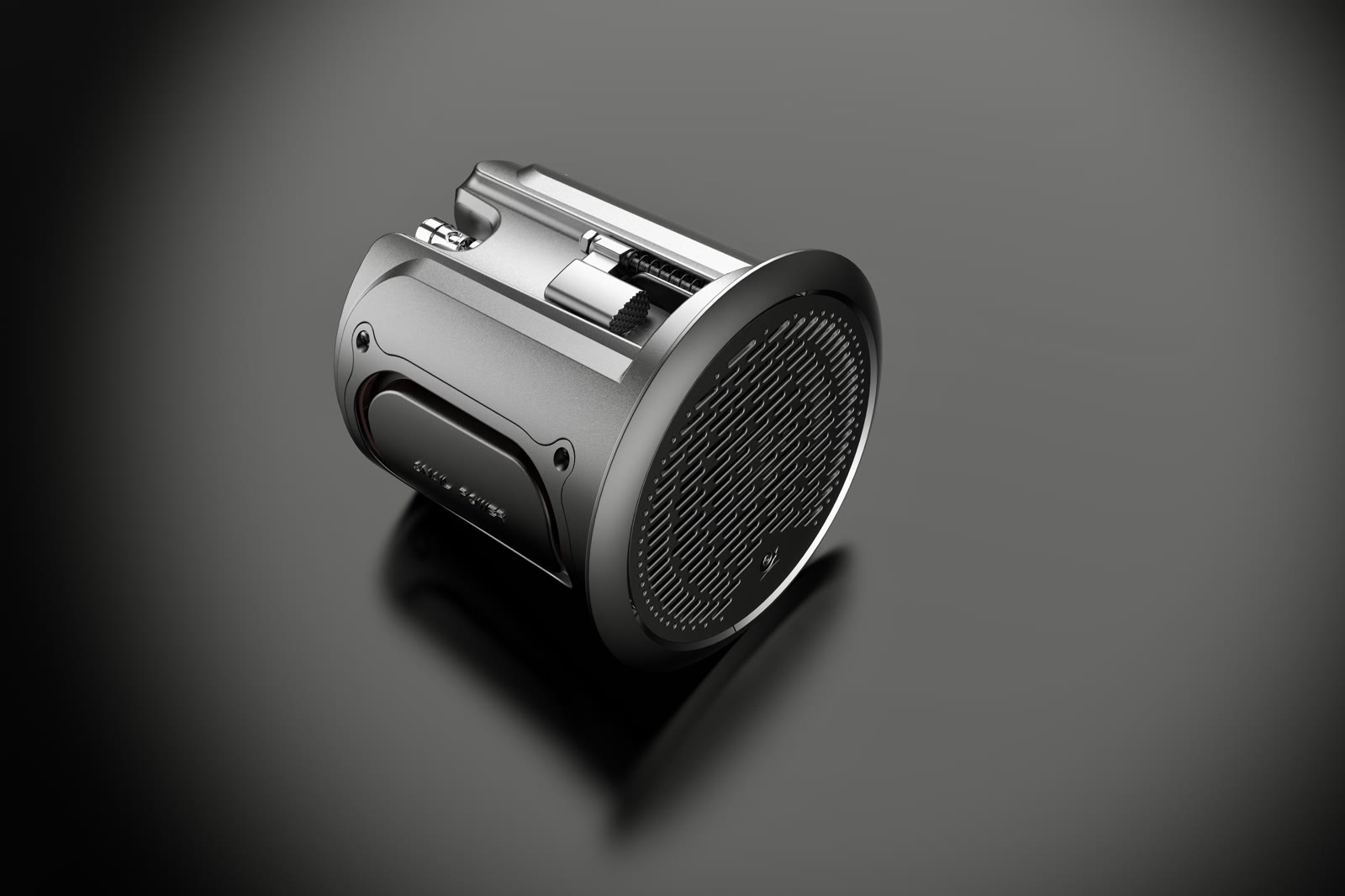
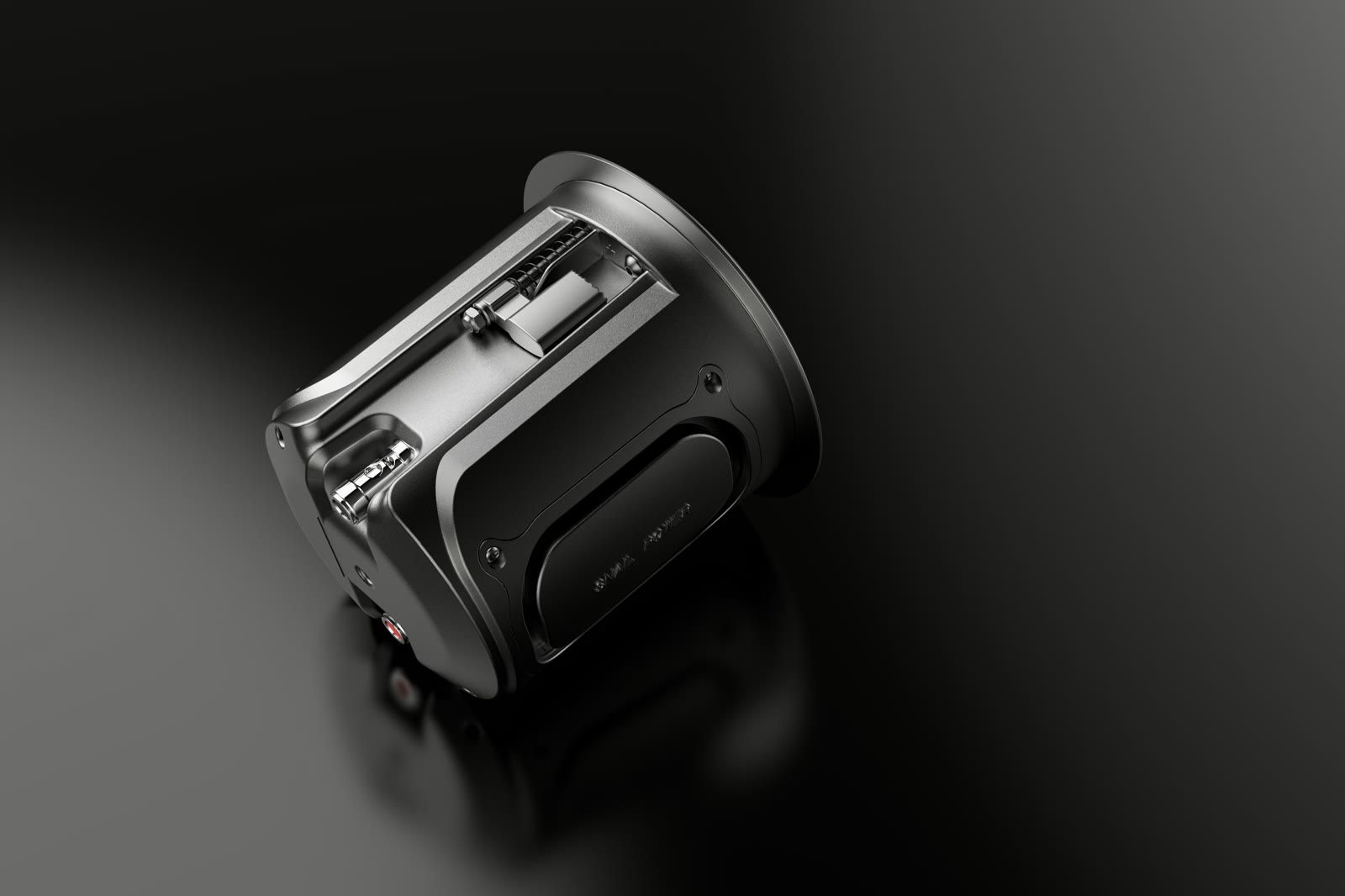
A concealed system takes the other road: five cabinets fixed at the designed positions, each one a real source. SNAIL POWER was founded in Milan in 1995 and has followed the route of hiding loudspeakers inside the architecture. The CW90 is a 2.75-inch full-range in-ceiling unit with one passive radiator, a Ø90mm cut-out, a Ø105mm faceplate and a 100mm cabinet height; a 100mm ceiling void is all it needs.
What it does is not make the cabinet smaller; it moves the cabinet out of the room layer. The faceplate sits flush with the ceiling surface, so looking up you see one Ø105mm circle, the same visual weight as a downlight, and it does not compete for attention overhead. On connection, the CW90 runs on a 5.8G dedicated channel, so the rear surrounds need no chasing and no cabling behind the sofa. For the person who remembers the cinema halfway through a renovation, this one line can save the project — plumbing and electrics done, walls skimmed, and as long as the ceiling has not been boarded there is still time.
In home theater design the speaker positions have to be settled before the lighting positions. That step takes less time than choosing a brand and influences far more: the lights take the ceiling, so the cabinets can only give way.
The trade-off: the time window is narrow. Coming back after the ceiling is boarded, the emulsion is on and the furniture is in means taking a finished surface apart. Price is a hard threshold too: the package starts several times above a soundbar, and it does not include a projector or a screen. Dolby Atmos and DTS:X certification in progress.
4. Putting the Comparable Numbers in One Table
A soundbar has no cut-out dimension to quote, because it cuts nothing; all that can be compared is the number of enclosures, the placement and one calibration. A concealed system has to quote cut-out, faceplate, cabinet height, power per unit and package price — these have units and they have numbers.
| Item | CW90 | Note |
|---|---|---|
| Cut-out diameter | Ø90mm | One hole per unit in the ceiling |
| Faceplate diameter | Ø105mm | Flush with the ceiling surface |
| Cabinet height | 100mm | The figure the ceiling void is planned around |
| Driver | 2.75-inch full-range + passive radiator | Low end goes to the subwoofer |
| Rated power | 90W per unit | Power handling of each unit |
| Maximum SPL | 111dB | A ceiling figure, not the level you sit at |
| Wireless | 5.8G dedicated channel | No speaker cable to the rear surrounds |
| Package price | Price on request | 5.1 wireless cinema and karaoke: CW90×5 + W10 subwoofer + MS-1 |
The wording has to be kept straight: the CW90 cut-out is Ø90mm, while within the same brand the Mini and the IW series each have a cut-out of their own, different by model. One millimetre is still two sets of tooling; quote the wrong model and it will not fit.
| Product line | Configuration | Package price |
|---|---|---|
| CW90 | 5.1 wireless cinema and karaoke | Price on request |
| U3 | 5.1 cinema and karaoke | Price on request |
| Mini | 5.1 cinema and karaoke | Price on request |
| IW3max | 5.1 cinema and karaoke | Price on request |
| U4max | 5.1 cinema and karaoke | Price on request |
| IW6 WIDE | 7.1 concealed | Price on request |
| X Series 5.1.2 | 10–25 m², C110 subwoofer | Price on request |
The range runs from the BMmini background-music speaker at the bottom up to the top X Series configuration, and what climbs is low frequency and channel count.
The trade-off: 111dB is the maximum SPL of this 2.75-inch driver, not the level you listen at on the sofa for a long evening; 90W per unit is the rated power of each cabinet, and the amplifier has to drive five of them plus a subwoofer at the same time. A 2.75-inch full-range cannot reach very low, so the bottom end must go to the subwoofer — in this configuration the W10 is not an optional part but a required one. Leave it out and the cabinets work hard and the sound goes tight.
5. Who Should Not Buy: Six Cases Where a Soundbar Fits Better
Putting the unsuitable cases first is more useful than listing the advantages.
- Renting, or moving within two years. Cutting is destructive; five Ø90mm holes in the ceiling cannot be made good when you hand the keys back.
- Already living in it, ceiling and walls finished. Retro-fitting means taking finished surfaces apart, and one soundstage is not worth disturbing a home once.
- Under 2 metres from sofa to television, with the sofa tight against the rear wall. Five cabinets cannot be spread out; the money is spent and no difference is heard.
- A budget under the bottom of the range. The threshold for concealed cinema audio starts at the entry tier; that budget only reaches an all-in-one.
- Neighbours above and below are very sensitive, and the building is old. There is no physical way to make the flat below hear nothing. If they are sensitive, a floating floor does more than changing speakers — low frequency is structure-borne, and a different cabinet will not hold down the energy in that 40Hz band.
- Mostly variety shows and gaming, with no need for rear imaging. Then do not spend the extra on invisible.
The trade-off: if these six people force the concealed route anyway, what they get is a system that sounds no different and has still disturbed the house. That kind of regret costs far more than buying the cheaper option.
6. In One Sentence: Ask About the House Before the Speaker
A soundbar sells not touching the house; a concealed system sells five cabinets you cannot see. Neither of these is an audio question — both are a house question. How living room cinema audio gets specified comes down to four conditions only: how high the ceiling is, where the sofa is, whether there are solid walls left and right, and whether the ceiling can still be closed.
What really has to be settled early in home theater design is the conflict between speaker positions and lighting positions, the clear height of the ceiling void, and where the rear surrounds take power. Fix those three during the renovation and the later choices hold.
The verdict: if you are renovating, if there is a ceiling, if the budget starts at the entry tier, and if you are willing to let someone do the position drawings first, take the concealed route — the CW90 is the entry to that line. If you already live there, if the place is rented, if the budget is limited, if the sofa is against the wall, buy the soundbar and do not fight it. The test is not which one sounds better; it is which option still holds in your house.
The exit condition: if the sofa position is not settled yet, settle the sofa first and talk about speakers afterwards. Get that step wrong and no brand of cabinet will make it back.
The trade-off: whichever you choose, an ordinary living room is not a listening room. Ceiling height, sofa position and the neighbour next door will not change because of the system you bought.
Related articles
- U3 vs U4max: What the 19,600 and 31,800 Actually Buy
- IW3mini vs IW4pro: Half an Inch, 50Hz and the Price List
- Choosing a Living Room Cinema by Area: 20 m², 35 m² and 50 m²
END
#ConcealedCinema #SoundbarOrConcealed #LivingRoomCinema #HomeTheaterRenovation #Wireless51Cinema #ConcealedSpeakers
Written by Digital Xiaoniu, first published on the SNAIL POWER official site, Product News.