Home / News / Product News / U3 vs U4max: What the 19,600 and 31,800 Actually Buy
U3 vs U4max: What the 19,600 and 31,800 Actually Buy
2026-11-23 12:09 · Product News
U3 and U4max are the two wall-mounted speakers in the SNAIL POWER U series, and the full 5.1 cinema-and-karaoke packages are quoted on request. Neither needs a cut-out and both hang straight on the wall, and both are aimed mainly at living rooms of 20–40 m². This class of living room cinema speaker never touches the ceiling, so all of the work lands on the walls: the two packages share one AV-700III receiver, one MU-1 8K player and the same F60D wireless microphones — what differs is the five satellites and the one subwoofer.
Key points
- U3: two 2.75-inch full-range drivers, 65Hz–20kHz, 104dB maximum SPL, 4Ω, with the B28 subwoofer, price on request for the package.
- U4max: a 4.5-inch coaxial full-range driver plus a 1-inch tweeter, 50Hz–20kHz, 110dB maximum SPL, 6Ω, with the C110 subwoofer, price on request for the package.
- The receiver, the player and the microphones are the same in both; the whole price gap sits in the satellites and the subwoofer.
- Wall mounting skips the ceiling cut-out and the work that has to be done before the boards go up, and the price is that the cabinets stay visible.
- Both are wired systems. A living room that will not take cable has to move to the 5.8G CW90, price on request for the package.
1. Wall Mounting Solves One Thing First: The Structure Stays Untouched
Concealed cinema speakers go the ceiling cut-out route. The CW90 has a Ø90mm cut-out, a Ø105mm faceplate and a 100mm cabinet height; a 5.1 set buries five CW90s in the ceiling, leaves only five round grilles showing, and puts the subwoofer on the floor. The precondition for that route is that the ceiling is still on the drawings: the holes have to be cut before the boards go up, and the cable has to be pulled before the boards go up.
The U series takes the other route. The cabinets hang on the wall or in a corner, no ceiling holes at all, only mounting holes drilled into the wall, with the rear surrounds on the wall behind the sofa. A finished apartment whose ceiling went in years ago, an older flat being reworked, an owner who does not want a crew in the house for another month — this is the class of room that can actually choose these cabinets.
The trade-off: the cabinets are visible. The U3 is 270×112×78mm and the U4max is 290×135×97mm, and once they are up, they are up. If what you want is that nobody can tell there is a cinema in the room, neither of these delivers it; that answer goes back to a cut-out ceiling. There is a second limit that bites harder: the wall behind the sofa is usually already spoken for by curtain boxes, cabinets and air-conditioning return vents, and when the surround positions cannot be settled the only fallback is to angle them back off the side walls — at which point the image sits off-centre.
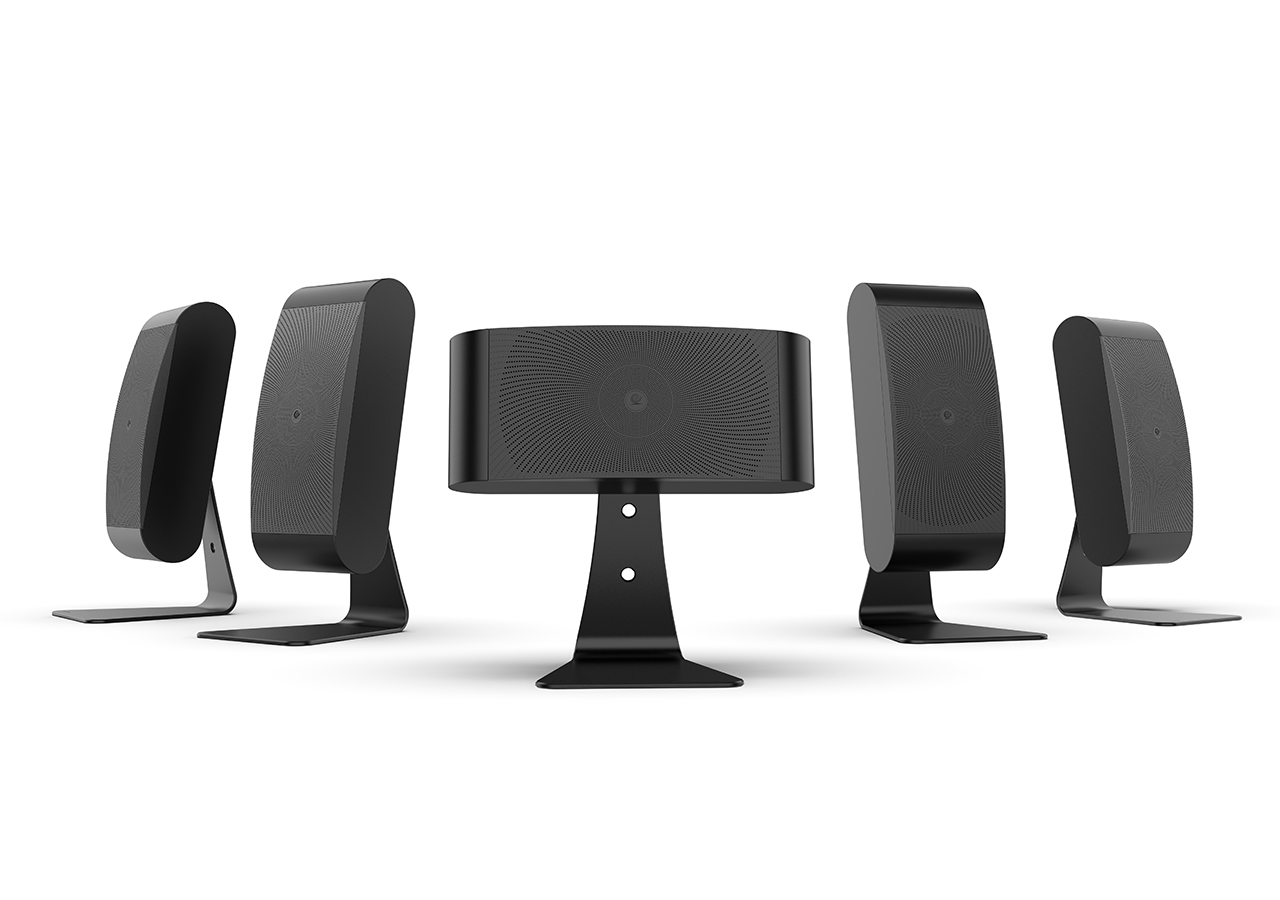
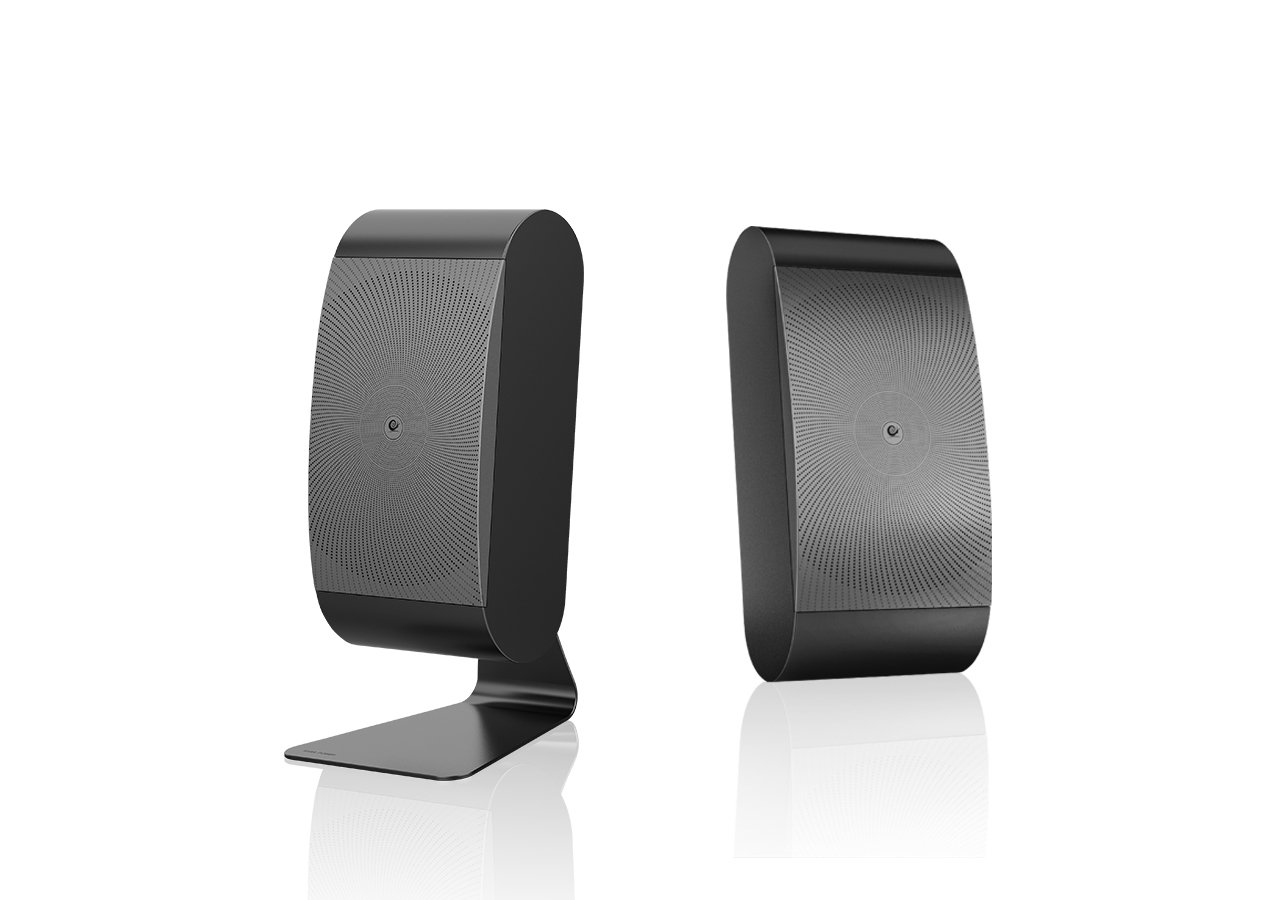
2. U3: Two 2.75-Inch Full-Range Drivers, for the 3m Seating Distance
The U3 is two 2.75-inch full-range drivers with no crossover, 65Hz–20kHz, 40–160W, 88dB sensitivity, 104dB maximum SPL, 4Ω, 1.5kg per unit and 78mm deep. The advantage of full-range is a clean handover: there is no crossover point cutting a seam between dialogue, voice and the mid-bass, and at a close wall-mounted listening distance the centre channel's lines come out straight.
In home theater design the U3 usually lands in a living room of around 20 m² with a seating distance of 3m or less. Short distance means less attenuation with range, and 104dB of headroom is enough at that distance.
The trade-off: 104dB is a ceiling, not a normal operating point. Take the room past 30 m² and the seating distance out to 4m and a loud passage hits that number first; add karaoke and push the microphones up and the margin gets tighter still. The 65Hz lower limit is what it is, and the bottom is handed entirely to the subwoofer: the B28 starts at 30Hz, so the two divide the job rather than overlap. A 4Ω load draws more current for the same sound pressure, so do not pair it with an integrated amplifier that is too thin.
3. U4max: A 4.5-Inch Coaxial, and Where the Extra 6dB Goes
The U4max is the third generation of the U4 series, and the driver complement becomes one 4.5-inch coaxial full-range unit plus one 1-inch tweeter: 50Hz–20kHz, 80–300W, 90dB sensitivity, 110dB maximum SPL, 6Ω, 2.6kg per unit, 97mm deep. Coaxial means the tweeter and the mid-bass share one axis, so around the crossover the two drivers do not pull apart directionally — and a wall-mounted cabinet sits close to the listener, where sitting off-centre shows that up far more than a floorstander does.
104dB to 110dB is 6dB of headroom, and 65Hz to 50Hz is the bottom reaching a step lower. What those two buy is not more volume: at the same sound pressure both the receiver and the driver are working more easily, so the top of a vocal does not go tight.
The trade-off: 97mm deep and 2.6kg each. Hang five of them and a lightweight steel-stud partition needs blocking added or the studs located first; expanding bolts straight into a hollow wall will not hold. The cabinet is a size larger, so it claims a size more wall, and a living room with a feature TV wall has to reserve that space in advance. The package price is quoted on request, and the cabinets are still visible: the money does not buy invisibility.
4. The Price Difference, Taken Apart
Put the two package lists side by side and the difference is very concentrated. The receiver is the AV-700III in both, the player is the MU-1 in both, the microphones are two F60D in both: those three items are identical. What changes is the satellites and the subwoofer — the B28 becomes the C110, so one 8-inch driver plus one 8-inch passive radiator becomes a single 10-inch bass-reflex cabinet; the lower limit moves from 30Hz to 25Hz and maximum SPL from 110dB to 114dB.
| Item | U3 / package price on request | U4max / package price on request |
|---|---|---|
| Satellite drivers | 2×2.75-inch full-range | 4.5-inch coaxial full-range + 1-inch tweeter |
| Frequency response | 65Hz–20kHz | 50Hz–20kHz |
| Power | 40–160W | 80–300W |
| Sensitivity | 88dB | 90dB |
| Maximum SPL | 104dB | 110dB |
| Impedance | 4Ω | 6Ω |
| Dimensions / net weight, per unit | 270×112×78mm / 1.5kg | 290×135×97mm / 2.6kg |
| Matching subwoofer | B28: 8-inch + 8-inch passive radiator, from 30Hz, 110dB | C110: 10-inch bass reflex, from 25Hz, 114dB |
| Matched trio | AV-700III + MU-1 + F60D×2 | AV-700III + MU-1 + F60D×2 |
How to read the table: first decide which column your room asks for. At around 20 m² with a 3m seating distance, the 104dB and 65Hz in the U3 column are enough; at 30 m² and up, or with karaoke taking half of the evenings, the U4max column is the one that means something. Divide the price gap across five cabinets and it comes to a per-cabinet figure, but that is only a division: the subwoofer changed tier as well, and on the purchase order it is two lines, cabinets and subwoofer.
The trade-off: the receiver is the same unit on this line, so paying more to get a better receiver does not exist between the U3 and the U4max — the extra money buys drivers, cabinets and a subwoofer, nothing else. There is a boundary in the other direction too: both are delivered as complete packages, so a U3 with a C110, or a U4max with a B28, has to be confirmed separately with the dealer; neither combination is on the factory list. One point of wording as well: Dolby Atmos and DTS:X certification in progress for SNAIL POWER, and until the formal approval arrives, format support is whatever the receiver and the player each state on their own labels.
5. Both Need Cable: That Is Where Wall Mount Stops and Wireless Starts
The U3 and the U4max are both passive cabinets driven by the AV-700III, and neither package contains a wireless transmitter, so speaker cable runs from the receiver out to all five cabinets and the subwoofer takes a signal cable of its own. In a living room that is already decorated, that cable either goes into surface trunking along the skirting and the door frames, or the walls are chased and made good again — a line item routinely left out of the budget. The subwoofer is active, its signal cable is separate, and its position still needs a power socket left available.
For anyone who does not want to run cable, the answer is on another product line: the CW90 5.1 wireless cinema runs a 5.8G dedicated channel, so the five in-ceiling units and the W10 subwoofer do not depend on pre-buried cable, price on request for the package, the entry point of the range. Its precondition is a ceiling that will take a Ø90mm hole, with a 100mm cabinet height and that much depth left free inside the void.
The trade-off: what 5.8G saves is cable and time on site, not sound pressure and not low end; the cut-outs, the boards and the repainting still have to be scheduled into the renovation, and any dropped or surface-mounted treatment on the ceiling hands the invisible result straight back. The wall-mount route pays for wiring and wall work instead, and that bill is no smaller than a set of holes. Among living room cinema speakers, what stops most people is one condition — the renovation is already finished — and not the budget.
6. The Judgement in One Sentence
The choice falls on the room and the use, not on which one is the newer generation. Around 20 m², seating distance within 3m, films most of the time: the U3 at its quoted price is the right pick at that distance. At 30 m² and up, with karaoke taking half the evenings and a need for the 50Hz and 110dB margin: move up to the U4max, quoted on request. The receiver, the player and the microphones are identical across the two, so the price gap buys cabinets and a subwoofer.
Who should not buy: anyone who wants nobody to see a cinema in the room — neither of these is right, so look at the in-ceiling IW series or the CW90 instead. Anyone renting, where the landlord will not allow holes in the wall, should also skip the wall-mount route. In an older building with a neighbour below who is sensitive to low frequency, put in a floating floor first; changing speakers will not fix sound travelling through the slab. A budget that stops below the mid tier, films only and no karaoke: the CW90 package at the entry price is the closer fit, provided the ceiling can take the cut-out.
If you remember one line: measure the walls first, then the seating distance, and only after that look at model numbers. If the wall will not hold the cabinet and the distance is not there, none of the numbers on the spec sheet will land in the room.
The trade-off: a wall-mounted decision can still be revised after the hard fit-out is finished — the cabinets can be moved, swapped and added to, and that is its structural advantage over a cut-out ceiling. The price is that it is always visible, and the cable is always on the wall.
Related articles
- IW3mini vs IW4pro: Half an Inch, 50Hz and the Price List
- Choosing a Living Room Cinema by Area: 20 m², 35 m² and 50 m²
- CW90 vs Mini vs IW3max: Which Concealed Cinema Line to Choose
END
#U3 #U4max #WallMountedSpeakers #LivingRoomCinema #HomeCinemaKaraoke #SnailPower #PackageComparison
Written by Digital Xiaoniu, first published on the SNAIL POWER official site, Product News.