Home / News / Experience Reports / IW4 + S10D, Live and Loud: One System, Two Uses (Video)
IW4 + S10D, Live and Loud: One System, Two Uses (Video)
2026-11-22 09:05 · Experience Reports
The IW4 + S10D is a flush-mounted cinema-and-karaoke system: the IW series cut-out differs by model, one S10D subwoofer goes with the set, and a single 5.1 array covers both film and singing. The line starts at the entry tier, and the CW90 5.1 wireless cinema-and-karaoke package is quoted on request for the whole set. It suits a living room already lived in, one that will not get a second KTV set. The video is a finished living room and the clip is somebody singing; it answers one question: when one system does the work of two, which few things have to hold true.
Key points
- Cinema needs dynamics and a soundstage; singing needs midrange weight and resistance to feedback. Serving both means taking the intersection.
- The IW series cut-out differs by model, and once it is in the ceiling only one round face is left. Being invisible is paid for in construction work.
- The S10D catches the low end, so the mid-bass driver need not strain, and that is what gives a voice a floor to stand on.
- Whether wired in-ceiling is workable is decided by the renovation stage, not the budget.
- Two uses save one KTV set. The cost is a shared amplifier and shared settings, switched by presets.
1. One System, Two Uses: The Three Things Being Shared
Cinema asks for dynamic range and soundstage localisation: the low end has to reach down, the surrounds to join up, the dialogue to stay anchored. Singing asks for the stretch between 200Hz and 4,000Hz: the voice needs weight, the microphone has to be pushed without drifting, and standing close to a cabinet must not set off feedback. Both live on the midrange, yet use it in opposite directions — one replays a recorded signal, the other amplifies a live one.
So whether the term cinema-and-karaoke system holds up is decided by what is shared, not by the name. One system doing two jobs shares three things: drivers and cabinets, amplification and processing, and the room. The drivers set the ceiling on vocal density, the amplifier sets microphone headroom, and the room decides whether a high note returns smeared into everything else. Two of the three are equipment; the third is the building, and it cannot be replaced.
The trade-off: intersecting two sets of requirements leaves a margin that has to be given up. A curve tuned for film carries more low end and a flatter midrange, and on a vocal it feels as if the voice is not far enough forward; a curve tuned for singing pushes the midrange out, and on film it sounds loud. Both uses work — which is not the same as both reaching their own standard.
2. Cut-Outs Differ by Model: Does Singing Get Harder or Easier
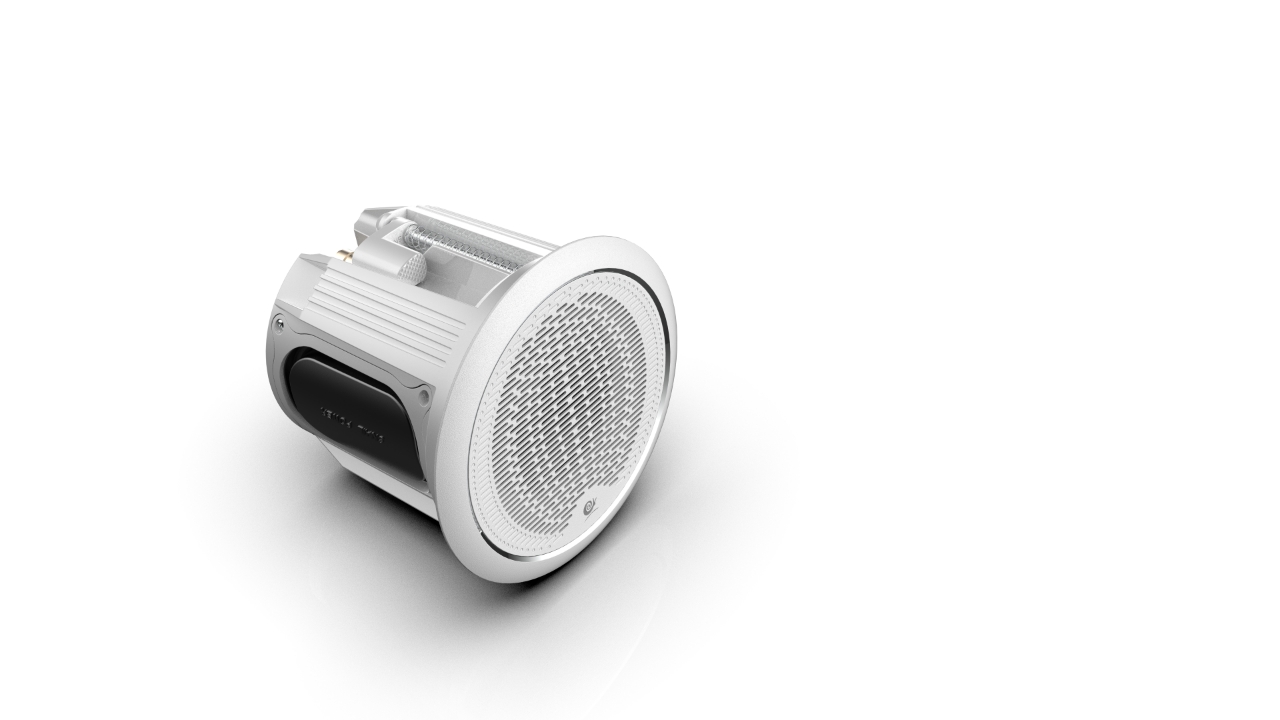
The IW series cut-out differs by model. That number decides what the ceiling shows: one circle the same diameter as a downlight, on the same plane as the paint. Living room cinema speakers have been moving into the ceiling for years, and the reason is not sound quality but the occasion — when friends come over you need not introduce the equipment first, and nobody has to move the sofa for two floorstanders. What the concealed category sells is exactly that: a room that needs no explaining.
A small cut-out also means a small cabinet. Volume, driver size and the low-frequency limit are tied together, and a small box stays a small box, which is why the package needs a subwoofer.
The trade-off: there are two, both about position. Cutting is irreversible — move a hole and the filler, the paint and the ceiling edge all get redone, which makes the layout drawing before the cut worth more than the calibration after. And an in-ceiling speaker is aimed through its waveguide, so the sound is laid over the sofa area; a singer who walks about leaves it and hears the balance change. That is not a defect, it is the premise of anything mounted overhead.
3. The S10D Catches the Low End: Why a Small Driver Dares to Be Played Loud
A cabinet with a small cut-out has the diaphragm area it has: this box cannot reach real low frequencies by itself, which is why the package needs a subwoofer, and the S10D is the part doing that job.
The benefit of splitting off the low end is not in the low end, it is in the midrange. Below the crossover everything goes to the subwoofer, the mid-bass driver no longer strains downward, and it only has to keep the midrange clean, so vocal weight, sibilance and breath stay where they belong. On a vocal this shows more plainly than on a film: the low end in a film is an effect, the low end in a song is the kick drum and the bass line, and once that foundation goes soft the voice floats and never settles.
Take the CW90 from the same family as a reference and the point can be measured: 90W per unit, 111dB SPL, reached inside a complete system with a subwoofer catching the low end.
Subwoofer placement deserves more of your time than model choice. A living room offers two or three spots; in a corner it booms, dead centre it sounds hollow, and the only way is to try on site. Where the downstairs neighbours are sensitive, a floating floor or isolation pads does more than a more expensive set of speakers, and that holds for every brand.
The trade-off: at high volume, what a small cabinet runs into first is compression rather than distortion — on the ear, the high notes suddenly lose their push. Peak management is less about how large the driver can be than about whether the amplifier can hold it.
4. The Cost of Wired In-Ceiling Lands on Renovation Timing
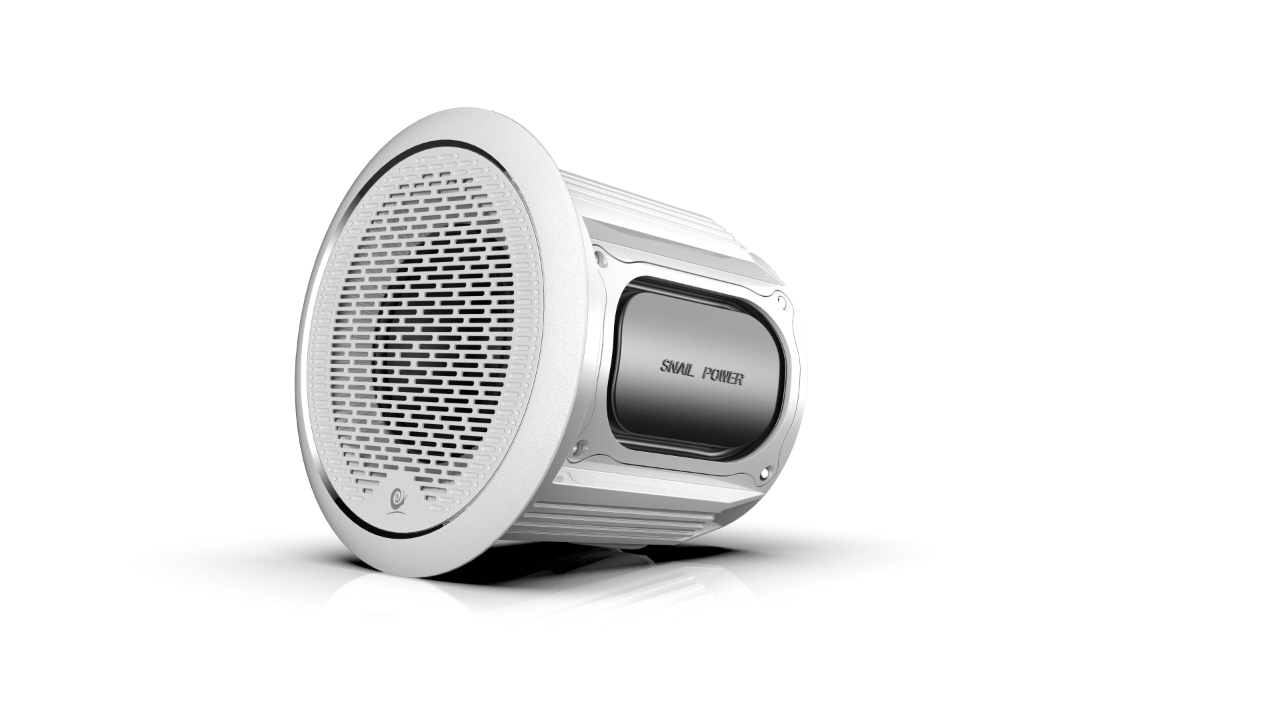
This set is a wired in-ceiling installation, and the official IW series 5.1 cinema-and-karaoke packages pair it with the AV-700III. The advantage of wire needs no rhetoric: the signal never crosses a wireless link, so latency and stability are both controllable. Singing cares most — if the microphone arrives tens of milliseconds late, the singer instinctively pulls the volume back.
The cost is one sentence: wired has to be decided at the plumbing and carpentry stage. What is expensive in home theater wiring is not the cable, it is the timing. Once the ceiling is closed and painted, the cable cannot get in, and the only option left is demolition. A living room already occupied has two routes: a partial tear-out, or a change of technical route — the CW90 runs a 5.8G dedicated channel, needs no wiring, and the whole package is quoted on request, with the line starting at the entry tier. Wired for a build, wireless for a finished room: that order is set by which stage your home is at, not the budget.
If the house is still at the plumbing stage, wired is the easier route and there is no reason not to take it. On the wireless route every cabinet still needs a position and a power point, so the nuisance moves from signal cable to mains and placement. The dedicated channel means something concrete too: as routers, gateways and cameras pile up, a channel outside the home network is more reliable than competing for bandwidth. One line of wording must be exact: Dolby Atmos and DTS:X certification in progress for this system, checkable on the official site's honors page.
The trade-off: the wireless route asks for no wall to be broken, but it does not remove the work, it relocates it — every cabinet still needs a position and a power point before the ceiling goes up.
5. Specifications and Prices: The Numbers You Can Check Against
Two tables: one for the specification wording, one for the prices of the packages on sale. The figures come from SNAIL POWER official material and can be checked.
| Item | Figure | Note |
|---|---|---|
| IW series cut-out | Varies by model | Same order as a downlight |
| CW90 cut-out | Ø90mm | Wireless line; do not mix figures |
| CW90 faceplate | Ø105mm | Visible after installation |
| CW90 height | 100mm | Depth taken from ceiling and wall |
| CW90 driver | 2.75-inch full-range + passive radiator | No crossover point |
| CW90 power | 90W per unit | Five units, same spec |
| CW90 SPL | 111dB | Within the complete system |
| CW90 transmission | 5.8G dedicated channel | Off the home network |
| Certification status | Dolby Atmos and DTS:X certification in progress | On the official honors page |
| Complete package | Price | Suits |
|---|---|---|
| CW90 5.1 wireless cinema and karaoke: CW90×5 + W10 subwoofer + MS-1 | Price on request | Finished living room, entry tier |
| IW3max 5.1 cinema and karaoke: 5×IW3max + B28 subwoofer + AV-700III + MU-1 | Price on request | Entry wired in-ceiling set |
| IW4pro 5.1 cinema and karaoke: 5×IW4pro + C110 subwoofer + AV-700III + MU-1 | Price on request | Larger subwoofer, mid-to-large room |
| IW6 WIDE 7.1 concealed: IW6LCR-II×3 + IW6max×4 + S10D subwoofer | Price on request | 7.1 soundstage, more complete space |
The price table is from the JD flagship store in November 2026, per complete package. The IW4 + S10D set in the video is quoted against an on-site list, so do not lay a model name over another quotation — two systems both called 5.1 often differ not in the speakers but in the subwoofer and the AV receiver.
The trade-off: to bring a budget down, the only thing you can change is the configuration. You cannot press the unit price down.
6. Who Should Not Buy It
The first group is people building a dedicated media room. From 30 m² upward, wanting 7.2.4 and large dynamics, small in-ceiling cabinets were not prepared for that room; look at the IW6 WIDE or the X series.
The second group is people who mainly want to sing and only occasionally watch a film. Singing puts the harder demand on midrange density, so in a living room it can make sense to start with a dedicated karaoke system and add the cinema side later.
The third group is anyone whose home will not allow a hole. A rented flat, a ceiling that cannot be structurally touched, a wall the property management will not permit work on — this set does not go in. Being invisible rests on a structural layer you may cut; if that does not hold, none of the figures further down matter.
In one judgement: half of what this set is worth is one system serving two uses, the other half is that after installation you cannot see anything was installed. Want both and it is the right route; want only one and another configuration meets you for less. The test is not in the specification table — it is whether your ceiling can still be cut, and whether you spend more of the year singing or watching.
The trade-off: no configuration of this system covers everything. Lower the entry point and you accept wireless and five CW90s; want a larger soundstage and lower latency and you pay the IW series' construction work and its price.
Related articles
- Can Concealed Speakers Sing? IW4pro Put Through Karaoke (Video)
- IW3max in a Real Cinema: What the Mid-Range Invisible Line Can Do (Video)
- CW90 Karaoke Test: Does a Fully Wireless System Hold Up? (Video)
END
#IW4 #S10D #CinemaKaraokeSystem #ConcealedSpeakers #LivingRoomCinema #HomeTheaterWiring
Written by Digital Xiaoniu, first published on the SNAIL POWER official site, Experience Reports.