Home / News / Product News / IW3mini vs IW4pro: Half an Inch, 50Hz and the Price List
IW3mini vs IW4pro: Half an Inch, 50Hz and the Price List
2026-11-22 12:05 · Product News
The IW3mini and the IW4pro are the two waveguide concealed speakers in SNAIL POWER's IW series: a 2.25-inch driver against a 2.75-inch one, a cabinet of Ø105×82mm against Ø120×104mm, and a 5.1 cinema-and-karaoke package from the entry point (the CW90 set) up to the IW4pro tier. They suit renovations where the ceiling can give up a cavity and nobody wants to see a cabinet in the living room.
The spec sheets make the two look almost the same: all-aluminium cabinet, waveguide, both rated 50Hz–20kHz. Turn to the price page and the difference appears. This article answers three things only: driver diameter, low end, and money.
Key points
- A 2.25-inch driver against a 2.75-inch one: on nominal diameter the diaphragm area differs by about fifty percent.
- Both are rated 50Hz–20kHz. Reaching the lower limit, and reaching it at a given sound pressure, are two different claims.
- Sensitivity 86dB against 89dB — 3dB apart, which means double the amplifier power for the same loudness.
- Both are passive cabinets, so speaker cable is buried during the renovation. If no cable can be touched, the CW90's 5.8GHz dedicated channel is the other route.
- Dolby Atmos and DTS:X certification in progress; the timetable is whatever the store tells you at the time.
1. Driver Size: Half an Inch, Paid in Diaphragm Area
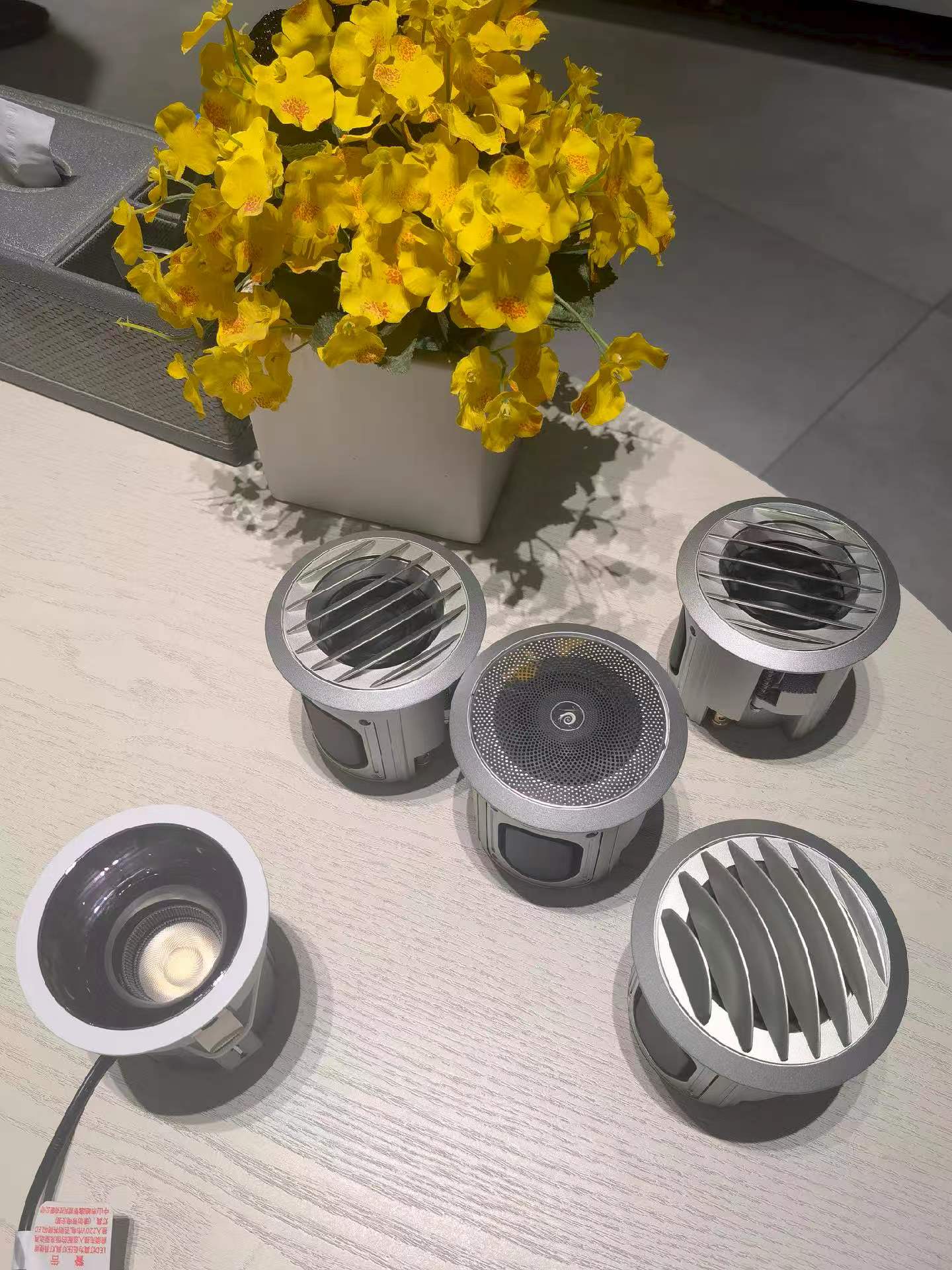
The IW3mini uses a 2.25-inch coaxial driver; the IW4pro a 2.75-inch two-way coaxial. The diameter differs by 0.5 inch and, on nominal diameter, the diaphragm area by about fifty percent — twenty percent more diameter is half again the area, and the square law is not negotiable.
A coaxial driver puts tweeter and woofer on one axis, so the sound leaves from a single point and phase around the crossover is less likely to smear. Both are coaxial; this is not where they differ.
Three things move with the diameter: power handling 20–160W against 200W, sensitivity 86dB against 89dB, and cabinet Ø105×82mm against Ø120×104mm. The 3dB gap deserves its own sentence: at the same loudness the IW4pro needs roughly half the amplifier power. Both ship with the AV-700III, so in a finished system that 3dB becomes headroom for big dynamics, not more volume.
110dB appears on the IW3mini's sheet, and its cabinet is only Ø105×82mm. The CW90 — 2.75-inch full-range plus a passive radiator, 90W per unit — also reaches 110dB maximum SPL, with a Ø90mm cut-out, Ø105mm faceplate and 100mm height. A small driver gets there because the waveguide and radiator spread the energy, not because the driver is big.
Fitting is decided by the hole. In the IW series Ø105mm is one tier, and both the IW3mini and the Mini are quoted against it; the IW4pro cabinet at Ø120×104mm means hole positions, cavity and joists are laid out again around it.
The trade-off: one tier up in cabinet means one tier more ceiling depth. The IW3mini's 82mm still has margin under a shallow ceiling, under a beam, beside a duct; the IW4pro's 104mm eats more clear space, and downlights, access panels and the curtain box give way. If the cavity is not there, the cabinet does not go in, and no later model change buys it back.
2. Low End: Both Say 50Hz, So Why Do They Sound Different
Both are rated 50Hz–20kHz: the lower limit is within reach of 50Hz, but nothing says how much sound pressure the speaker makes at 50Hz. Low-frequency output follows displacement volume, area times excursion — fifty percent more area, a cabinet around twice the size by outer dimensions, and the margin comes from there.
Neither should carry the low end alone. The IW3mini package pairs with the B28 (dual 8-inch, 400W), the IW4pro with the C110 (10-inch, 500W). The bottom octaves go to the subwoofer and the cabinets handle the join above the crossover. Near the crossover the smaller driver has less headroom: push the volume and that band gives way first, which sounds like a thin patch in the mid-bass.
Under that division of labour the subwoofer's position matters more than the cabinets': the cabinets are in the ceiling and fixed by the holes, the subwoofer stands on the floor and is fixed by the room.
Do not subtract the SPL figures directly: 110dB against 110dB, a 1dB gap on paper, both manufacturer ratings taken under different conditions. They say nothing about which has more low end.
The trade-off: low end is decided by the subwoofer and the room. One size up in the subwoofer buys another stretch of it; if the room has a standing wave at 40Hz, changing cabinets will not flatten it. One point that has nothing to do with the brand: the slab is shared, an in-ceiling cabinet pushes energy into the structure, and with sensitive neighbours below a floating floor does more than a different speaker.
3. Price: Check That the Lists Match First
| Package | Main speakers | Subwoofer | AV receiver and player | List price |
|---|---|---|---|---|
| CW90 wireless 5.1 cinema and karaoke | CW90×5 | W10 | MS-1 | price on request |
| IW3mini-B28 5.1 | IW3mini×5 | B28 (dual 8-inch, 400W) | AV-700III + F60D | No separate list price |
| IW3max 5.1 cinema and karaoke | IW3max×5 | B28 | AV-700III + MU-1 | price on request |
| IW4pro 5.1 cinema and karaoke | IW4pro×5 | C110 (10-inch, 500W) | AV-700III + MU-1 | price on request |
The entry price is the CW90 package, the entry start: 5.1 wireless cinema and karaoke in one delivery, rear surrounds on a 5.8GHz dedicated channel, no speaker cable to pull. For a house whose ceiling is closed and will not be cut again, this is the way in.
The step between the IW3max and the IW4pro lands in two places: the main speakers become the IW4pro, the subwoofer changes from the B28 to the C110. The AV-700III and the MU-1 are untouched on both sides. So "the extra money all goes into the cabinets" is only half right.
To compare the IW3mini package, align the lists first: its microphone set is the F60D, the IW4pro package adds an MU-1 player, so part of that gap is not sound. The package has no separate official list price; the exact figure comes from the store's current list.
The trade-off: package quotes follow the configuration, so line up the lists before comparing shops: how many main speakers, which subwoofer, which AV receiver, whether the microphone and player are in. Compare totals alone and "one player missing" starts to sound cheaper than it is.
4. How to Choose: Measure the Cavity, Then Fix the Model
Three questions, and the model is more or less settled.
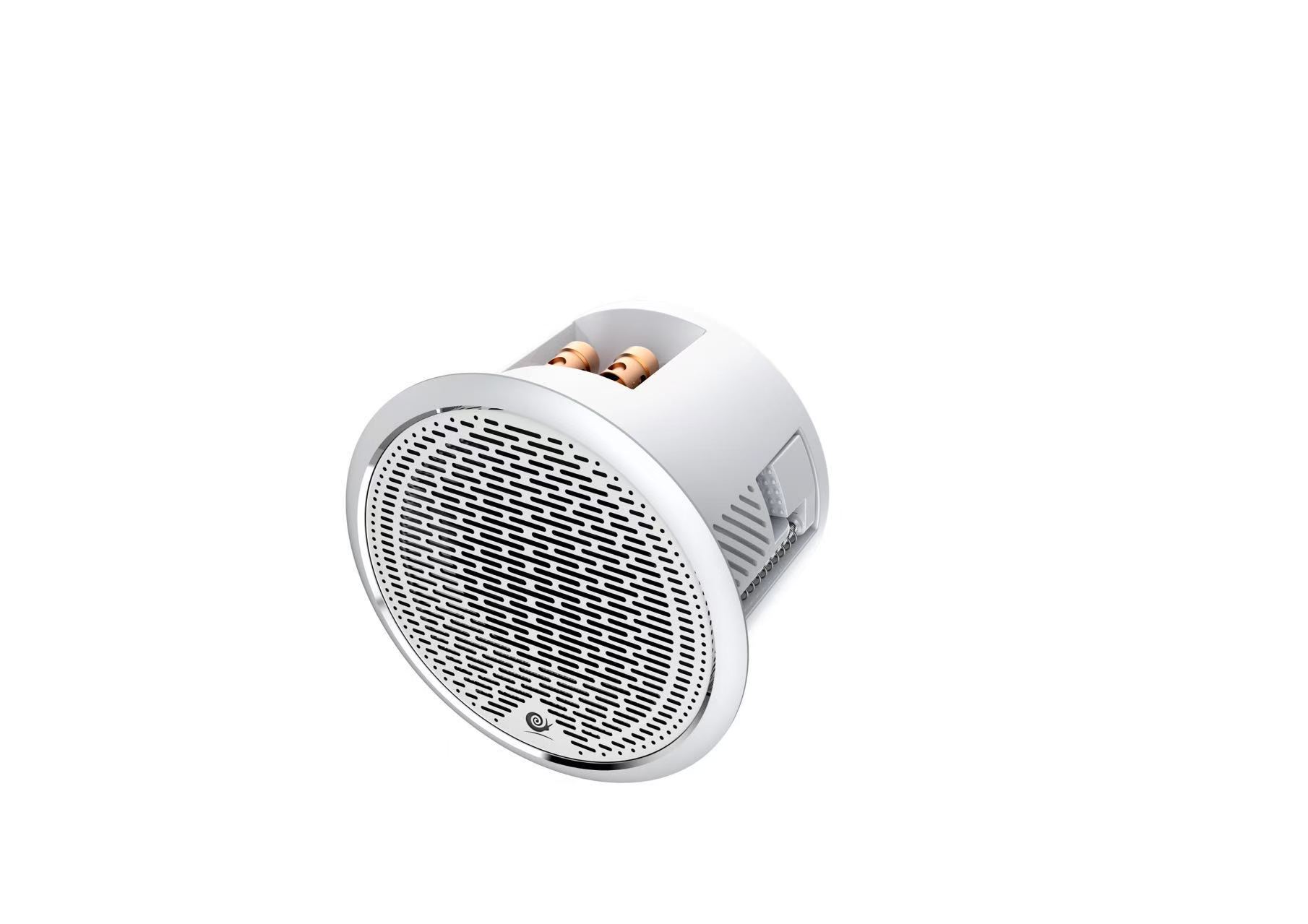
How deep the ceiling can go: the IW3mini cabinet is 82mm, the IW4pro 104mm. That 22mm is the difference between fitting and not fitting under a beam, beside a duct, along a lighting channel; measure with joists and cable included.
Whether cable can run: both are passive cabinets with binding posts, so speaker cable is buried during the renovation. If no cable can be moved, only the CW90 wireless package is left. Adding cable after the ceiling closes means surface-mounted trunking.
So every line on the layout drawing needs a destination: from the rack to each hole, how many joists it crosses, all counted before work starts.
Room size, and where the subwoofer sits: for a 15–20m² living room the IW3mini with the B28 is enough; at around 25m² with an open-plan living and dining area, the IW4pro with the C110 is calmer; above 30m², look at the X series. The subwoofer wants floor contact, its own power outlet and some distance from the wall — half of how a living-room cinema sounds is ruined by where the subwoofer sits.
The order in home theater design is positions, cavity, power, and the model last.
The trade-off: if one of the three has no answer, do not fix the model yet. Move a position by 30cm and the holes, joists and cable runs all start over; if the cavity is too shallow, the cabinet can only go on the surface.
5. Who Should Not Buy: Five Cases
One thing first: a soundbar is not a bad answer; in some rooms it suits better than ceiling work.
In a living room already decorated that will not see another round of filler, a soundbar is usually less work: dialogue is clear, it plays the day it goes in, only the surround is virtual and the rear image is not what real cabinets do.
- No ceiling work, a rented flat, a sale within three years: a hole in the ceiling is destructive. A soundbar sits under the TV and leaves with you.
- A small living room, a sofa against the wall, a modest budget: virtual surround is enough in a small square room, and it saves the holes, cabling and calibration.
- Sensitive neighbours below, a thin slab: float the floor first; these two models do not solve structure-borne sound.
- Two-channel listening, cello and organ low end: a cinema speaker hands the bottom octaves to the subwoofer, and you will hear that they were handed away.
- A separate room above 30m²: sound pressure and low end both need headroom; look at the X series.
The trade-off: force it in any of those five and you get a system that moved the house without getting the sound there, dearer than choosing a soundbar at the start.
6. In One Sentence: Diameter Sets the Headroom, Cavity Sets the Model
2.25 inches against 2.75 inches, fifty percent more area, and it lands in low-frequency headroom; both are rated 50Hz, and what really decides low end is the subwoofer and the room; from the CW90 entry set to the IW4pro, half of the price difference sits in the list itself.
After installation, check whether the five holes sit at one level, then listen whether the five cabinets are even in loudness. Skip those two steps and no later adjustment buys them back.
The conclusion: ceiling depth of 82mm and a 15–20m² living room, take the IW3mini package; ceiling depth of 104mm, around 25m², more low-frequency headroom wanted, take the IW4pro.
When to walk away: ceiling closed, sofa not decided, budget under the entry point — do not cut a hole yet. A soundbar or a small surface-mounted cabinet will do the job; talk about concealed cinema speakers when the conditions are all in place.
The trade-off: whichever one you take, an ordinary living room is not a dedicated cinema room. Ceiling height, the sofa and the neighbours do not change because the model did.
Related articles
- Choosing a Living Room Cinema by Area: 20 m², 35 m² and 50 m²
- CW90 vs Mini vs IW3max: Which Concealed Cinema Line to Choose
- CW90 Cabinet Materials: Why Chipboard Is Not Enough
END
#IW3mini #IW4pro #SnailPower #ConcealedSpeakers #LivingRoomCinema #HomeCinemaKaraoke
Written by Digital Xiaoniu, first published on the SNAIL POWER official site, Product News.