Home / News / Product News / Choosing a Living Room Cinema by Area: 20 m², 35 m² and 50 m²
Choosing a Living Room Cinema by Area: 20 m², 35 m² and 50 m²
2026-11-22 18:05 · Product News
A 20 m² living room takes a CW90 5.1 wireless cinema package: Ø90mm cut-out, Ø105mm faceplate, 90W per unit, 111dB maximum SPL, price on request for the set — the entry line of living room cinema audio. Configure by area and three variables come first: SPL headroom, seating distance, and how large a hole the ceiling takes. At 35 m² the first decision is whether there are height channels; at 50 m² the low end has to be made even first.
Key points
- Up to 20 m²: the CW90 5.1 set at the entry price, Ø90mm cut-out, no pre-buried cable for the rear surrounds.
- 20–35 m²: the Mini set and the IW3max set; the cut-out varies by model.
- At 35 m² the extra budget goes into the receiver and the height channels, not the speakers.
- 30–50 m²: the X series 7.2.4 with two subwoofers, price on request — what you buy is even low frequency.
- All three tiers have rooms that should not buy them: a ceiling that cannot be touched, a sensitive downstairs neighbour, a rented flat.
1. What Area Really Buys Is Headroom
Two living rooms, 20 m² and 50 m², do not differ in whether the sound is good; they differ in how much headroom is left for the same loudness. Sound pressure falls with distance: in free field, double the distance and you lose about 6dB. In a 20 m² living room the main seat sits around 3m from the screen; in a 50 m² wide room the seating distance often reaches 5m or more, and the same loudness costs about 4dB more headroom.
That headroom comes from driver construction and power. The CW90 uses a 2.75-inch full-range driver plus a passive radiator, 90W per unit, 111dB maximum SPL. That figure only means something inside a Ø90mm cut-out — but its lower limit is not very low, so the subwoofer has to catch the bottom, and in 5.1 it cannot be left out.
In home theater design a room-size table is only a starting point. Measure four things together: seating distance, the gap between sofa and rear wall, clear height under the ceiling, and the duct runs. Block any one and the configuration is rearranged.
The trade-off: a rule based on area counts distance only, not room shape. A long narrow living room, a sofa against the wall, a TV wall off to one side — each eats headroom. Two rooms of the same 20 m², one of them placed slightly worse, and no amount of extra money will be audible.
2. Up to 20 m²: One CW90 Package Is Enough
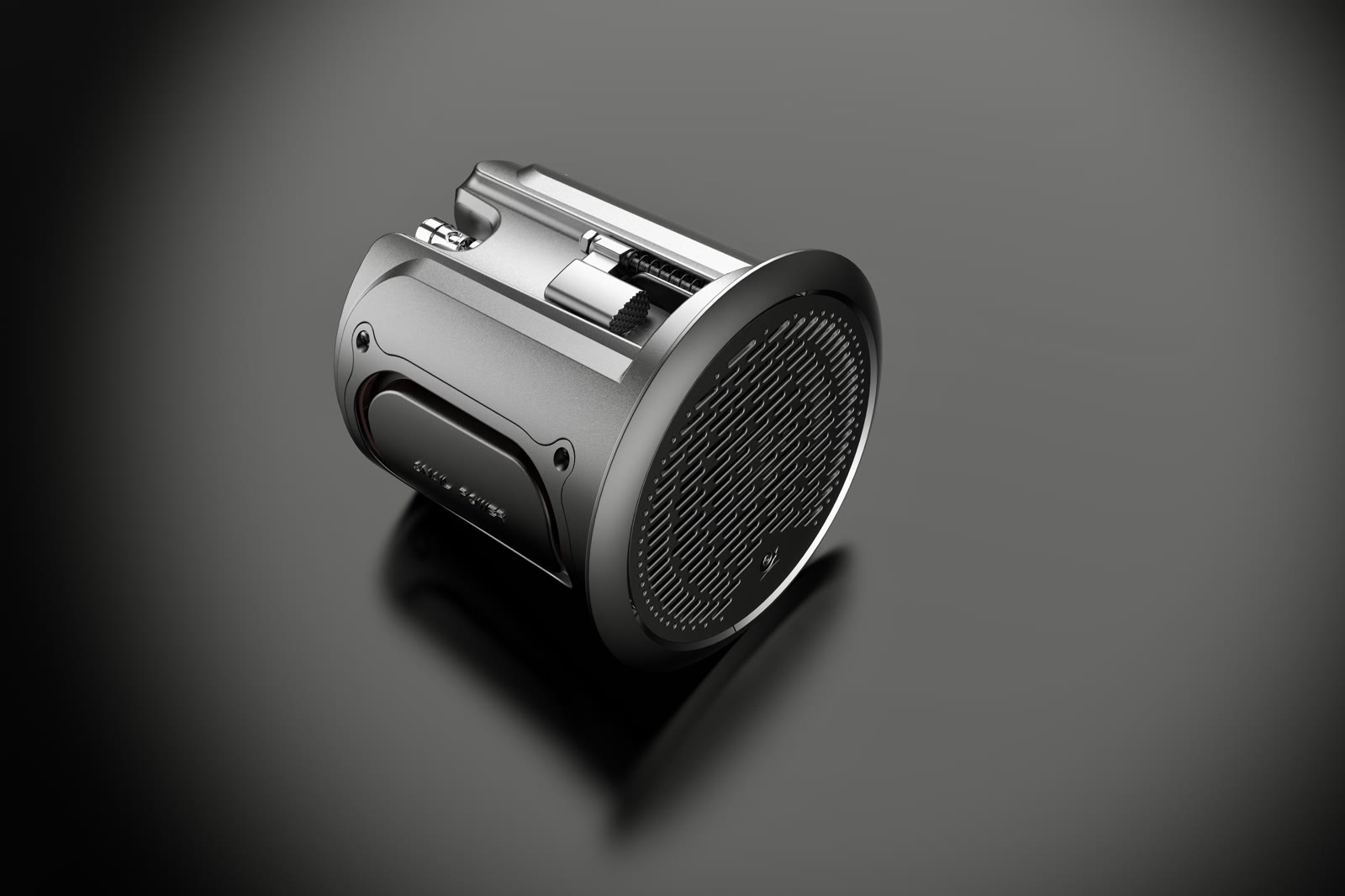
The requirement here is clear: short seating distance, low SPL demand, and few spots the ceiling will accept. The package is CW90×5 plus a W10 subwoofer and an MS-1, price quoted on request. Total cabinet height is 100mm, the opening is barely larger than a mug, and the ceiling void has room to work in.
| Item | Figure |
|---|---|
| Cut-out diameter | Ø90mm |
| Faceplate diameter | Ø105mm |
| Total cabinet height | 100mm |
| Driver | 2.75-inch full-range plus passive radiator |
| Rated power | 90W per unit |
| Maximum SPL | 111dB |
| Wireless | 5.8G dedicated channel |
| Package price | Price on request (CW90×5 + W10 subwoofer + MS-1) |
The wireless part deserves its own paragraph. The CW90 runs a 5.8G dedicated channel, so the five in-ceiling units and the W10 subwoofer need no pre-buried cable. For a living room already boarded, or where nobody wants another channel cut for the rear surrounds, that routes around the can-it-be-done question — and it is what lets concealed cinema speakers land in the second half of a renovation. Those two rear-surround cables are often what makes people abandon a ceiling.
The trade-off: the full-range limit is high and all the low end rests on the W10 subwoofer, while in 20 m² there are usually only one or two places the subwoofer can go. With the sofa against the wall the rear surrounds end up behind and above the listener and the image drifts towards the ceiling. In a room under 2.4m clear height with ducts in the ceiling, a Ø90mm hole will not always land where it is needed; a wall-mounted system is the more reasonable answer.
3. 35 m²: The Money Moves From the Speakers to the Height Channels
At 35 m² the seating distance stretches to 4 to 4.5m and the headroom demand rises — but what moves the budget up a tier is not the speakers, it is whether there are height channels. Going from 5.1 to 5.1.2 adds a pair of overhead channels and an AV receiver that decodes Dolby Atmos, and that line item often costs more than a tier of speakers. Dolby Atmos and DTS:X certification in progress for SNAIL POWER; when choosing a receiver, go by the manufacturer's own format certification.
Three lines are available at this size: the Mini 5.1 cinema-and-karaoke set, the IW3max 5.1 cinema-and-karaoke set, and the U4max. All come with the B28 subwoofer and the AV-700III; the difference is cabinet depth, driver size and how low the low end reaches, not whether it plays.
One warning on cut-out sizes: the CW90 is Ø90mm, while the Mini and the IW series vary by model. A millimetre apart means the hole saws are not interchangeable, and the wrong model is usually discovered after the ceiling has been cut.
Receiver headroom has to match. Five CW90s at 90W each plus a subwoofer is within reach of an ordinary integrated receiver, but at a 35 m² seating distance you need dynamic headroom in reserve; look at output per channel, not only the total power figure. Height channel placement matters as much: too far back and overhead localisation smears into one blur, too far forward and they compete with the main channels. If the positions cannot be fixed during the renovation, 5.1.2 falls back to the effect of 5.1.
The trade-off: a 35 m² living room is usually a wide room, and the ceiling is often cut into segments by cove lighting, curtain boxes and air vents, so the two height channels end up forward of the seats. What you get is a raised soundstage, not true overhead localisation. Real overhead channels mean accepting a dropped ceiling or surface mounting, which conflicts with a cinema nobody can see — pick one.
4. 50 m²: Get the Low End Even First, Then Count Channels
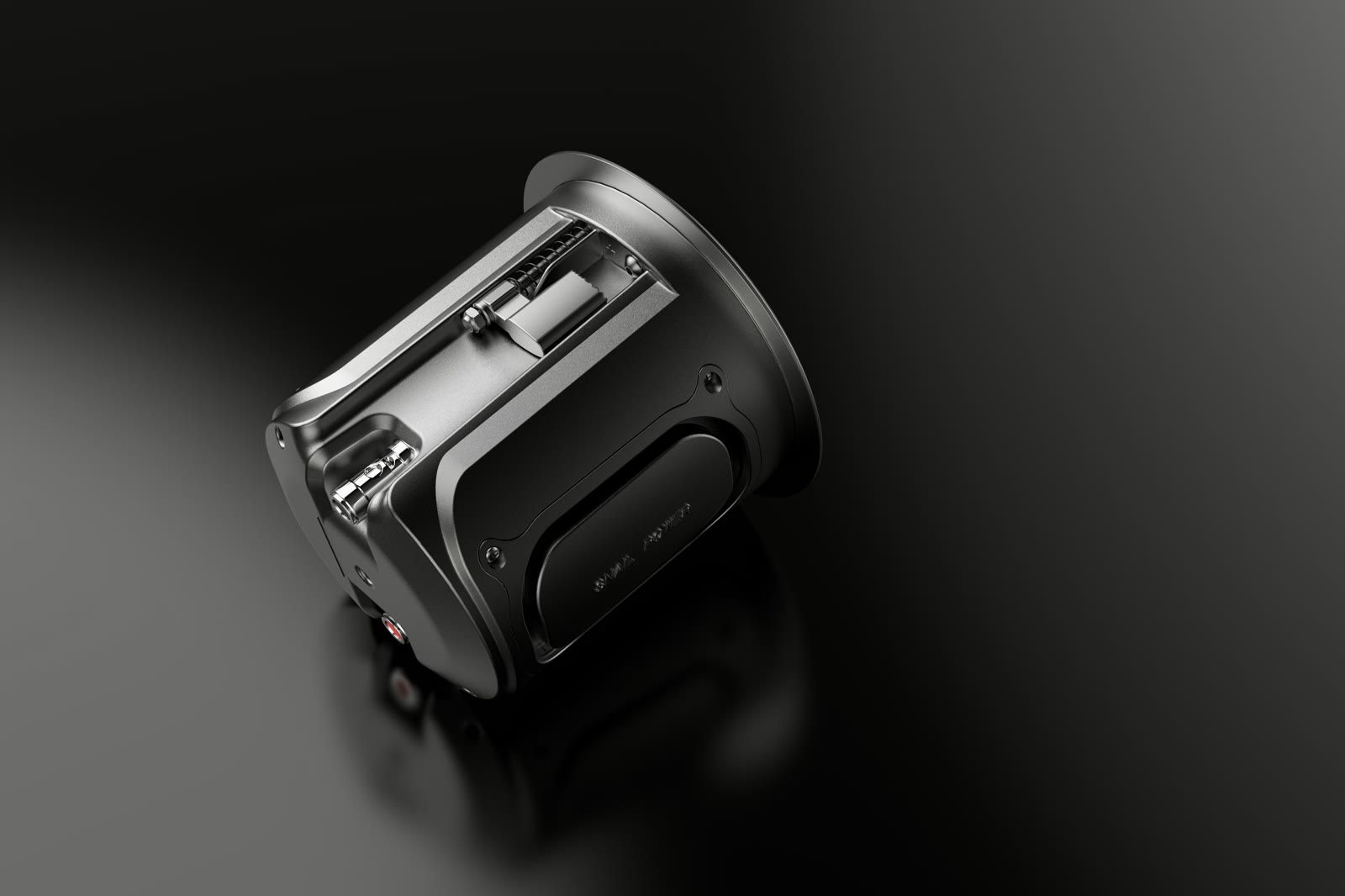
Double the area to 50 m² and the first thing to go wrong is not the high frequency, it is the low. Low frequency moves air, and the larger the room the more likely a single subwoofer booms at one seat and is missing at the next. The X series 7.2.4 uses two subwoofers, price on request for the set, and that is what it solves: not louder, but the peaks and dips spread evenly across the seats. The same series has two 5.1.2 versions — C110 subwoofer for 10 to 25 m², X135 for 20 to 35 m², both price on request — the difference being the subwoofer's size and drive headroom.
The other problem is cable runs and delay. In a 50 m² wide room the run from the TV wall to the rear surrounds often exceeds 12m, and no step can be skipped: chasing, conduit, patching, skimming. At this size wireless saves schedule time and damage to the walls, not sound quality.
Subwoofer position affects the outcome more than the model number. In a corner the low end piles up: it sounds like weight, but it is an extra lump in one band. Move it to the middle of a side wall and some weight comes off, and the difference between the two seats narrows. That is what the second subwoofer is for — leave the placement untuned and it copies the peaks and dips again.
Who should not buy it: a rented flat, a ceiling that cannot be touched, a budget capped below the X series — any one and the X series is the wrong end of the list; the CW90 package for 20 m² is the one that fits. Force a large system in and the money goes somewhere you cannot hear it.
The trade-off: physically there is no way to make it inaudible downstairs. A 50 m² concrete slab passes low frequency more obviously than a small room, and a second subwoofer amplifies that. If the downstairs neighbour is sensitive, a floating floor is more effective than different speakers, and that money has to be set aside separately.
5. All Three Tiers Side by Side: Cut-out, Price and Weak Point
Put the tiers into one table and the price gaps and weak points show at the same time. Prices are full-package delivered prices from the JD flagship store in November 2026, excluding installation and consumables; the line runs from the BMmini background-music set at the bottom to the X series 7.1.4 at the top.
| Living room area | Package | Cut-out | Package price | Weak point of this package |
|---|---|---|---|---|
| Up to 20 m² | CW90×5 + W10 subwoofer + MS-1 | Ø90mm | Price on request | High full-range limit; all the low end rests on the subwoofer |
| 20–35 m² | 5×Mini + B28 subwoofer | Varies by model | Price on request | Subwoofer and receiver take up cabinet space |
| 20–35 m² (height channels wanted) | 5×IW3max + B28 subwoofer | Varies by model | Price on request | The ceiling has to be altered in advance |
| 35–50 m² | 5×IW4pro + C110 subwoofer | Varies by model | Price on request | Deeper cabinets; more clear height above the ceiling |
| 30–50 m² | X series 7.2.4, two subwoofers | In-wall | Price on request | Two thresholds: budget, and sound insulation in the slab |
How to read it: locate your area first, then decide whether you can live with the weak-point column. Do not skip the cut-out figures — Ø90mm and varies-by-model need two different hole saws, and one wrong hole costs more to put right than swapping a speaker does.
The trade-off: delivered as a package means the configuration is fixed; change one model and the subwoofer and receiver pairing has to be rearranged, and after-sales is counted per package. If you intend to mix and match, work out first who you call when something goes wrong. A hole cut in a ceiling is far more expensive to return than a floorstander is to carry back out.
6. The One-Sentence Verdict
20 m² takes the CW90 5.1 at the entry price; at 35 m² decide whether there will be height channels before choosing a model; at 50 m² solve even low frequency and slab insulation first. Area decides headroom only — the cost of getting the configuration wrong always lands on the cut-out size and on that stretch of low frequency.
If you keep one line, keep this: measure the ceiling first, then the budget, and only then pick a model. When you cannot measure it properly, size down — filling a small room is far easier to hear than emptying a large one.
The trade-off: every in-ceiling scheme has to be settled while the ceiling is still open. Change it after the hard finish is done and three bills come round again: cutting, wiring and repainting.
Related articles
- IW3mini vs IW4pro: Half an Inch, 50Hz and the Price List
- CW90 vs Mini vs IW3max: Which Concealed Cinema Line to Choose
- CW90 Cabinet Materials: Why Chipboard Is Not Enough
END
#CW90 #SnailPower #ConcealedSpeakers #LivingRoomCinema #InCeilingCutout #HomeCinemaByArea #WirelessCinema
Written by Digital Xiaoniu, first published on the SNAIL POWER official site, Product News.