Home / News / Product News / U3 vs Other Speakers: What Only a Live Comparison Shows (Video)
U3 vs Other Speakers: What Only a Live Comparison Shows (Video)
2026-11-25 09:05 · Product News
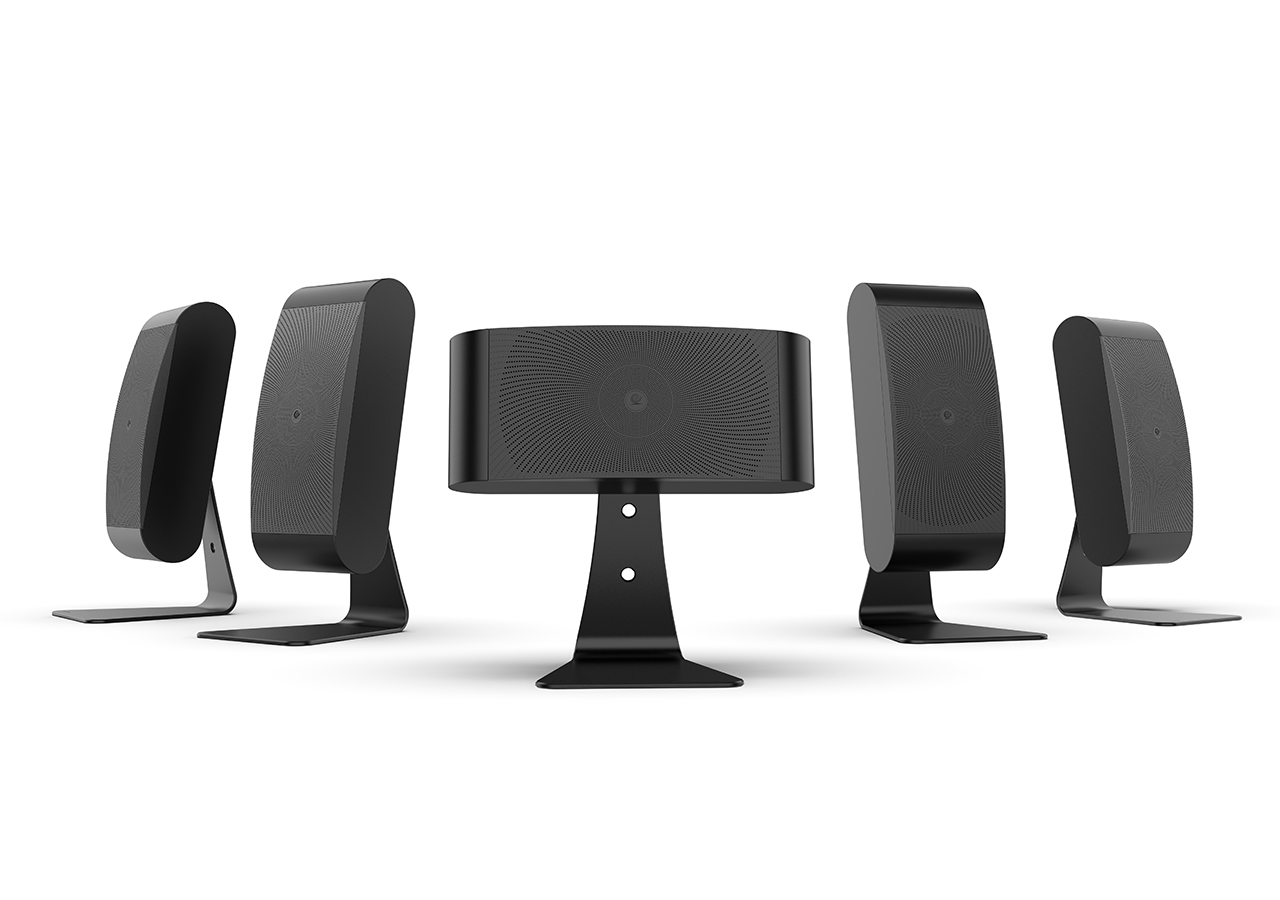
The U3 is the cabinet in SNAIL POWER's 5.1 cinema-and-karaoke package: five U3 to a set, shipped with a B28 subwoofer, an AV-700III AV receiver, an MU-1 and two F60D, at an official package delivery price quoted on request. It is aimed at a household that watches films every day and sings now and then, in the living room. The video is a live comparison: the U3 and other cabinets taking turns in the same room. What the clip shows and what it cannot show are set out below, against the configuration list and the numbers.
Key points
- The U3 package sits one step above the CW90 wireless set; the gap sits in the AV receiver and the signal chain, not in the cabinet tier.
- A live comparison lets you hear voicing and sound-pressure headroom. It does not tell you whether you will still switch it on three months later.
- "Invisible" cannot be judged by ear; what gets compared is the cut-out, the faceplate and the depth available in the ceiling.
- A small driver is neither a virtue nor a fault; it simply hands the low end to the subwoofer.
- Three things to settle before ordering: whether there is still time to run cable, how large the room is, and who in the house sings.
1. Check the List First; the Adjectives Can Wait
The official price list sets out both configurations plainly. The CW90 set is 5.1 wireless cinema and karaoke: CW90×5 plus a W10 subwoofer and an MS-1, quoted on request for the package. The U3 set is also 5.1: U3×5 plus a B28 subwoofer, an AV-700III AV receiver and an MU-1, and two F60D, quoted on request for the package. The two are a short step apart, and spread across five cabinets the difference buys little in any one of them — not one tier up in a speaker.
What actually differs is the chain. The CW90 runs a dedicated 5.8G channel and needs no cable; what the U3 list carries is an AV-700III AV receiver and an MU-1. Both are home theater packages, but whether it can go in after the event, and whether the cable has to be buried during the renovation, separates them by more than voicing does. Home theater wiring only has a window of a few months while the work is going on; wanting it afterwards costs a ceiling taken down.
The trade-off: the U3 costs more than the CW90, but it is not an upgraded CW90; it is the other route. For a household that has already finished and will not open the walls, the extra spend cannot buy back the chance to bury cable — in that case the dearer set is the one that does not fit.

2. What Fifteen Minutes of Live Comparison Can Show
A live comparison is useful, but its valid range is narrower than it feels. Swapping cabinets in one space, three things come through: whether the voicing runs bright or full, whether the vocal smears into the low midrange, and whether big dynamics hold together. All three carry real weight when choosing, especially in a living room that has had no acoustic treatment.
What gets overlooked is level matching. Two cabinets of different sensitivity compared at the same setting of the volume knob will always make the louder one sound stronger. To hear the real difference, match the sound pressure first; otherwise what you end up trusting is the volume, not the quality. Bring the few minutes of material you have listened to for years, as well; it does far more work than a song picked at random on the spot.
The figures deserve a line here too: the CW90 is 90W per unit, with 111dB maximum SPL. What that set of numbers means is that there is headroom in hand, not that it competes with a large cabinet for extension. Some read 111dB as "this can replace a subwoofer", which is a misreading.
In the room, the passage really worth watching is dialogue. If dialogue is muffled, the volume goes up all evening once you are home; if it is sharp, two hours leaves you tired. Neither usually shows in fifteen minutes, but there is a question you can put: play the same dialogue at three different levels and listen again. Whoever is willing to do that is more reliable than whoever is willing to play a song.
The trade-off: by the fourth round of A/B the ears are tired and judgement is falling away. A live comparison also proves nothing about a long relationship: it cannot show that you will still have it on in three months, and it cannot show what your floor slab, curtains and sofa will turn it into. Living-room cinema speakers are bought to be used for five years, not listened to for fifteen minutes.
3. The Numbers: Several Ways to Build the Same 5.1
| Product line | Package configuration | Official package price |
|---|---|---|
| CW90 wireless cinema | CW90×5 + W10 subwoofer + MS-1 | Price on request |
| U3 | U3×5 + B28 subwoofer + AV-700III + MU-1 + F60D×2 | Price on request |
| Mini | 5×Mini + B28 subwoofer + AV-700III + MU-1 + F60D×2 | Price on request |
| IW3max | 5×IW3max + B28 subwoofer + AV-700III + MU-1 | Price on request |
| U4max | U4max×5 + C110 subwoofer + AV-700III + MU-1 + F60D×2 | Price on request |
| IW4pro | 5×IW4pro + C110 subwoofer + AV-700III + MU-1 | Price on request |
| IW6 WIDE | 7.1 concealed: IW6LCR-II×3 + IW6max×4 + S10D subwoofer | Price on request |
Every figure in that table is a package delivery price. It tells you where the money goes: across the range what rises is not "the speakers get dearer" but the specification of the subwoofer, the drive of the AV receiver, and the mounting changing from a wireless retrofit to construction across a whole wall.
One much-asked price gap is worth clearing up on the way: the widely circulated "IW3max bargain figure" is not an official package price. That is a single cabinet, or an unofficial old price; the official 5.1 cinema-and-karaoke package is quoted on request.
The trade-off: the table is equipment prices. Ceiling work, acoustic treatment and labor are not in it. A ceiling has to be cut, reinforced and cabled, and none of that money is in the table. Anyone who treats the package price as a total budget will feel it on settlement day.
4. Invisibility Is Not Something You Can Compare
"Invisible" is not an audio figure; it is a building figure. The CW90 takes a Ø90mm cut-out, with a Ø105mm faceplate and a 100mm body height; the Mini and the IW series vary from model to model, so do not memorize them as one figure — one millimeter apart means two different cabinets and two different sets of mounting parts. What people choosing concealed cinema speakers compare is never the sound; it is the construction drawing. The faceplate stands a ring wider than the cut-out, and that ring is the tolerance that hides the seam. Measure it wrong and the result is a black edge.
A small hole has its own arithmetic. Inside the CW90 sits a 2.75-inch full-range driver plus a passive radiator, 90W per unit. A 2.75-inch driver will not reach very low, so the bottom end has to be caught by the subwoofer. That is not a compromise; it is what the 5.1 division of labor looks like: the subwoofer carries the energy, the full-range carries position and directivity, each doing its own job.
The trade-off: if there is not enough depth in the ceiling, there is not enough, and arguing with it is no use. Measure the clear height before fixing the model. Once the cut-out positions are set, moving the sofa swings the image, and the only repair is cutting again; doing the job twice costs far more than measuring once.
5. Who Should Not Buy the U3
The budget test. If the number in mind stops below the entry tier, go straight to the CW90 wireless set and do not stretch. Stretching to the next tier does not buy the difference people imagine, while the complications it does buy — one more AV receiver to house, a power point for it, cable to run — are entirely real.
The renovation test. A finished house that will not accept surface-mounted cable should ask, before ordering, exactly how this chain is going to run. If that question cannot be answered clearly, everything afterwards is an argument.
The overhead-channel test. This is 5.1, with no overhead channels. The factory's current wording on certification is "Dolby Atmos and DTS:X certification in progress"; until certification is finished, do not count Atmos as a feature already in hand.
The room test. Above 40 m², or under a ceiling five or six meters high, do not force it: the headroom in a small cabinet is there for a living room, not for a hall. Anyone who only sings and never watches a film does not need the package either — half the money in a cinema-and-karaoke set goes into the film side of the chain.
On the system side, the official direction is connection to Mijia and Xiao Ai, with TCP/IP and a serial port left spare; on the source side there is 4K Blu-ray, NAS and an online song library. Whether it feels right has to be tried by hand in the room: a manual cannot describe feel, and a comparison audition cannot either.
The trade-off: "it will not disturb anyone" has to be taken apart. The waveguide directivity, the full-range radiator, the bass radiator and the absorption cone are genuinely there to keep more of the sound inside the room, but physics will not make it silent downstairs. Where the neighbor below is particularly sensitive, a floating floor does far more than a different speaker does.
6. In One Sentence
The U3 is not "the better one". It is a package that fills all five 5.1 positions in one go, at an official delivery price quoted on request — one step above the CW90 wireless set, with the extra going into the AV receiver and the chain rather than into a higher grade of driver. Its value is a list that is clear and a chain that is complete, not a win in a comparison.
The judgement is short: still inside the renovation, a room from a dozen-odd to thirty-odd square meters, films and karaoke in the same year, and this package explains itself in one pass. A budget at the entry tier, a finished house that will not be opened up, or a need for Dolby Atmos means the money is better spent elsewhere. Someone will ask about other cabinets — those are simply not their strength; each has its own design target, and the thing to do is know what you want before you choose.
The trade-off: the ceiling of this system is set by the room and by the ceiling above it. Paying more still does not buy flat low end in a living room that has had no acoustic treatment at all.
Related articles
- CW90 Wireless vs Wired In-Ceiling: Where the Money Goes
- Soundbar or Concealed Cinema? Ask the House Before the Speakers
- U3 vs U4max: What the 19,600 and 31,800 Actually Buy
END
#U3 #SnailPower #LiveComparison #CinemaKaraokePackage #ConcealedSpeakers #LivingRoomCinema #HomeTheaterWiring
Written by Digital Xiaoniu, first published on the SNAIL POWER official site, Product News.