Home / News / Company News / Single Speakers vs a Delivered Package: Why We Advise Against DIY
Single Speakers vs a Delivered Package: Why We Advise Against DIY
2026-11-24 18:05 · Company News
Package delivery prices five speakers, one subwoofer, one amplifier and the calibration as a bundle: the CW90 5.1 wireless cinema-and-karaoke set starts at the entry tier, the full package price is quoted on request, the cut-out is Ø90mm behind a Ø105mm faceplate — for living rooms where nobody wants to specify the components. What separates it from "buy two now, add the rest later" is not those five cabinets; it is the crossover, the levels and the pairing.
Key points
- Buying a unit at a time saves selection time, not money; package delivery saves rework.
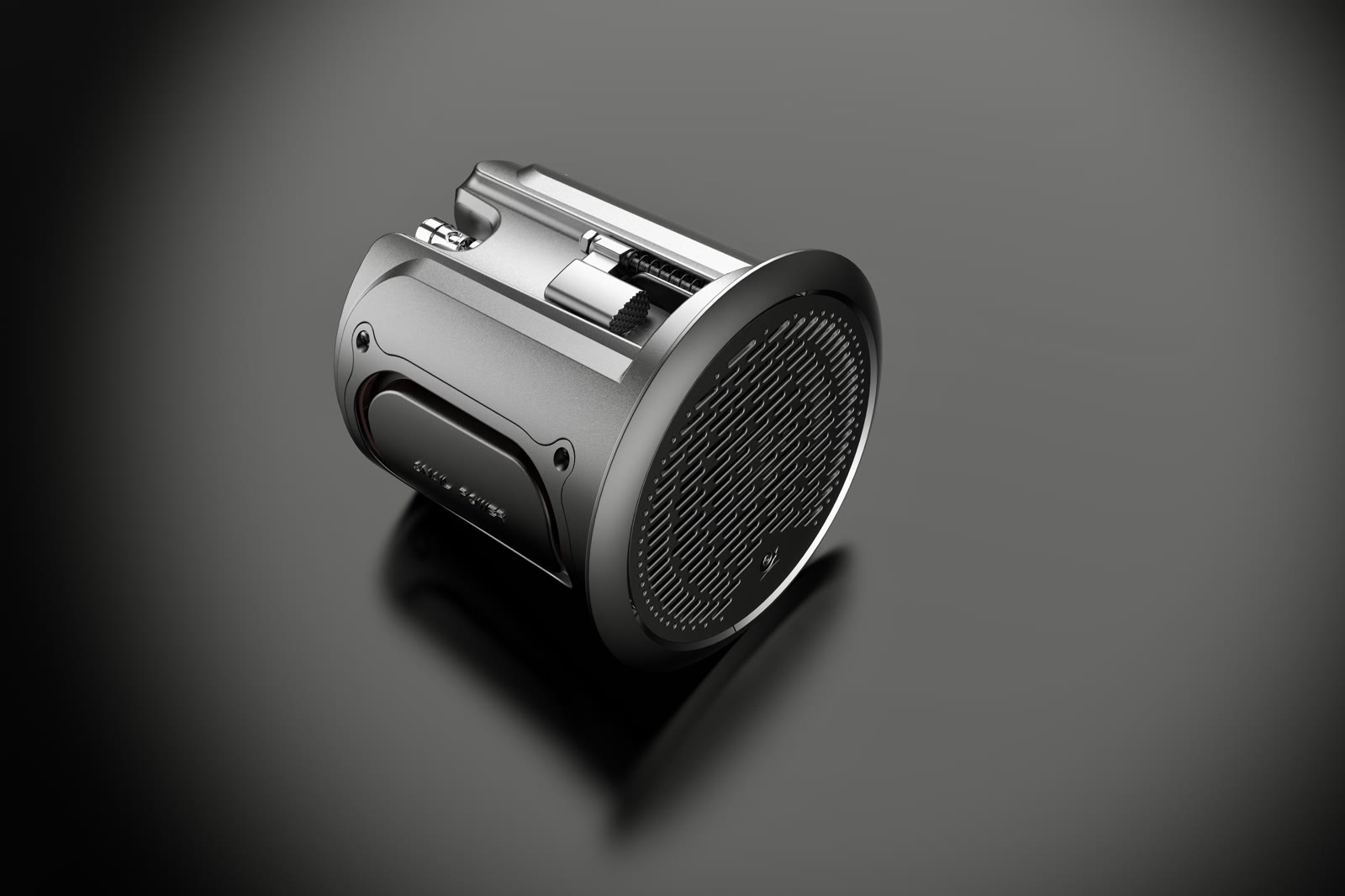
- CW90: 90W per unit, 111dB maximum SPL, 2.75-inch full-range plus passive radiator; the low band goes to the sub.
- Self-built systems fail in three places: the crossover point, the channel levels and the 5.8G pairing.
- Official packages run from the entry set to the top X Series; the range reaches down to background music at the bottom.
- Anyone who already owns the amplifier and subwoofer pays twice for part of it.
1. One at a Time or the Whole Package: Not the Five Cabinets
Buying a speaker at a time is common: left and right first, centre and surrounds when the budget loosens, subwoofer later. On a single-unit quotation it looks light, but the risk moves downstream. Five cabinets bought in three batches can differ in batch, mounting angle and crossover setting, and what gets assembled is five points each doing its own thing.
The package runs the order backwards: fix the positions, then deliver the set. The CW90 is sold as a 5.1 wireless package — one W10 subwoofer, five CW90 and one MS-1 wireless module, price on request for the package. Signal runs on the 5.8G dedicated channel; no speaker cable reaches the ceiling.
Buying one at a time takes on three jobs: matching a sub to five in-ceiling cabinets, getting the crossover point and phase right by trial, and pairing the node on every cabinet. None is mystical; each costs time and tools, and afterwards nobody can tell you whether it is right or nearly right.
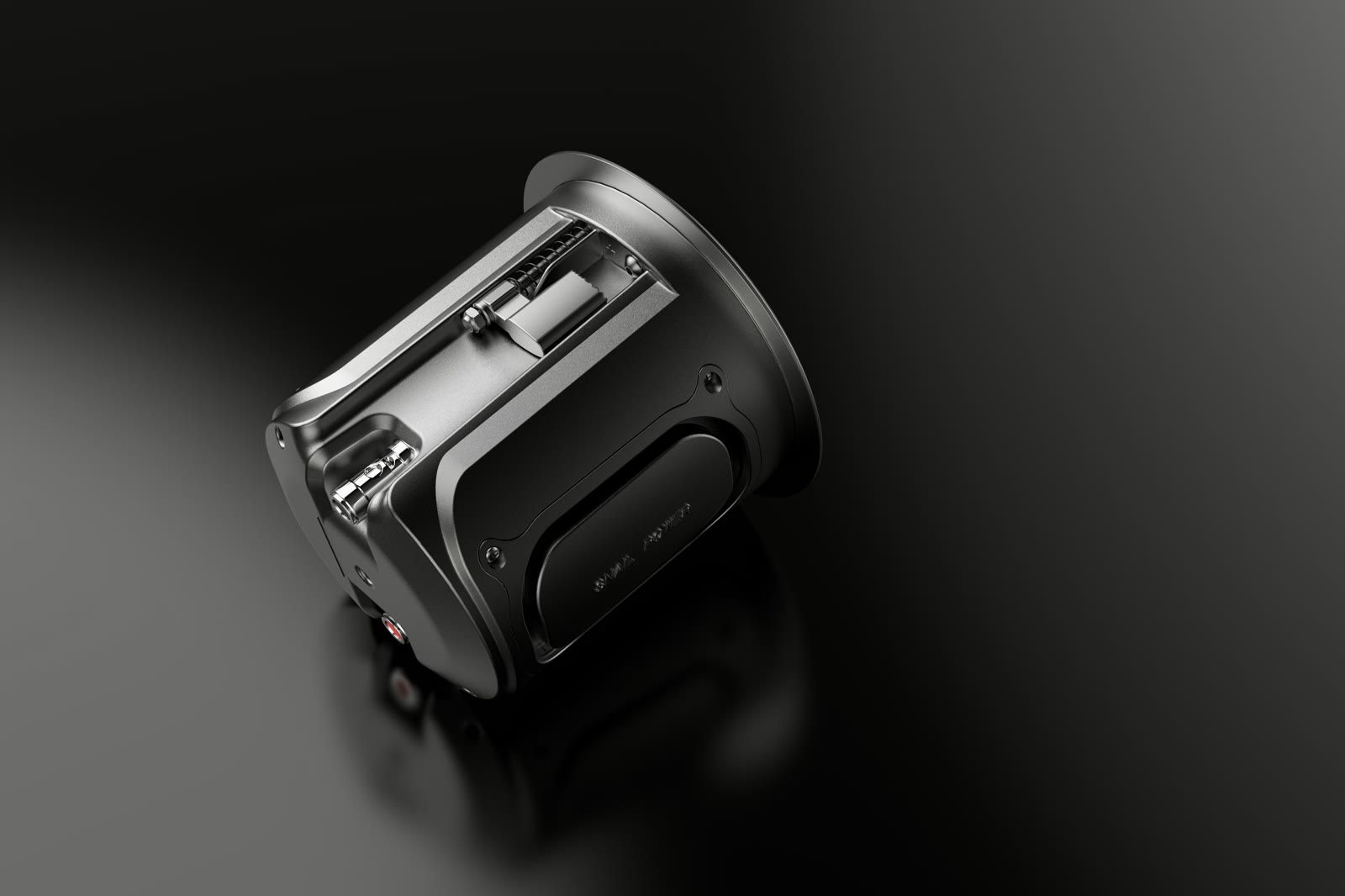
One small thing is easy to miss: the CW90 cabinet is 100mm high on a Ø90mm cut-out. The ceiling void needs 100mm plus allowance for cable and hangers, confirmed at carpentry stage. Change it when the lights go in and the price is a ceiling panel.
The trade-off: ordering one at a time looks light on the day; the missing pieces return as a second bill a fortnight later, when the ceiling is usually closed. With the ceiling open and no measurement microphone, package delivery is worth the difference.
2. Cut-out and Power Decide Which Band the CW90 Carries
The figures that can be checked go on the table first; the rest follows from them.
| Item | Figure |
|---|---|
| Cut-out diameter | Ø90mm |
| Faceplate diameter | Ø105mm |
| Cabinet height | 100mm |
| Rated power per unit | 90W / unit |
| Maximum SPL | 111dB |
| Driver | 2.75-inch full-range + passive radiator |
| Wireless link | 5.8G dedicated channel |
A 2.75-inch full-range driver does not reach very low, and the diameter decides that; tuning cannot bring it back. So the package includes a subwoofer to take the low band away, and the full-range unit works in the mid and high range where it is comfortable: the sound opens up and the vocal does not tighten. That is the difference from "five cabinets first, subwoofer later" — somebody has to own the low band.
The 90W per unit only means something next to the 111dB. High sound pressure from a small diameter depends on efficiency and on controlling the power going in; driving a small driver to its limit is the other route, and it ends with distortion before sound pressure does. 111dB is a ceiling, not a working level — ordinary viewing sits far below it.
On the cut-out, so nobody buys the wrong hole saw: the CW90 takes Ø90mm, the Mini and IW series differ by model, and neighbouring sizes can be a single millimetre apart. Cut to the wrong one and there is no room to put it right. The faceplate is Ø105mm, 15mm wider, so a position that drifts has no margin.
The trade-off: a small diameter cannot go low. Asking five in-ceiling full-range cabinets to produce weight is not physically possible, so the subwoofer money cannot be saved — only saved elsewhere.
3. Where the Price Gap Sits: The Subwoofer and the Amplifier
Two packages both called 5.1 can differ in price by half; the gap does not land on the speakers. The official list makes it plain.
| Product line | Configuration (5.1 unless stated) | Package price |
|---|---|---|
| CW90 wireless cinema | 5.1 wireless: CW90×5 + W10 subwoofer + MS-1 | Price on request |
| U3 | U3×5 + B28 subwoofer + AV-700III + MU-1 + F60D×2 | Price on request |
| Mini | 5×Mini + B28 subwoofer + AV-700III + MU-1 + F60D×2 | Price on request |
| IW3max | 5×IW3max + B28 subwoofer + AV-700III + MU-1 | Price on request |
| U4max | U4max×5 + C110 subwoofer + AV-700III + MU-1 + F60D×2 | Price on request |
| IW4pro | 5×IW4pro + C110 subwoofer + AV-700III + MU-1 | Price on request |
| IW6 WIDE | 7.1 concealed: IW6LCR-II×3 + IW6max×4 + S10D subwoofer | Price on request |
CW90 against IW4pro is a wide step apart. That buys the subwoofer (W10 against C110), driver diameter, where the series sits, and whether AV-700III and MU-1 are included. The same five cabinets, with a different subwoofer and amplifier, decide the total more than the cabinets.
One claim needs clearing up: "IW3max for a low single-cabinet figure" is not the official package price — that is a single unit, or an old price that was never official. The full 5.1 package is quoted on request, and reading a single-unit price as a package price is the easiest way to get a comparison wrong.
Dolby Atmos and DTS:X certification in progress. Decide on the configuration in front of you, not on what it may become.
One quotation has an upside — simple arithmetic, clear responsibility — and a downside: you cannot take one part of it.
The trade-off: the package ties the subwoofer and the amplifier into the price, and the old amplifier at home is neither credited nor discounted.
4. Three Places Where Self-Built Systems Fail
The first is the crossover point. Set it high and the subwoofer pushes into the vocal region, muddying the sound; set it low and the 2.75-inch driver takes the low frequencies and gives out first. No standard answer exists — it depends on the room, the placement and the sub model — and it takes several passages of material to settle.
The second is level. Five cabinets from one series are fine; mix series or batches and the centre and surrounds end up 2–3dB apart, with the dialogue floating out of the picture. Nothing is broken; nobody calibrated the levels. Without a measurement microphone this is guesswork by ear.
The third is wireless pairing. The 5.8G channel means no cable between cabinets, so the renovation schedule no longer decides whether a cinema is possible; the price is that each node is paired separately. Five cabinets, five nodes. Miss one and that night's film is a channel short, and the system may not report a fault.
Crossover and level belong to "you cannot hear it when it is right, you hear it every day when it is wrong"; pairing belongs to "when nothing goes wrong you never think about it". What they share: all happen on site, and all need a decision there and then.
The trade-off: none of the three shows up on unboxing day. They show up the first time the system plays a film or takes a microphone, when the rework touches the ceiling. With no measurement microphone and no plan to open the ceiling, handing these three to the installer costs less than trying them yourself.
5. In Home Cinema Design, Calibration Is Often What Gets Cut
Living room cinema audio is a problem of position: downlights, curtain boxes, air-conditioning vents and access panels all compete for the ceiling with five speaker positions. The five points of a 5.1 are not five circles cut anywhere in the ceiling. Left-right spacing, surround height and subwoofer position each shift the image by however much they are off — the part of home cinema design that cannot be added afterwards.
The advantage of concealed cinema speakers is a clean ceiling; the price is that once the holes are fixed they are hard to change. Ø90mm cut-out, Ø105mm faceplate, only 15mm of cover all round: drift off position and there is no margin left. A floorstander ten centimetres out can be moved; an in-ceiling cabinet cannot.
SNAIL POWER was founded in Milan in 1995, developed its variable waveguide in 2016 and launched the IW3 in 2018, with one aim throughout: let the speaker stay in the room without taking the room over. An outboard bookshelf cabinet places flexibly and moves easily — that is its strength. It is just that five extra boxes in a living room are not for every household.
Calibration is the step that gets left out: the system is installed and switched on, the centre level never checked, the crossover on default, surround delay estimated from room size. The labour saved comes back later as "the sound is wrong", and it is hard to return.
Who should not buy package delivery, plainly:
- Anyone who already owns an amplifier that can drive these cabinets and a suitable subwoofer, and can set levels with a measurement microphone — part of the package is paid twice.
- Anyone who only wants two height channels, 5.1 to 5.1.2 — the package means three cabinets too many.
- Anyone whose budget is still short of the entry point — do not move the speaker money into the fit-out; save up, then touch the ceiling.
- Anyone whose ceiling is already closed and who will not accept surface-mounted cabinets — settle the construction plan first; the equipment can wait.
The trade-off: package delivery cannot be cut to fit. Components you will not use are still in the price, with no pro-rata refund for one cabinet fewer.
6. In One Sentence
Package delivery buys positions, a complete set of parts and calibration in one pass; single units buy choice and the option of spending in instalments. For a household whose ceiling is open, that has no measurement microphone and does not want rework on installation day, the CW90 5.1 wireless cinema-and-karaoke set at a quoted package price is the easier road. For one that already owns the amplifier and subwoofer and can measure levels itself, single units are better value.
If only one sentence stays: most of what separates one cinema from another is not the model of the five speakers, but where they were mounted and how they were set up.
The trade-off: flexibility is low. Cabinet model, subwoofer size and amplifier all follow the package, and changing the approach halfway means starting again.
Related articles
- Your First Week With SNAIL POWER: 5 Common Questions
- Hong Kong Show, Booth GH-E17: Cinema and Background Music on One Stand
- Hong Kong Autumn Lighting Fair, 27–30 October: Online Registration Now Open
END
#CW90 #SnailPower #PackageDelivery #Wireless51Cinema #HomeCinemaKaraoke #InstallCalibration
Written by Digital Xiaoniu, first published on the SNAIL POWER official site, Company News.