Home / News / Product News / U4max in 6 Seconds: How the Surface-Mount Install Works (Video)
U4max in 6 Seconds: How the Surface-Mount Install Works (Video)
2026-11-26 09:05 · Product News
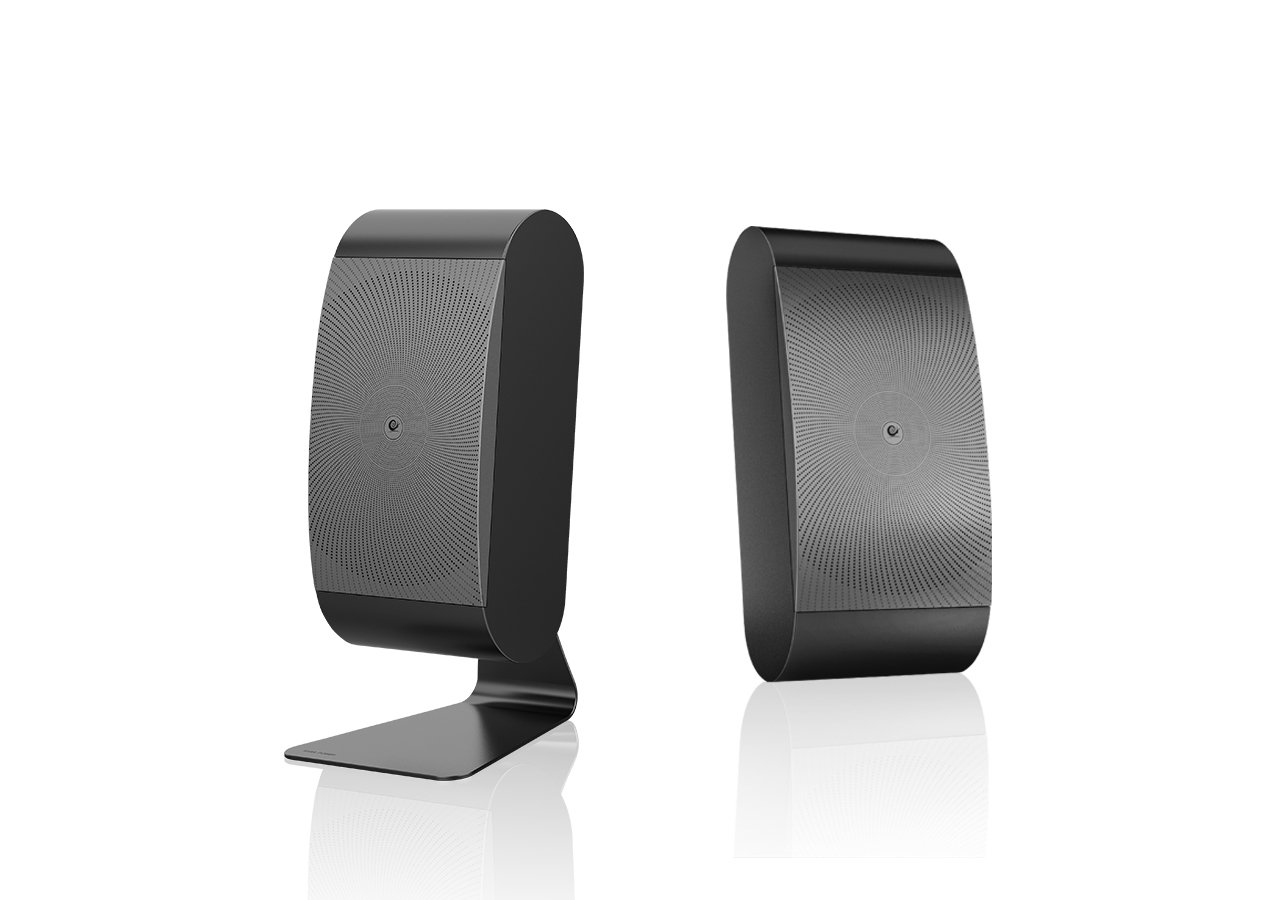
The U4max 5.1 cinema-and-karaoke package is a surface-mount living room cinema system: five U4max cabinets, one C110 subwoofer, an AV-700III AV receiver and an MU-1, at a price quoted on request for the package, with no hole cut in the ceiling, installed into a living room that people are already living in. The renovation stage is behind you, the ceiling is closed, the furniture is in, and you still want a 5.1 — this line was built for that order of events.
The clip the brand released runs six seconds. Six seconds cannot say anything about sound; it carries one action only, how the cabinet is fixed to a surface. So what follows is written around the product line itself: what it can do, what it cannot do, and why, both being 5.1, it costs markedly more than the CW90 set.
Key points
- The U4max is surface-mount: it goes onto the finished face of a wall or a ceiling, never inside the slab, and no cut-out is made.
- The full 5.1 cinema-and-karaoke package is quoted on request, and it includes five U4max, a C110 subwoofer, an AV-700III, an MU-1 and two F60D.
- What it deletes is the build sequence: cutting the hole, skimming the plaster, painting, waiting for the paint to dry — none of those steps are in the process any more.
- The trade-off is that it is visible, and so is the cable; there is no way around that on this route.
- Anyone whose requirement is "you cannot tell a cinema was installed" should not start here. The CW90 or the IW3max is the starting point instead.
1. Six Seconds, and the Build Sequence It Deletes
A flush-mount installation is a chain of steps that cannot be skipped: mark the position, cut the hole, confirm where the joists run, pull the cable, fix the cabinet, skim the plaster, paint, wait for it to dry. The CW90 takes a Ø90mm cut-out; the Mini and the IW series take a cut-out that differs by model; one cabinet, one hole, and five cabinets mean five holes. Two of those steps are outside your control — the skim needs time to set, and the paint has to dry right through. The schedule is not yours; it belongs to the foreman.
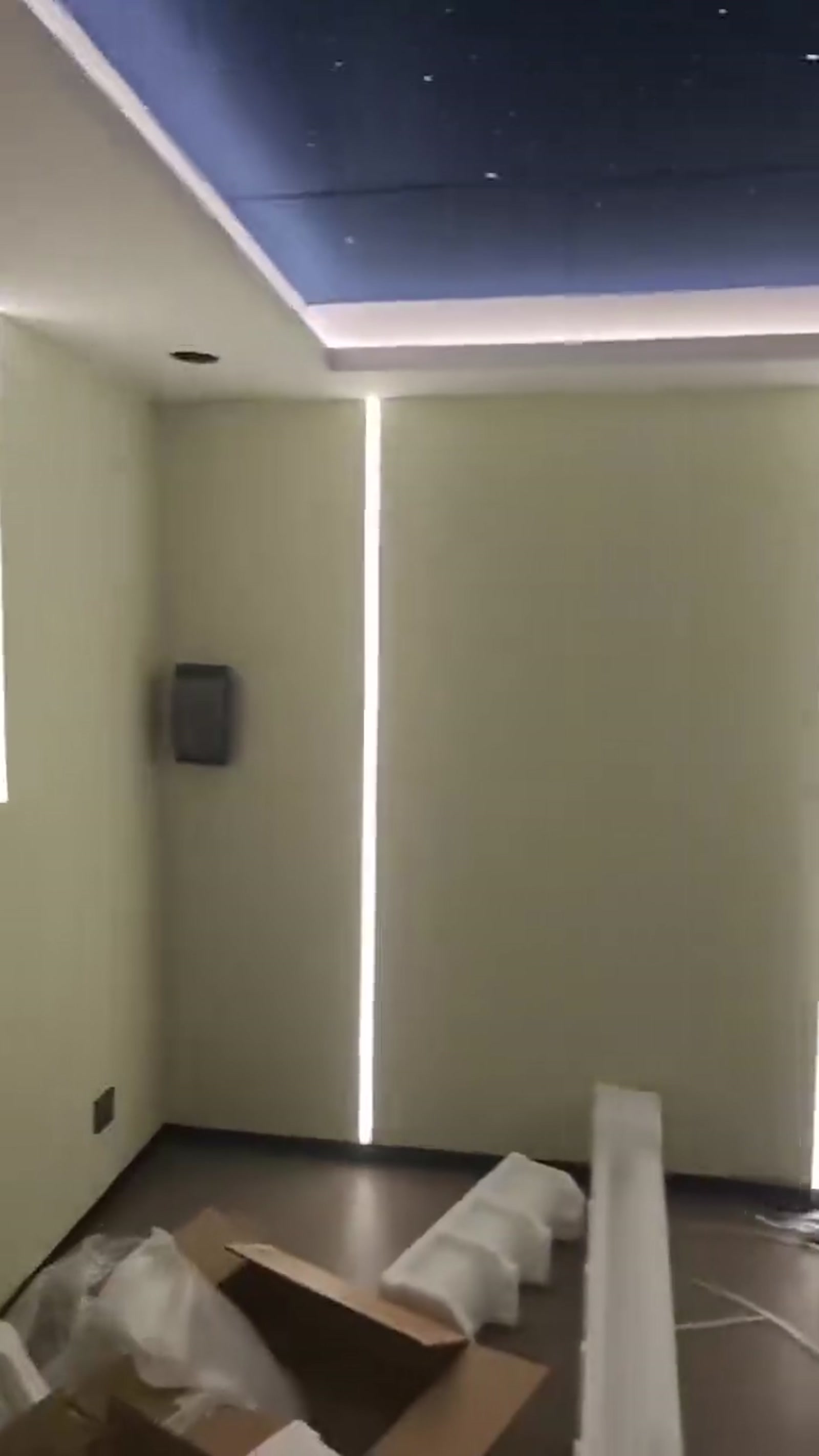
Surface mounting cuts that chain down to its back half. The face of the wall or the ceiling is already a finished surface, the cabinet is fixed onto it, and the cut-out becomes a handful of fixing points; the skim and the paint leave the process altogether. Cutting a hole is renovation work; hanging a cabinet is installation work. The two do not cost anything like the same amount of time, and that is why six seconds is enough: it is not fast-forward, there are simply fewer actions to show.
The trade-off: surface mounting actually asks more of the substrate. The cabinet hangs on the wall or the ceiling, so whatever is behind it has to carry the load. Emulsion paint is easy enough to deal with, but on microcement, decorative plaster or stone one fixing leaves one mark and there is no second chance at the position. Get the position wrong and what you are facing is not a patch of filler; it is a whole wall.
2. It Solves the Order of Events, Not the Invisibility
The concealed route does physical separation: it takes the cabinet out of the room layer and puts it into the ceiling or the wall. The CW90 is that idea — a Ø105mm faceplate, 100mm of height, one Ø90mm hole left in the ceiling, flush when it is finished, reading as a downlight.
The U4max takes the other route: the cabinet stays in the room, mounted on a finished surface. It does not pretend not to exist. That is both where its efficiency comes from and where its boundary sits — no waiting for the ceiling, no waiting for paint, no redrawing a construction plan for the sake of one hole, but you look up and it is there.
So do not compare the two lines as if they were one thing. For someone who wants "you cannot tell a cinema was installed", the U4max is wrong from the starting point; the route only holds if you can live with a few more cabinets on the wall in exchange for a process that does not turn the house over. Selection goes wrong at this step more often than anywhere else: price first, then performance, and only afterwards the discovery that the performance was not the thing you wanted.
The trade-off: surface mounting does not deliver the result called invisible, and choosing it means accepting that. The sentence does not look good on a product page, but it can save you one return.
3. Four Lines in One Table, and Where the Difference Sits
Put the 5.1 cinema-and-karaoke lines the brand currently sells side by side and the difference is visible at a glance:
| Product line | Mounting method | Ceiling cut-out | 5.1 cinema-and-karaoke package |
|---|---|---|---|
| CW90 | In-ceiling, dedicated 5.8G channel | Ø90mm | Price on request |
| Mini | In-ceiling | Differs by model | Price on request |
| IW3max | In-wall | Differs by model | Price on request |
| U4max | Surface-mount, on-surface installation | No cut-out | Price on request |
Four packages all called 5.1, and the table spans a wide range. That money is not in whether the speakers are good; it is in the structure of the configuration. The CW90 set is 5.8G wireless with a W10 subwoofer and an MS-1; the U4max set is a C110 subwoofer with an AV-700III, an MU-1 and two F60D. A different subwoofer, a different amplifier, different peripherals. The share of the budget that the cabinets themselves take up is lower than most people estimate.
The trade-off: every price in that table is a package delivery price; it excludes ceiling modification, wall treatment and power points. Site costs are worked out per house, not per product. So I cannot quote a figure here for what your home will cost — the state of your ceiling and your walls decides the total more than the choice of line does.
4. No Cut-Out Does Not Mean No Cable
This is where surface mounting is most often misunderstood. Home theater wiring is not something the U4max removes for you; it moves the cable out of the ceiling and onto the surface. Speaker cable runs from the cabinet to the AV-700III, either in trunking, or along the skirting, or hidden behind the cabinetry.
The CW90 set is the other answer: a dedicated 5.8G channel, with no cable between the cabinets. It suits a house where the ceiling is already closed and nobody wants to add trunking to the walls. Both are "move in once it is installed", but one saves the drilling and the other saves the cable runs; do not put those two accounts down as one.
The trade-off: if the walls are tile, microcement or wood veneer, surface trunking is ugly enough to make you regret the fortnight you saved. A house like that has two options: settle the trunking positions at the wall-design stage, or change to a wireless solution. There is no such thing as getting used to surface cable; noticing it three months after the handover is common.
5. The Karaoke Half, and Five Kinds of Buyer Who Should Walk Away
This package is configured as cinema plus karaoke: the AV-700III is the amplifier, the MU-1 is on the list, and the two F60D are on the list as well. Karaoke is not an option bolted on afterwards; two uses are what leaves the factory. For a living room that is the money-saving end of the deal — one system with two uses, and no second KTV set to buy. SNAIL POWER positions this line as "one set is enough in the living room", and that structure is what carries the claim.
The trade-off: karaoke loads a cabinet differently from film. A film is short bursts of large dynamics; singing is a long stretch at medium-to-high level, and the heat accumulates. A surface-mount cabinet hangs on a surface and its depth is limited by the installation conditions; two hours of singing and one film are not the same load. Once a week, this set is enough. Three times a week at two hours a session, look at a line with larger cabinets — that is a different budget band.
Telling you who it does not suit is more useful than praising it:
- The goal is "you cannot tell a cinema was installed". Buying the U4max will disappoint you. For that result, look at the CW90 (Ø90mm cut-out) or the IW3max (cut-out differs by model).
- Surface trunking on the wall is completely unacceptable. On this line the cable is on the surface. The CW90 runs a dedicated 5.8G channel with no wiring, and a house like that should take it.
- The budget stops below the mid tier. Entry starts with the CW90 package. The U4max package is a tier above, which is not the same band.
- The renovation is still running and the ceiling is not done. The fortnight a surface mount saves is worth nothing to you now; in-ceiling or in-wall is the better value at that point, because the same money buys a higher configuration.
- You want 7.1. This is a 5.1 structure and it ends there. Above it is the IW6 WIDE set, or a move across to the X series altogether.
6. In One Sentence
The U4max is a line that trades installation method for a result: it does not give you invisibility, it gives you not having to wait for the renovation. The decision can be short — if the ceiling is closed and will not be touched again, that price buys the fortnight you do not lose and the certainty of no rework; if the renovation is still running, or the result you wanted was "you cannot tell a cinema was installed", that money sits better on the CW90 or the IW3max.
Surface-mount living room cinema speakers are not a replacement for in-ceiling speakers; they are a route added for houses whose order of events is already fixed. A house whose order is right has no use for it. That is not a fault; it is a division of labor.
The trade-off: one honest line to close on — part of what that price buys is not sound, it is the convenience of the installation. If your room is in the middle of a renovation anyway, you have no use for that convenience, so do not pay for it.
Related articles
- AV-700III vs AV-900II: 5+2 or 7+2, and Where the Money Goes
- B28, C110, S10D or X135: Picking the Subwoofer by Room Size
- U3 vs Other Speakers: What Only a Live Comparison Shows (Video)
END
#U4max #SurfaceMountSpeakers #LivingRoomCinema #HomeCinemaPackage #InvisibleCinemaSpeakers #HomeTheaterWiring #CinemaKaraokeSystem
Written by Digital Xiaoniu, first published on the SNAIL POWER official site, Product News.