Home / News / Product News / AV-700III vs AV-900II: 5+2 or 7+2, and Where the Money Goes
AV-700III vs AV-900II: 5+2 or 7+2, and Where the Money Goes
2026-11-25 18:05 · Product News
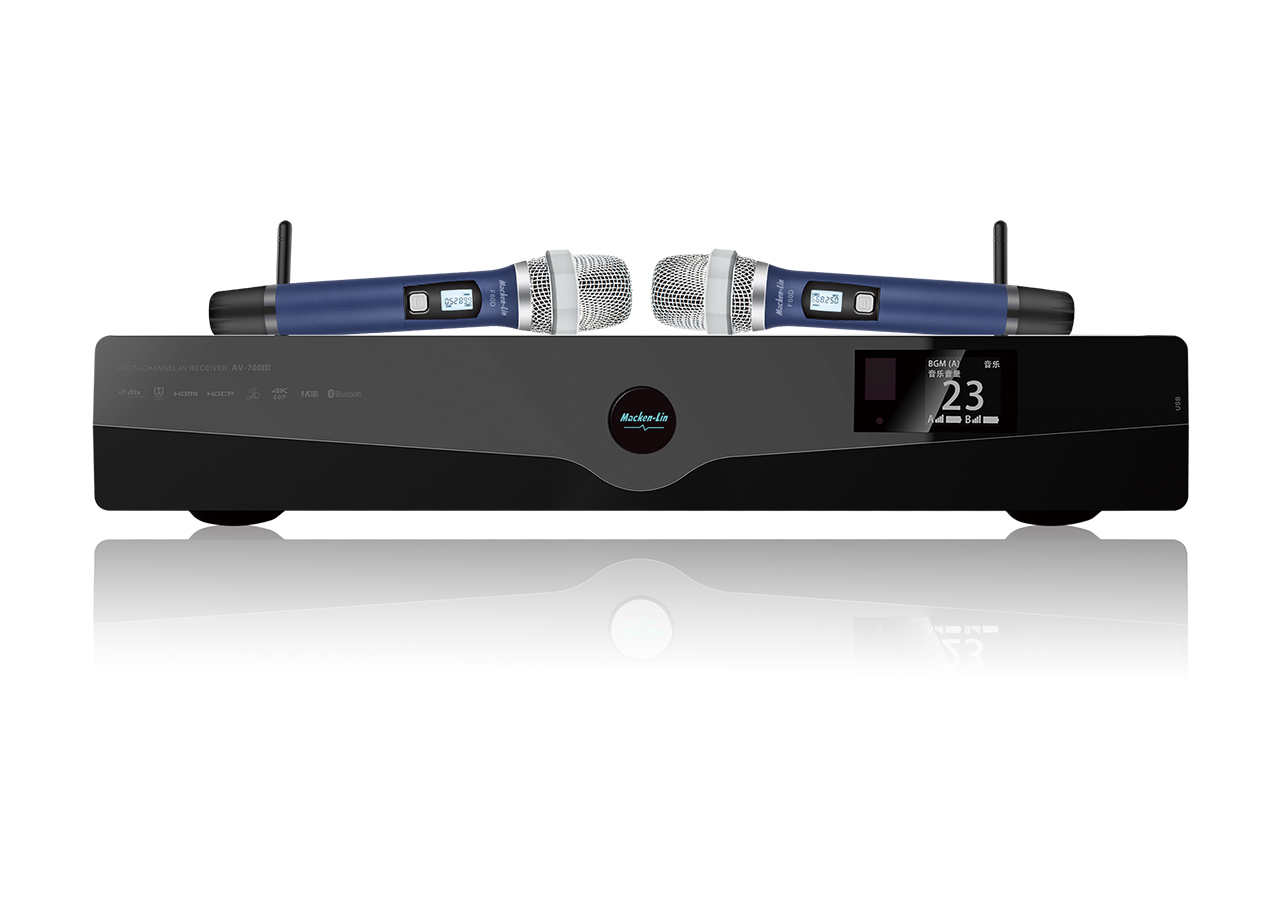
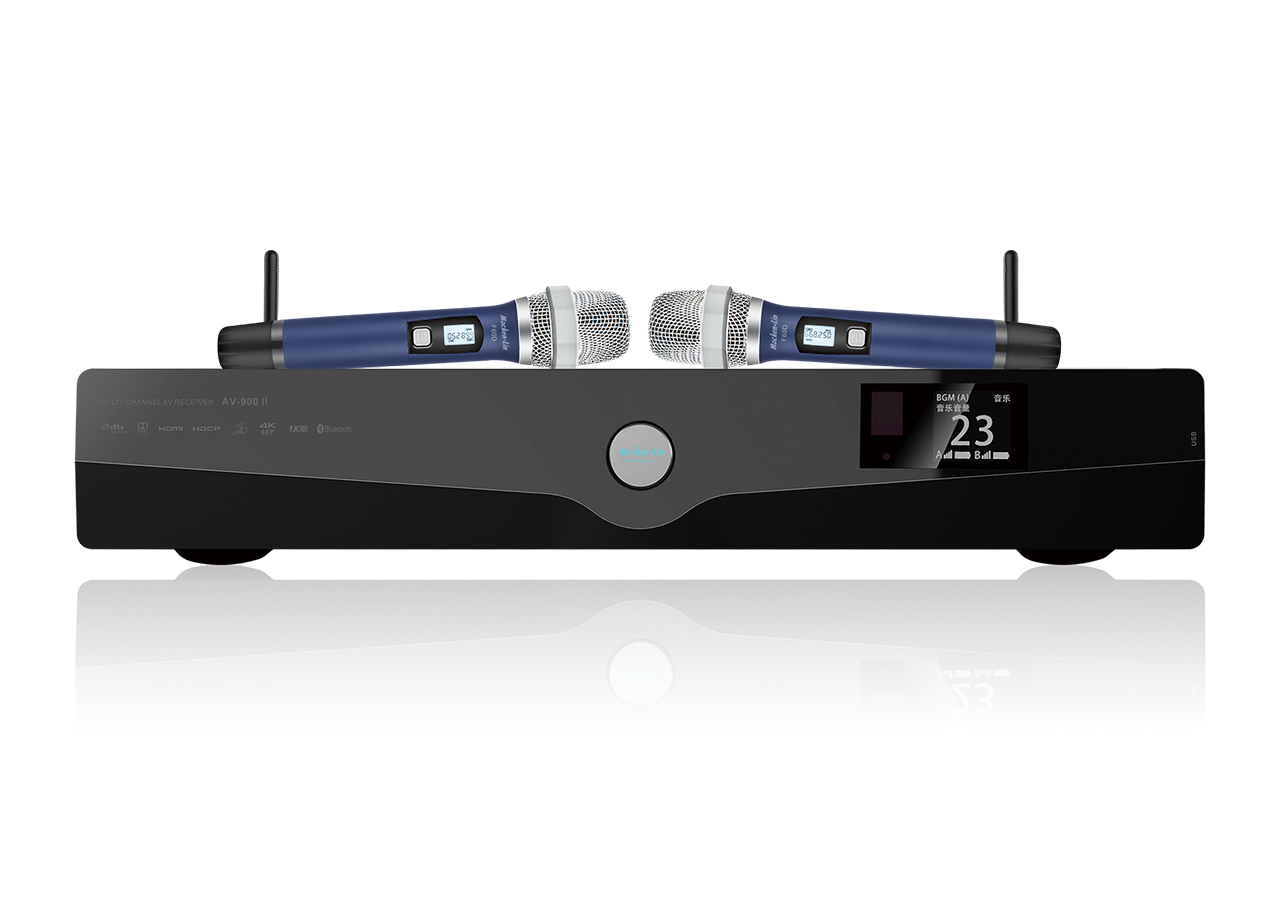
AV-700III and AV-900II are the two cinema-and-karaoke AV receivers in the SNAIL POWER range: 5+2 channels and 7+2 channels, 100W per channel, and a 5.1 wireless cinema package with in-ceiling cabinets starting at the entry tier (the CW90 package). On paper what separates them is two amplifier channels and 0.8kg of net weight. The money is spent in two completely different places.
Key points
- One is 5+2 channels at 5×100W; the other is 7+2 at 7×100W.
- Channel count and net weight are the only differences; every other figure is the same.
- The dividing line sits in the two optional wireless channels behind the "+2": an extra pair of channels needs a position to sit in and a signal to feed it.
- 100W per channel against the CW90's 90W per unit leaves under ten percent headroom, and that margin is there to keep the driver from burning, not to make the system louder.
- Dolby Atmos and DTS:X certification in progress. Until the approval letter arrives, do not treat certification as a reason to buy.
1. On Paper the Difference Is Three Lines: Channels, Power, Net Weight
Lay out the specifications of both machines and the overlap is larger than the difference: distortion, signal-to-noise ratio and gain carry identical figures, and the chassis is the same 68mm-high slim box. Those numbers say both come off one design line — the amplification architecture and the parts have not been split apart.
Only three lines differ: 5+2 against 7+2, 5×100W against 7×100W, 6.2kg against 7kg. Two more amplifier channels inside the same 68mm chassis add 0.8kg, and that 0.8kg is the weight of circuit boards and heatsink hardware, not mysticism.
The trade-off: the two extra channels on the AV-900II only count if the room genuinely holds two more speakers and you are willing to pay for those two cut-outs. Buy 7+2 for a living room that runs 5.1 and the extra money does not turn itself into sound.
2. The Two Extra Channels Have to Ask the Ceiling First
The "+2" is an optional wireless channel pair, and it only exists once the wireless module is fitted. Mapped onto an in-ceiling 5.1.2 or 7.1.2 layout, it corresponds to the ceiling layer, and that layer is exactly where concealed cinema speakers earn their keep: the cabinet hides in the ceiling, the sound leaves through a Ø90mm hole, and the aim still has to land on the sofa.
The CW90 has a Ø90mm cut-out, a Ø105mm faceplate and a 100mm cabinet height, so the ceiling has to leave at least 100mm of clear space. Positions are contested as well: air-conditioning vents, downlights, access panels and joists all fight the cut-out. This is content that belongs to the home cinema design stage — a hole in the wrong place is cheap to fill and skim, a ceiling opened a second time is not.
The trade-off: in a house with under 100mm of ceiling clearance, no amount of money gets a CW90 in. That is a dimension problem, not a selection problem. Where the clearance is fine but the positions are taken by vents and downlights, 5.1.2 is off too and the layout falls back to 5.1: the money for two ceiling cabinets is saved, and the soundfield loses one layer of height information.
3. Two Tables: The Specifications, and Where the Money Goes
Specifications first. The two machines share most of them.
| Parameter | AV-700III | AV-900II |
|---|---|---|
| Channels | 5+2, wireless optional | 7+2, wireless optional |
| Rated peak power | 5×100W + 2×80W | 7×100W + 2×80W |
| Distortion | <0.03% | <0.03% |
| Net weight | 6.2kg | 7kg |
Now the standard packages built around the AV-700III. These are complete delivery prices, taken from the official price list and valid in November 2026. Every tier includes one AV-700III AV receiver and one MU-1 player; U3, Mini and U4max add two F60D wireless microphones.
| Package | Speakers and subwoofer | Price |
|---|---|---|
| U3 5.1 cinema and karaoke | U3×5 + B28 subwoofer | Price on request |
| Mini 5.1 cinema and karaoke | Mini×5 + B28 subwoofer | Price on request |
| IW3max 5.1 cinema and karaoke | IW3max×5 + B28 subwoofer | Price on request |
| U4max 5.1 cinema and karaoke | U4max×5 + C110 subwoofer | Price on request |
| IW4pro 5.1 cinema and karaoke | IW4pro×5 + C110 subwoofer | Price on request |
The CW90 is a separate line: it runs on a 5.8G dedicated channel with the MS-1 wireless module and the W10 subwoofer, price on request for the complete set, and it is not among the AV-700III configurations. It is set beside those five tiers only to give the entry price a reference point — all of them are called 5.1, the spread runs across a wide band, and most of the difference lands in the subwoofer and in the number of speakers.
The trade-off: the prices in the table do not include making good the ceiling after the cut-outs and they do not include acoustic treatment, nor do they cover the AV-900II tier: a 7+2 configuration is not a standard package and has to be quoted against the actual number of cabinets and the subwoofer chosen. To compare against this table, ask first whether the figure quoted is for the whole package or for a single unit.
4. 100W Into a 90W Driver Leaves Under Ten Percent
Rated peak power is 100W per channel; the CW90 is rated 90W per unit. On paper the headroom is under ten percent. That looks tight, but the CW90 is a 2.75-inch full-range driver with a passive radiator: the low band is handed to the W10 or the B28 subwoofer, the unit only does the part it is good at, and its maximum SPL is quoted at 111dB.
In living room cinema the power sum is worked out per speaker, not per square metre of floor. Push a 90W driver hard past 111dB and the driver gives out before your ears do. So the value of these two machines is not that they can drive the cabinets; it is where the crossover point sits, at what level the protection trips, and how the limiter on the karaoke path compresses.
Protection logic is the hard part to write about. A 2.75-inch driver fears two things: large low-frequency signals, and long stretches at full power. The amplifier has to pull the signal in while the music still sounds normal. Pull in too early and it sounds gutless; too late and the driver goes first. Little headroom does not mean little sound — the gap in between is closed on site, by tuning.
The trade-off: if the plan is one amplifier driving a pair of floorstanders, big orchestral dynamics or party-level low end, neither machine fits: small in-ceiling cabinets are the design target, and larger cabinets outrun both the power and the cooling. On the neighbour question there is a physical limit as well: nothing will make the flat downstairs completely inaudible, so where the floor is sensitive, a floating floor down there does more than a bigger amplifier.
5. Cinema and Karaoke in One Box: Half the Money Is in the Mic Path
Both machines belong to the cinema-and-karaoke integrated AV receiver class, which means cinema decoding and karaoke microphone processing live in one chassis. The manual specifies a BNC antenna connector, so wireless microphone reception is one box you do not have to add. For a living room that saves space: one less device and one less power cable in the TV cabinet.
The compromise is in the mixing. Cinema wants each channel separate and time-aligned; karaoke wants the microphone signal sitting above the backing track, with reverb that does not smear. Two routings, one machine, switched over by scene presets. What has to be tuned on site afterwards is microphone gain, reverb depth and the level of each channel — get those three wrong and the convenience of one box turns into a compromise at both ends.
The trade-off: karaoke's high sound pressure and cinema's wide dynamics draw on the same reserve of power, and one machine cannot meet both limits at once. Sing close to the edge of feedback and also want explosion scenes uncompressed, and two separate machines are the steadier arrangement; keep the living room under 20 m² and use karaoke only occasionally, and this is where the one-box machine pays.
6. Who Should Not Buy, and One Judgment
The order of judgment is better reversed: ceiling clearance and cut-out positions first, then whether the sofa can come away from the wall with room for two rear surrounds, and only then the amplifier.
Who should not buy the AV-900II. If the living room is not deep enough and the sofa sits against the rear wall, the two rear surrounds of 7+2 have nowhere to go and the extra channels stay empty. If the budget stops just above the entry tier and the system has to be complete in one go, the AV-700III's 5+2 already covers both 5.1 and 5.1.2, and the money saved is more audible in the subwoofer.
Who should not buy either machine. Anyone planning a pair of large floorstanders as the main speakers and listening mostly to two-channel music; a house still at bare shell where a dedicated media room is planned on a 7.2.4 layout, which is X-series work; and anyone who only wants to fix television sound with one soundbar — an AV receiver plus five in-ceiling cabinets is over-specified for that.
The trade-off: the two extra rear surrounds of 7+2 need positions of their own, and the two Ø90mm cut-outs and the stretch of ceiling clearance have to be counted together with them. None of those three can be added afterwards.
In one sentence: the price difference between the AV-700III and the AV-900II buys two amplifier channels and two channel positions, not a tier of sound quality. If the room takes 7.1.2 and you are willing to drill two more Ø90mm holes in the ceiling, take the AV-900II; if it does not, the AV-700III's 5+2 is the form this system should take.
The exit conditions are worth writing down too: ceiling clearance under 100mm, a sofa against the rear wall, or a budget under the entry tier — any one of the three and this selection does not apply to you. Fix the house first, then discuss the amplifier. As for certification, Dolby Atmos and DTS:X certification in progress; wait for the approval letter before counting it as a selling point.
Related articles
- B28, C110, S10D or X135: Picking the Subwoofer by Room Size
- U3 vs Other Speakers: What Only a Live Comparison Shows (Video)
- CW90 Wireless vs Wired In-Ceiling: Where the Money Goes
END
#AV700III #AV900II #HomeCinemaKaraoke #ConcealedSpeakers #LivingRoomCinema #CeilingClearance #SnailPower
Written by Digital Xiaoniu, first published on the SNAIL POWER official site, Product News.