Home / Support & Downloads / In-wall or in-ceiling: what a living-room cinema should use
In-wall or in-ceiling: what a living-room cinema should use
In short: L/C/R in-wall for stable imaging; surrounds and heights in-ceiling for easier build. If the walls cannot be cut, all-ceiling works - at the cost of a higher image.
The difference is where the image sits
In-wall speakers sit at ear height, so dialogue stays anchored. Ceiling speakers come from above: natural for surrounds and heights, vague for dialogue.
Build conditions decide feasibility
In-wall needs the wall opened and is hard on structural, stone or service-filled walls; ceiling only needs a cuttable ceiling - which is why finished living rooms usually end up all-ceiling.
By channel
| Channel | Preferred | Why |
|---|---|---|
| L / C / R | In-wall | Image at ear height |
| Side / rear surrounds | Either | Depends on wall |
| Height (Atmos) | In-ceiling | Only sensible position |
| Background music | In-ceiling | Even coverage |
Cost: mixing the two means calibrating level and delay per channel, or the image drifts.
Related
- Selection guide hub
- CW90 with height channels: two ways to build 5.1.2
- IW3max vs IW4pro: what 85 mm and 105 mm really change
- IW4pro vs IW6 WIDE: what 105 and 185 mm change for a room
- Wireless cinema latency: will lip-sync drift?
- Should you pre-wire the living-room cinema?
- Troubleshooting
- Case breakdowns
- Download center and support
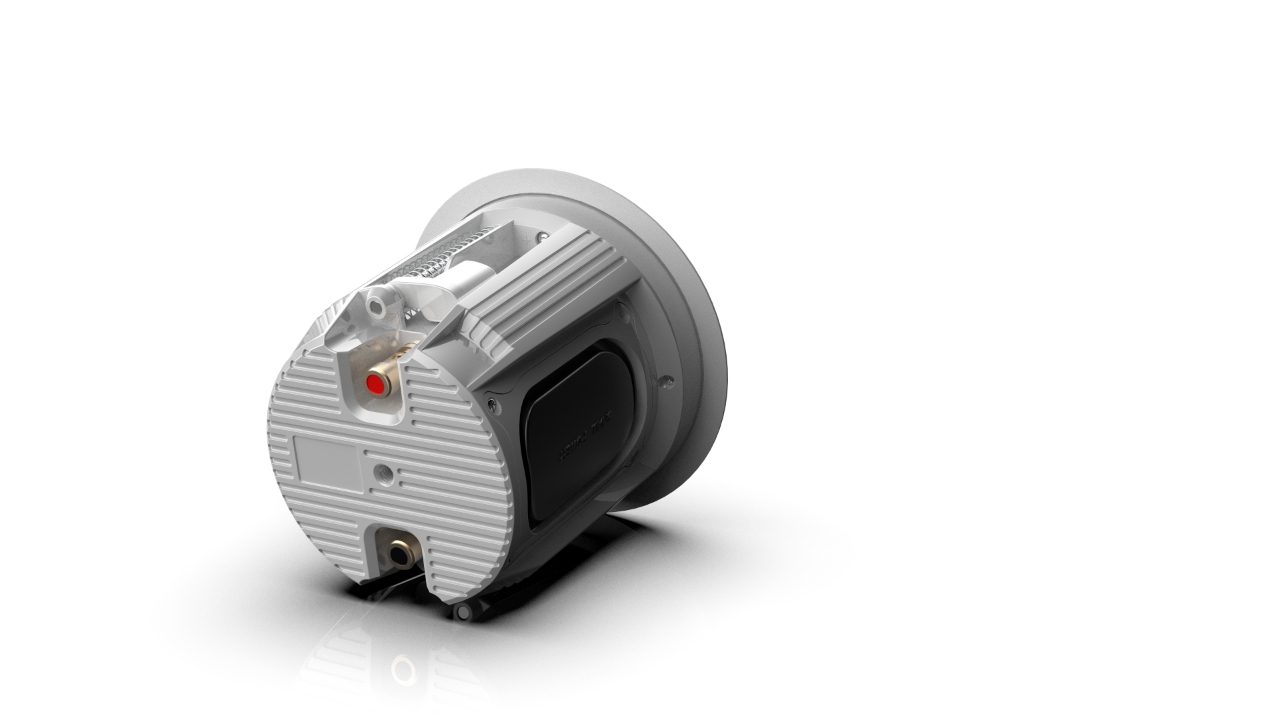 IW4pro On-Site Install: One Case Start to Finish in 77 Seconds (Video)
 U4max in 6 Seconds: How the Surface-Mount Install Works (Video)
 U3 vs Other Speakers: What Only a Live Comparison Shows (Video)