Home / News / Product News / Subwoofer Placement: Corner, Side Wall and Behind the Sofa
Subwoofer Placement: Corner, Side Wall and Behind the Sofa
2026-11-13 · Product News
Conclusion: the subwoofer's position matters more than its model, and a corner can add 6dB plus 6dB of boom
Many people swap subwoofers without getting satisfying low end; the problem is usually placement. In the same room, with the same subwoofer, a corner and an asymmetric position can differ by more than 10dB across 40–80Hz. That difference comes from room modes, not from the quality of the subwoofer.
This article explains the acoustic difference between four common positions, then gives a method for finding the right spot without measurement gear.
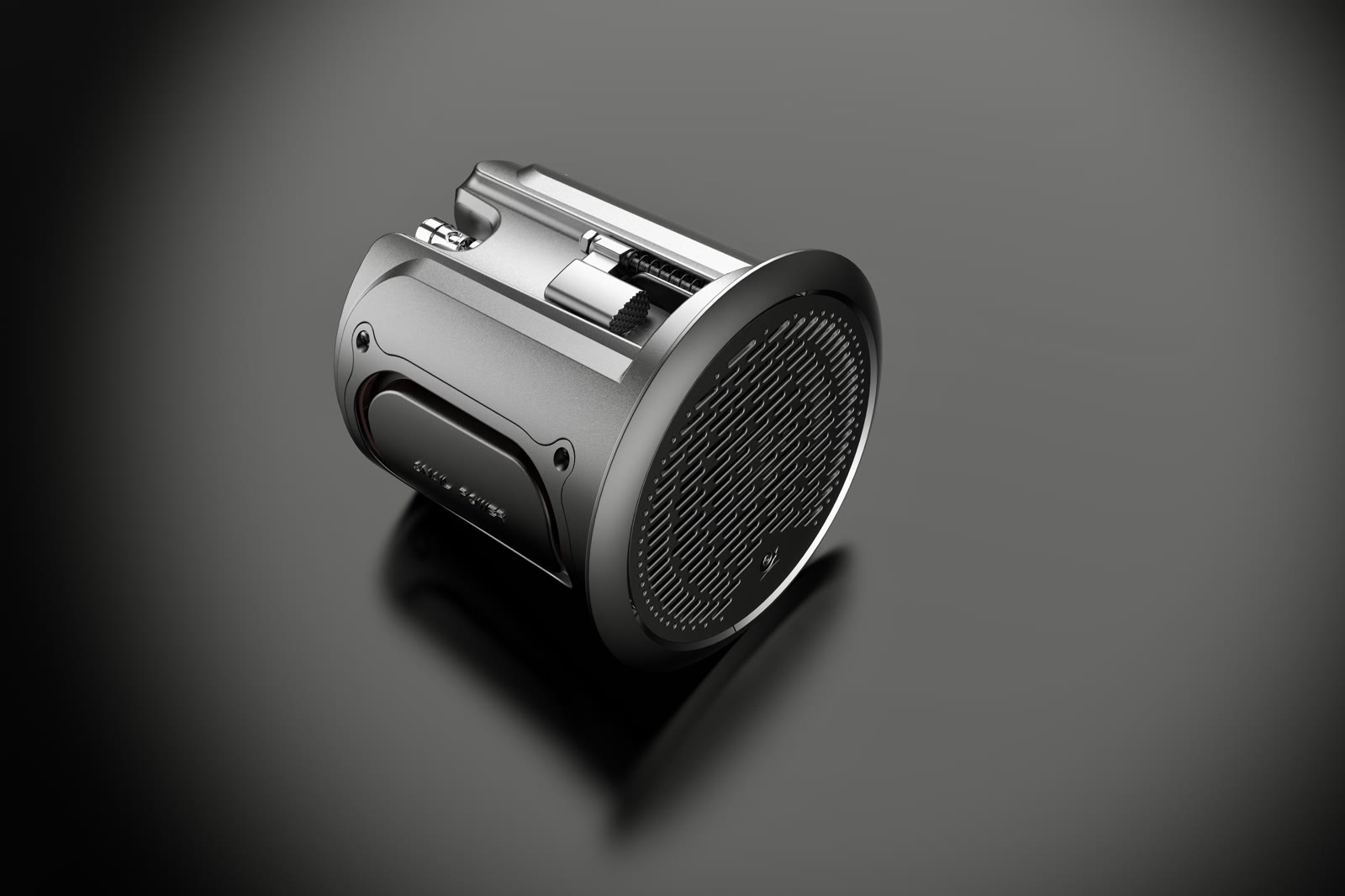
1. How the four positions differ
| Position | Low-frequency output | Main risk | Suited to |
|---|---|---|---|
| Corner (two walls) | Highest, +3~6dB | Modes excited at the same time, boom | Small rooms, a subwoofer on the small side |
| Against one side wall | Medium | Left-right asymmetry, skewed soundstage | Space on one side of the sofa |
| Room center line | Lowest | Not enough output, but the cleanest | Large rooms, a large enough subwoofer |
| Behind the sofa (near field) | Strong physical impact | Poor localization, direction easily heard | Workarounds, when the front end stays put |
The point is not which position is better, but whether your room has a pronounced peak between 40–80Hz. With a peak, a corner magnifies it; without one, a corner adds output instead.
2. Finding the spot without instruments
The method is the subwoofer crawl: put the subwoofer at the listening seat (around ear height), play a sustained low-frequency signal (a bass test track, or a sustained low-frequency passage from a film), then crawl around the room and find the point where the low end is most even and does not boom. That point is where the subwoofer belongs.
- Connect the subwoofer, set the volume to medium, and crouch or lie at each candidate point.
- Play a sustained 40–80Hz signal and listen for the place where output is sufficient but not boomy.
- Move the subwoofer to that place and sit back on the sofa to verify.
- Keep adjustments within 30cm; a 10cm shift already changes the response.
Without a test signal, a double bass passage or sustained low-frequency ambience from a film will do. The method is not precise, but it is far more reliable than putting the subwoofer in a corner by feel.
3. Phase and crossover: the two switches most often forgotten
- Phase (0/180°): around the crossover point the subwoofer and the main speakers add or cancel. Sit in the main seat, switch between 0 and 180, and choose the setting where the low end is firmer; with a measurement microphone, check for a dip near the crossover point.
- Crossover point: commonly set to 80Hz. With small main drivers (Ø85–90mm), try 90–100Hz so the subwoofer carries more; with large main speakers, 60–80Hz is more natural.
- Level: do not set the subwoofer volume by what feels impressive; align it to the main speakers with a test signal, then check with film clips.
4. When to change the subwoofer instead of moving it
| Symptom | What to adjust before swapping | When to change the subwoofer |
|---|---|---|
| One seat booms badly | Move it, adjust phase | After moving, that one spot still booms |
| No output overall | Corner, raise the level a little | The subwoofer distorts or bottoms out at maximum volume |
| Big scenes collapse | Crossover point, level | The room is far larger than the subwoofer can handle (e.g. 60 m² with a 10-inch) |
| Low end drags and blurs | Position, mode treatment | Switch to a sealed subwoofer, or add a second subwoofer |
5. Who should not buy a large subwoofer
- Rooms smaller than 15 m²: a large subwoofer in a small room excites modes harder; address the room before changing hardware.
- Neighbors sensitive to low frequency, no soundproofing: low frequency penetrates well compared with other sounds; address building isolation beforehand.
- Switching it on just for films: the low end is part of the system, and leaving it off for long periods wastes it.
6. Placing two subwoofers, and when not to add one
The main problem with a single subwoofer is not a lack of output; it is that some seat in the room always gets the low end wrong. The value of a second subwoofer is that it spreads peaks and dips out, not that it plays louder.
| Layout | Effect | Suited to |
|---|---|---|
| Both on the front wall, symmetrical | More even low end, some modes cancelled | Most living rooms |
| One on the front wall, one beside or behind the sofa | Stronger physical impact, but phase is harder to set | Home theaters where impact is the goal |
| Both stacked in the same corner | Output +6dB, modes +6dB too | Not recommended |
Before adding a second subwoofer, ask: is the existing one placed as well as it can be? Adding a subwoofer before fixing placement copies the problem.
7. Common questions
Q: Are two subwoofers better than one?
In a difficult room, two small subwoofers placed symmetrically are often more even than one large subwoofer, but setup takes twice the effort.
Q: Can the subwoofer go in a cabinet?
Not advisable. The cabinet resonates, the low end gets trapped, and heat dissipation becomes a problem.
Q: Do carpets and sofas absorb the low end?
They absorb mid and high frequencies. Low frequency is set mainly by room dimensions and position; furnishings have little effect.
Q: How do I tell a mode from an underpowered subwoofer?
Listen from another position: if it clearly improves, it is a mode; if it is thin everywhere, the subwoofer is not enough.
8. Matching models
10-inch class: B28 (sealed, small, suited beside the sofa); more dynamics: X135; for complete systems see the IW3max-S10D 5.1 set and the X-Series 7.1.4 set.
One-line verdict
Place the subwoofer correctly before talking about replacing it. Dodge the peaks the room gives you with position and phase; for the ones you cannot dodge, a better subwoofer presses them down.