Home / News & Projects / Product News / S10D Subwoofer Close-Up: How the Low End Is Built (Video)
S10D Subwoofer Close-Up: How the Low End Is Built (Video)
2026-11-29 09:05 · Product News
The S10D is the subwoofer in SNAIL POWER's 7.1 concealed cinema package: seven channels buried in ceiling cut-outs that differ by model, the whole set quoted on request, for a living room already boarded and closed, where nobody wants to see a speaker again.
The video is a close-up of the S10D, and anyone who cannot watch the picture asks the reasonable question: what is there to film about one subwoofer on its own. The low end is not photogenic: it works by the room, not by shape. Most of the money goes into what you cannot see, plus one item that has to stand on the floor.
Key points
- The low end rests mostly on the subwoofer. The CW90 is a 2.75-inch full-range unit with a passive radiator and a limited bottom end; hand the low band over and the system stops sounding tight.
- The S10D appears on one row of the price list, the 7.1 concealed row; comparing its unit price against the 5.1 packages below it gets you nothing.
- The wavelength at 20Hz is 17.15m, and most living rooms cannot hold a whole wave; low frequency is a matter for the room.
- Two packages both called 5.1 can differ by half in price, and the difference sits mostly in the subwoofer and the amplifier, not in the speakers.
- The trade-off: a living room of a dozen-odd square metres, a very sensitive downstairs neighbour, or a household that only streams series and never pushes the sub — none should buy the subwoofer first.
1. What the S10D Does in the Package: Taking the Low Band Off the Main Channels
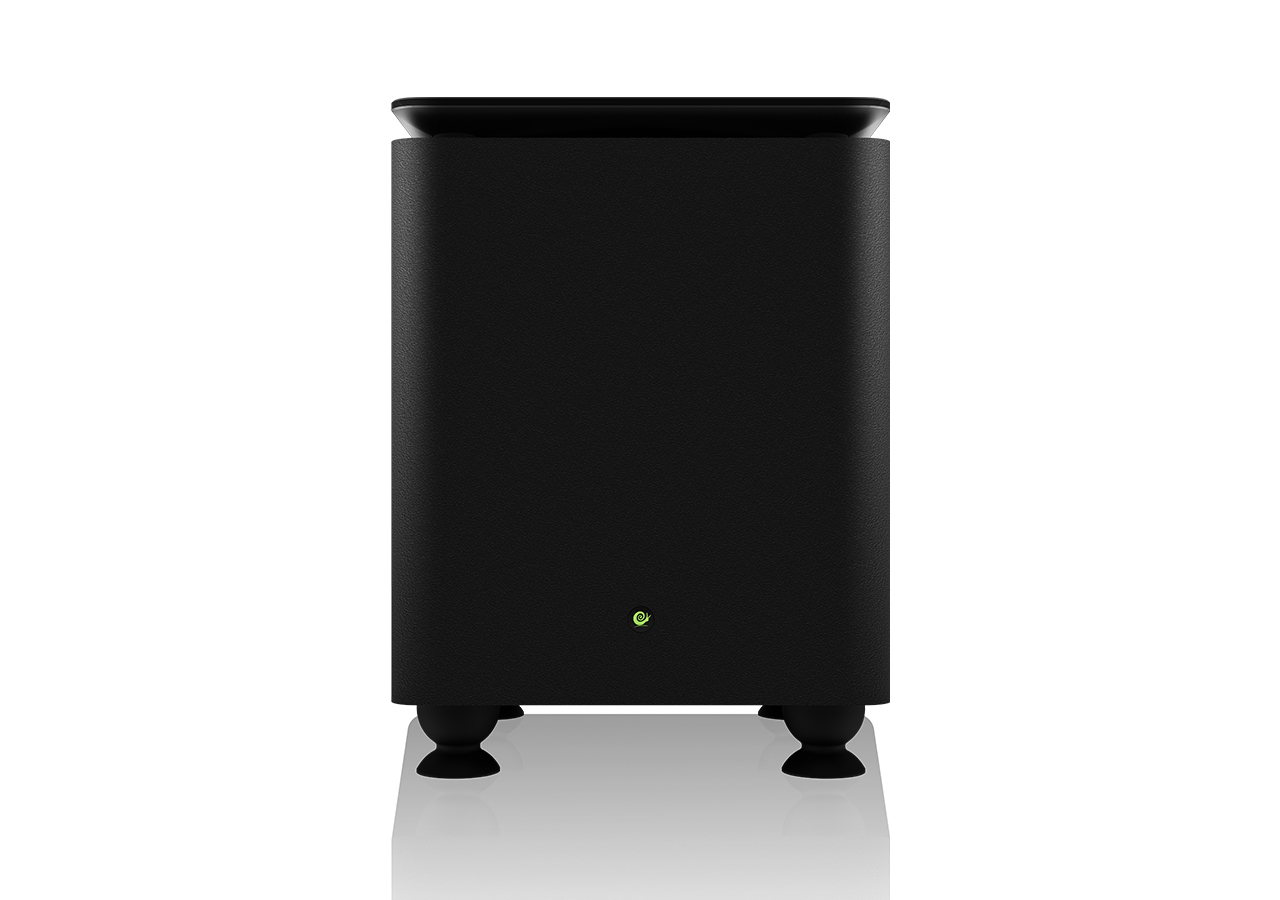
The division of labour is plain: the front three channels are IW6LCR-II×3, the four surrounds are IW6max×4, and the whole low band goes to the S10D. Seven cabinets go into the ceiling and the walls, and the only thing standing in the room is this subwoofer.
Cut the low frequencies out and the mains get an easier job. A 2.75-inch full-range driver, however finely voiced in the midrange, cannot move the air 40Hz needs. The crossover usually sits near 80Hz, and once the subwoofer takes over the mains work only in the mid and high band, where distortion and dynamic compression both drop. That is what the division of labour means: not that the subwoofer is louder, but that the mains no longer have to force themselves. Not one of the seven is designed to run below 80Hz; that was fixed when the package was laid out, and on-site tuning is not meant to patch it up.
The trade-off: the S10D is the one piece in the set that cannot be hidden. It takes floor area: against a wall, into a corner, behind the side of the sofa, any of those works; what does not work is inside a closed TV cabinet. Bass shut in a cabinet sounds present but unmoving — the money is spent, the result discounted. Concealed cinema can make seven cabinets disappear; it cannot make this one disappear.
2. How the Low End Gets Made: Three Ledgers, Two of Them Off the Cabinet
Displacement. The volume of air a low frequency has to move is the cone area multiplied by excursion. Large area means a large cabinet; that is physics. No subwoofer that wants to reach below 30Hz can be the size of a fist.
Power. The low band draws current, which is why subwoofers almost always carry their own amplifier and are active. The CW90 in the ceiling is rated 90W per unit at 111dB sound pressure — its limit inside a Ø90mm cut-out, a Ø105mm faceplate and 100mm of height. The subwoofer's amplifier is a separate ledger: the .1 output on a home theater receiver sends a signal, and what drives the cone is the amplifier inside the sub. A more expensive receiver buys better bass only while the subwoofer itself still has headroom.
The room. 20Hz has a wavelength of 17.15m; 40Hz, 8.58m. The long side of most living rooms is shorter, so low frequency stays in the room rather than travelling through it. The same subwoofer in a corner and at one third of the room's length can differ by a whole grade across the forty-to-fifty-hertz band. Tuning a subwoofer therefore starts with moving it, not with changing the electronics.
The trade-off: a subwoofer magnifies the room's problems along with everything else. A 40Hz peak you never noticed becomes boom once the sub is in. That is not the subwoofer's fault; it is the room's bill, paid with placement, a rug, soft panels behind the sofa, or DSP. It is also the part people are most often unhappy with after a living room cinema goes in.
3. The Numbers: The Physical Size of Bass, and Where the S10D Sits on the Price List
The table below is calculated at 343m/s. Only one thing needs noticing: 40Hz has a wavelength of 8.58m, longer than most living rooms are wide.
| Frequency | Wavelength | What that means in a living room |
|---|---|---|
| 20Hz | 17.15 m | A whole wave will not fit; the room pressurises it |
| 30Hz | 11.43 m | Roughly the diagonal of most living rooms |
| 40Hz | 8.58 m | Longer than the room is wide; standing waves form easily |
| 60Hz | 5.72 m | Close to the distance from the sofa to the TV wall |
| 80Hz | 4.29 m | The usual crossover point, where subwoofer and mains meet |
Below that, the room's own dimensions start taking part in making the sound. One subwoofer's specification says little on its own; what matters is where it sits in your room.
The S10D appears on this one row of the official price list, and no other.
| Product line | Configuration | Subwoofer | Package price |
|---|---|---|---|
| CW90 wireless cinema | 5.1 wireless cinema and karaoke: CW90×5 + W10 subwoofer + MS-1 | W10 | Price on request |
| U3 | 5.1 cinema and karaoke: U3×5 + B28 subwoofer + AV-700III + MU-1 + F60D×2 | B28 | Price on request |
| Mini | 5.1 cinema and karaoke: 5×Mini + B28 subwoofer + AV-700III + MU-1 + F60D×2 | B28 | Price on request |
| IW3max | 5.1 cinema and karaoke: 5×IW3max + B28 subwoofer + AV-700III + MU-1 | B28 | Price on request |
| U4max | 5.1 cinema and karaoke: U4max×5 + C110 subwoofer + AV-700III + MU-1 + F60D×2 | C110 | Price on request |
| IW4pro | 5.1 cinema and karaoke: 5×IW4pro + C110 subwoofer + AV-700III + MU-1 | C110 | Price on request |
| IW6 WIDE | 7.1 concealed: IW6LCR-II×3 + IW6max×4 + S10D subwoofer | S10D | Price on request |
The trade-off: that table reads easily as the pricier the row, the better the subwoofer, and it is not. The entry row carries a W10, and for a living room of a dozen-odd square metres it is already enough; force an S10D into a room that size and the low end has no distance to open out in, only more boom. Choose the subwoofer by the room, not by the top of the budget.
4. Concealment and Low End Are Misaligned by Nature: One Hides In, One Stands Out
What a client asks for is not a cinema; it is a cinema you cannot tell was installed. So concealed cinema speakers take another route: the cabinet leaves the room layer, into the ceiling and the walls, leaving only a Ø90mm cut-out that differs by model. The CW90 has a Ø105mm faceplate and stands 100mm high; that is the order of magnitude.
Low frequency does not join them in hiding. The reason is in the table above: wavelengths measured in metres, energy that comes from volume and displacement. So the real division of labour is this — mid and high concealed, low end in plain sight. That settles the two ways a living room cinema gets installed: fully hidden, with the low end carried by one well-placed subwoofer; or half hidden, with the subwoofer treated as a piece of furniture. There are usually only two or three usable positions: one side of the TV wall, behind the side of the sofa, one third of the way into the room.
The trade-off: if somebody tells you the low end can be hidden in the ceiling too, ask how low in hertz it goes. Cabinet volume in a ceiling is limited, and hidden bass usually stops at the mid-bass. Fully disappearing is not something a living room can do; accepting one subwoofer on the floor is what makes this 7.1 hold up.
5. Who Should Not Buy This S10D System
The room test. Boundaries first. A living room of a dozen-odd square metres, sofa two-odd metres from the TV wall, has no distance for the low end to open out in; getting placement and crossover right first does more than adding a subwoofer. An older building with a very sensitive flat below needs a floating floor before it needs speakers: speakers do not solve structure-borne sound, and that point cannot be fudged. A household that only streams series and never plays live recordings has enough in the CW90 5.1 wireless cinema, and no reason to go to 7.1 for one explosion.
The timing test. Once the boards are closed the ideal is a pre-install, but the CW90 runs a dedicated 5.8G channel and works without cable — the route left open for retrofits. What home theater wiring really has to fix in advance is the power outlet for the subwoofer and the rack position; both are expensive to add later.
The certification test. Dolby Atmos and DTS:X certification in progress for this system, so for now it can only be described as supported and in process, not as an approval already granted. It makes no difference to how it sounds; but if you need a certification status you can write into an acceptance sheet, you have to wait.
The trade-off: inside the package, the subwoofer is the piece that stands on the floor, and it is not easy to swap out. If the room is wrong for it, half of what it costs cannot be heard.
6. In One Sentence: It Takes the Low Band Off Seven Cabinets
Back to the opening: the S10D is the subwoofer in this 7.1 concealed cinema, and the whole set is quoted on request. Its value is not that the bass is fierce; it is that the low band is taken off seven concealed cabinets so they only do the mids and highs.
The decision is short. If you want a cinema you cannot tell was installed and you accept one subwoofer standing in the room, this holds — at the cost of one more visible piece of furniture and the money it takes to go to 7.1. If you do not want to see even the subwoofer, or the living room is a dozen-odd square metres with elderly people living downstairs, fall back to the CW90 package and make the 5.1 wireless cinema solid; that is better value than forcing 7.1.
The trade-off: the S10D only pays out in a room that gives it a place to stand and enough distance for the wave to open out; a room that gives it neither keeps the furniture and loses half the sound.
Related articles
- Soundstage Calibration: The Three Steps Before a 5.1 Handover
- The X Series: High-End Custom Cinema in 14 Seconds (Video)
- U4max in 6 Seconds: How the Surface-Mount Install Works (Video)
END
#S10D #SnailPower #Subwoofers #71ConcealedCinema #LowFrequency #ConcealedSpeakers #LivingRoomCinema
Written by Digital Xiaoniu, first published on the SNAIL POWER official site, Product News.