What are the key metrics and technical terms for judging speaker performance? Get them now!
1. Powered Speakers
A powered speaker is a speaker system with a power amplifier (amp) built in. The power amplifier and the driver system are made as one unit, so it can be connected directly to ordinary sources (a portable player, CD player, video disc player, VCR and so on) to form a complete audio setup. With powered speakers there is no need to buy a separate power amplifier and no agonizing over how best to match amplifier and speakers; operation is simple, and their extremely high performance-to-price ratio has made them widely accepted among wage earners.
2. Cabinet Types
Depending on the sound-production principle and the internal structure, speakers fall into several types: bass-reflex, sealed, flat-panel, horn and labyrinth. The two most important forms are sealed and bass-reflex. A sealed speaker is simply a driver mounted in a closed cabinet, and its efficiency is relatively low;
A bass-reflex speaker differs in having a round port on the front or rear panel. It works on the principle of the Helmholtz resonator, and its advantages are high sensitivity, greater power handling and a wide dynamic range. Because the sound waves behind the driver are also released through the port, its efficiency is higher than that of a sealed box. Moreover, the same driver mounted in a suitable bass-reflex cabinet produces bass sound pressure 3dB higher than in a sealed cabinet of the same volume, which benefits the low-frequency performance — an important reason why bass-reflex cabinets have become so widely popular.
3. Power
Sound quality has no direct relationship with power. What power determines is the maximum sound intensity a speaker can produce.
According to international standards, power is rated in two ways:
Rated power (RMS: root mean square of a sine wave) is the maximum electrical power that, when driving an 8Ω speaker within the rated range with a defined continuous waveform of simulated signal, repeated a set number of times at set intervals, does not cause any damage to the speaker;
Instantaneous peak power (PMPO) is the maximum power a speaker can withstand for a short time.
In 1974 the US Federal Trade Commission set a standard for rating power: with two channels driving an 8Ω speaker load, the effective wattage measured over 20–20000Hz with harmonic distortion below 1% is the amplifier's output power, and the figure on the label is the rated output power. Usually, to play to consumers' psychology, sellers quote instantaneous (peak) power, typically about 8 times the rated power. Consider that the very same PHILIPS TDA1521 amplifier chip (maximum rated power 30W at THD=10%) can be labeled 360W on some products, or even 480W P.M.P.O. — so when buying multimedia speakers, go by the rated power.
More power is not always better — what suits the situation is best. For an ordinary household room of about 20 square meters, a genuine 60W of power (meaning an effective speaker output of 30W×2) is enough, but the amplifier's headroom is better larger, ideally more than twice the actual output power. If the speaker output is 30W, for example, the amplifier's capability should ideally exceed 60W; in HiFi systems, the amplifiers driving the speakers are all very powerful.
4. Frequency Range and Frequency Response
Frequency range: the span between the lowest and highest effectively reproducible frequencies of an audio system;
Frequency response: when an audio signal at constant output voltage is fed to the system, the sound pressure the speaker produces rises or falls with frequency and its phase shifts with frequency; this frequency-linked relationship between sound pressure and phase (the amount of variation) is called frequency response, measured in decibels (dB).
An audio system's frequency characteristics are usually described by a frequency response curve, with power on the vertical axis on a decibel scale and frequency on the horizontal axis on a logarithmic scale. When the sound power is 3dB below normal power, that power point is called the high-frequency cutoff point or the low-frequency cutoff point of the frequency response. The frequencies between the high-frequency and low-frequency cutoff points are the device's frequency response; the curves of sound pressure and phase lag against frequency are called the "amplitude-frequency characteristic" and the "phase-frequency characteristic" respectively, together known as the "frequency characteristic". This is an important indicator of a speaker's quality, directly related to a speaker's performance and price: the smaller its decibel figure, the flatter the frequency response curve, the lower the distortion and the higher the performance. For example: a speaker with a frequency response of 60Hz–18kHz +/- 3dB. The two concepts are sometimes not distinguished and are simply called the frequency response.
In theory, a frequency response of 20–20000Hz is sufficient. Sound below 20Hz cannot be heard, but the body's other senses can detect it — you can feel the so-called weight of the bass. So to reproduce all kinds of instruments and speech signals perfectly, an amplifier must achieve high fidelity, reproducing every harmonic of the tone. The amplifier's frequency band should therefore be extended, down to below 20Hz and up to above 20000Hz. For signal sources (tuners, cassette decks, CD players and the like) the frequency response is expressed differently. For example, the European Broadcasting Union specifies a frequency response of 40–15000Hz +/-2dB for FM stereo broadcasts, and the International Electrotechnical Commission's minimum frequency response requirements for cassette decks are 40–12500Hz +/-2.5, +/-4.5dB (normal tape); the figures actually achieved are clearly better than these. A CD player's frequency response has an upper limit of 20000Hz and can reach very low at the bottom end — just a few hertz — which is one reason CD players sound so good.
But the harmonics that make up a sound are extremely complex, and a wider frequency range does not necessarily mean better sound — though for entry-level and mid-range multimedia speakers this still broadly holds true. In frequency response specs we commonly see the two terms "system frequency response" and "amplifier frequency response". Bear in mind that "system frequency response" is always narrower in range than "amplifier frequency response", so quoting only the "amplifier frequency response" means nothing — it is used only to mislead uninformed consumers. Speaker makers today generally quote far too wide a system frequency response; the treble end is not so far off, but the bass end is grossly unrealistic. Well-known imported HiFi (high-fidelity) speakers rate only around 40 or 50Hz, yet ordinary domestic wooden speakers costing a few hundred dare to claim the same figure — which is simply laughable! So a word of warning: judge low-frequency sound with your own ears, and do not readily believe the numbers on a brochure. The music played through multimedia speakers is mainly MP3 or CD music and songs, game sound effects, background music, and the dialogue and ambient sound in films. Such content is mostly in the mid and high frequencies, so when choosing multimedia speakers you should care more about their performance in the mid-to-high range than the low end.
Loudness
The strength of a sound is called intensity, and it is determined by the amplitude of rapid air-pressure changes (sound pressure). But the ear's subjective sense of intensity does not match the objective physical intensity; this subjective sense of strength is called loudness, also measured in decibels (dB). It is derived from the ratio of the sound pressures of a 1000Hz tone at different intensities, taking one tenth of the common logarithm of that ratio. The reason for using logarithms is that intensity and loudness do not increase in direct proportion, but in a real-number-to-logarithm relationship! For example, when sound intensity grows tenfold it only sounds one step louder (10dB), and when it grows a hundredfold it only sounds two steps louder (20dB). For a 1000Hz sound signal, the lowest sound pressure the human ear can detect is 2×10E-5Pa; this sound pressure level is defined as 0dB, and when sound pressure exceeds 130dB the ear cannot bear it, so the dynamic range of human hearing is 0–130dB.
Most people cannot perceive a sudden change in signal level of less than 3dB, so 3dB is commonly taken as the permissible variation in an audio system's frequency response curve.
5. Distortion
Distortion falls into harmonic distortion, intermodulation distortion and transient distortion. Harmonic distortion is the distortion caused by high-order harmonic components being added during playback that were not in the original signal; intermodulation distortion mainly affects the pitch of the sound; transient distortion arises because a speaker has a certain inertial mass, so the cone's vibration cannot keep up with the instantly changing electrical signal, producing a difference between the original signal and the reproduced tone. In speaker and driver systems this is more important, directly affecting how faithfully tone and timbre are reproduced, and so this metric is closely tied to speaker quality. It is usually expressed as a percentage — the smaller the figure, the lower the distortion. For ordinary multimedia speakers a distortion below 0.5% is desirable, while subwoofers generally have higher distortion, where below 5% is acceptable.
6. Speaker Sensitivity (unit: dB)
For every 3dB difference in speaker sensitivity, the sound pressure output doubles. Around 87 dB is medium sensitivity, below 84 dB low sensitivity, and above 90 dB high sensitivity. Raising sensitivity comes at the cost of increased distortion, so for a high-fidelity speaker, preserving the fidelity and reproduction of timbre means accepting somewhat lower sensitivity requirements. But the reverse does not follow — it is not true that high-sensitivity speakers necessarily sound bad or low-sensitivity ones necessarily sound good. Low-sensitivity speakers are hard for an amplifier to drive (they require greater amplifier headroom). So although sensitivity is a speaker specification, it has nothing to do with a speaker's sound quality or timbre.
7. Impedance
This is the ratio of voltage to current in the signal fed to a speaker. Speaker input impedance is generally classed as high or low: above 16Ω is high impedance, below 8Ω is low impedance, and the standard speaker impedance is 8Ω.
Headphone impedance is usually high — 32Ω is very common. An amplifier's impedance can generally be quoted as an equivalent impedance; for example, 130W of output into 4Ω is roughly equivalent to 80W of equivalent output.
There is a term easily confused with this, the "damping factor", which is speaker impedance divided by the internal resistance of the amplifier source, ranging roughly from 25 to 1000. After the electrical signal has gone, a speaker cone still oscillates several times before it fully stops moving, and the voltage generated by the voice coil — producing current and a magnetic field — can oppose this parasitic motion; that is damping. The magnitude of the current, and hence the effect of the damping, depends on the internal resistance of the amplifier output stage through which it flows. That resistance is far lower than the speaker's rated impedance, typically 0.1Ω, but because of the series resistance of the speaker voice coil and of the crossover network, a damping factor above 50 is difficult to achieve.
8. Signal-to-Noise Ratio
This is the ratio of the normal sound signal a speaker reproduces to the noise signal (power) when there is no signal. It is also expressed in dB. For example, a cassette deck with a signal-to-noise ratio of 50dB has an output signal power 50dB greater than its noise power. The higher the figure, the lower the noise.
The International Electrotechnical Commission's minimum signal-to-noise requirements are 63dB or more for a preamplifier, 86dB or more for a power amplifier, and 63dB or more for an integrated amplifier. The best figure for an integrated amplifier should exceed 90dB; for tuners, 50dB for FM stereo, though in practice 70dB or more is preferred; for cassette decks, 56dB (normal tape), though Dolby noise reduction raises the figure considerably. For instance, with Dolby B the signal-to-noise ratio can reach 65dB, and with Dolby C it can reach 72dB (all figures for normal tape); a CD player can reach 90dB or more, and high-end models more than 110dB. When the signal-to-noise ratio is low, noise is severe at low input levels and the whole frequency range sounds noticeably muddy and unclear, so speakers with a signal-to-noise ratio below 80dB are not recommended! For the same reason, a subwoofer rated at 70 dB is likewise not recommended.
9. Speaker Construction and Characteristics
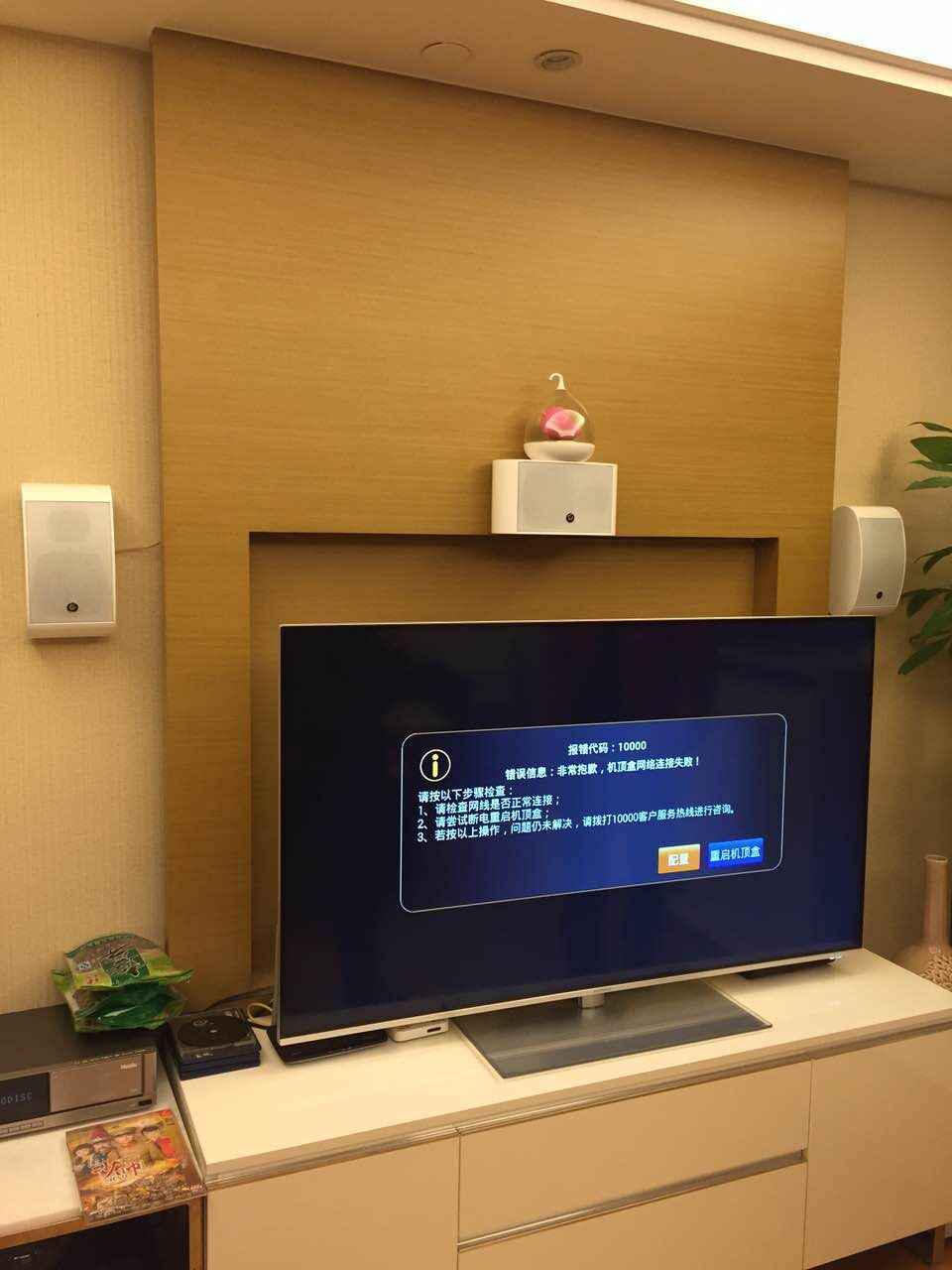
By construction, speakers divide into bookshelf and floor-standing types. The former are compact, with clear layering and precise imaging, but their power is limited and their low-frequency extension and weight are insufficient; they suit listeners who mainly enjoy high-fidelity music and are the first choice of multimedia enthusiasts like us;
The latter are larger and handle more power, with stronger low-frequency weight and springiness, good at conveying sweeping momentum and powerful impact — though poorly executed examples fall a little short in layering and imaging.