Home / News / Experience Reports / Minimalist Living Room Cinema: SNAIL POWER IW6 LCR Hands-On Notes
Minimalist Living Room Cinema: SNAIL POWER IW6 LCR Hands-On Notes
2020-07-17 · Experience Reports
Anyone who has read my reviews probably knows that I have always been against using ceiling speakers in a cinema. Not only do they aggravate flutter echo, they also sound like listening to a crowd in the street with your head under water at the bottom of a swimming pool — when normally you should be able to close your eyes and feel as if you were walking down that street yourself. But after hearing the SNAIL POWER IW6 LCR, I suddenly felt I should not cling to old ideas forever. After all, there is always something in this world that surprises you.
The SNAIL POWER IW6 LCR is another new product from SNAIL POWER. It arrived in the same shipment as several other models and sat in a corner of the room until I finally had time to audition it recently, and by the time I publish this post the product is already officially on sale.
Unboxing
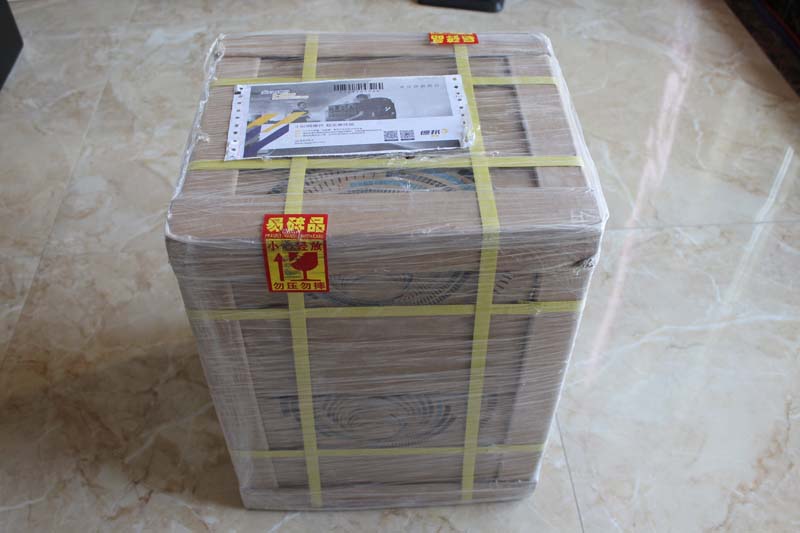
The packaging is classic SNAIL POWER: a corrugated carton plus angle-steel-like reinforced cardboard, plastic straps and a waterproof membrane, so it is essentially safe and worry-free in transit.
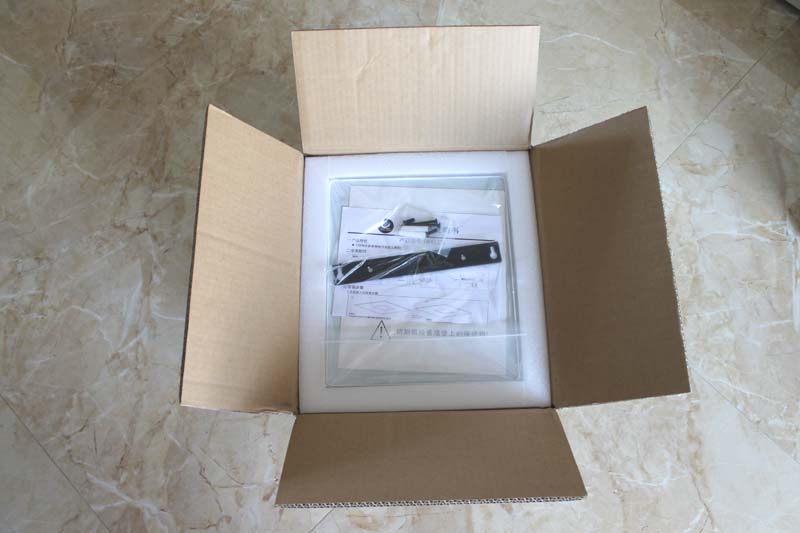
Once the box is open you see a pile of accessories and a user manual (bilingual Chinese and English — a thumbs up). The accessories are quite complete; how they are used we will get to in a moment.
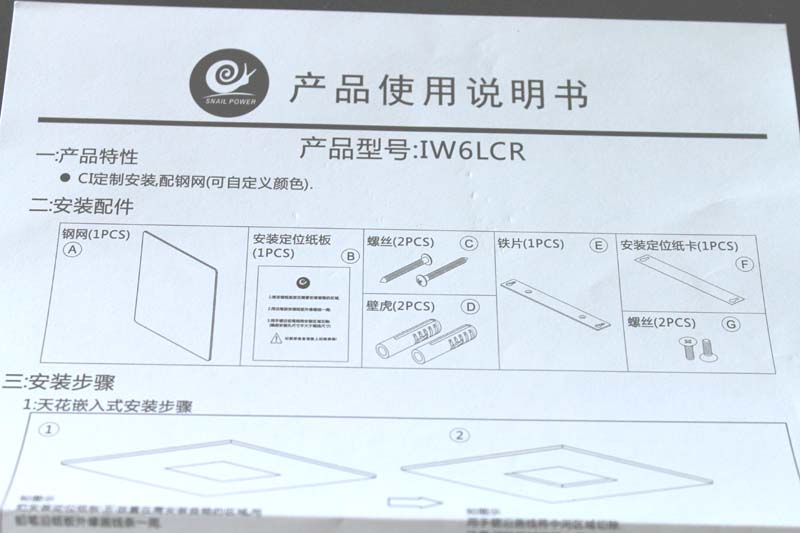
Accessory List
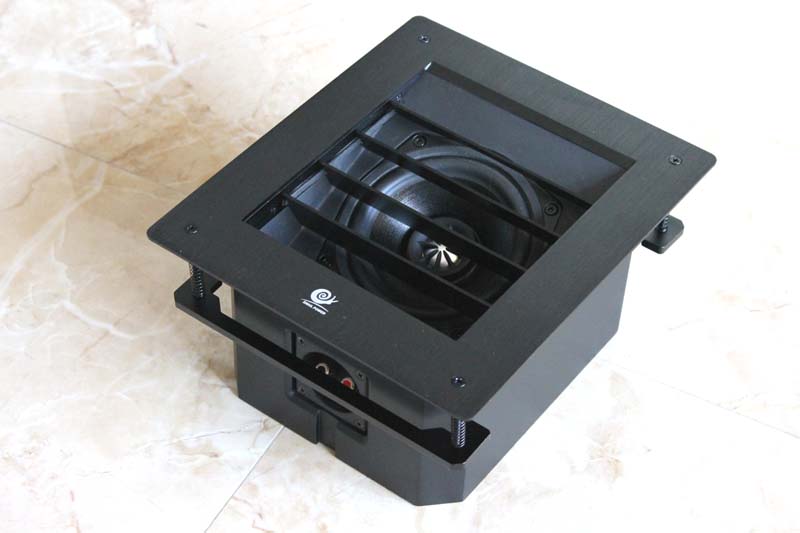
The real star is this black box that at first glance looks like a Transformer's face, with a cool metallic style.

Transformers Poster
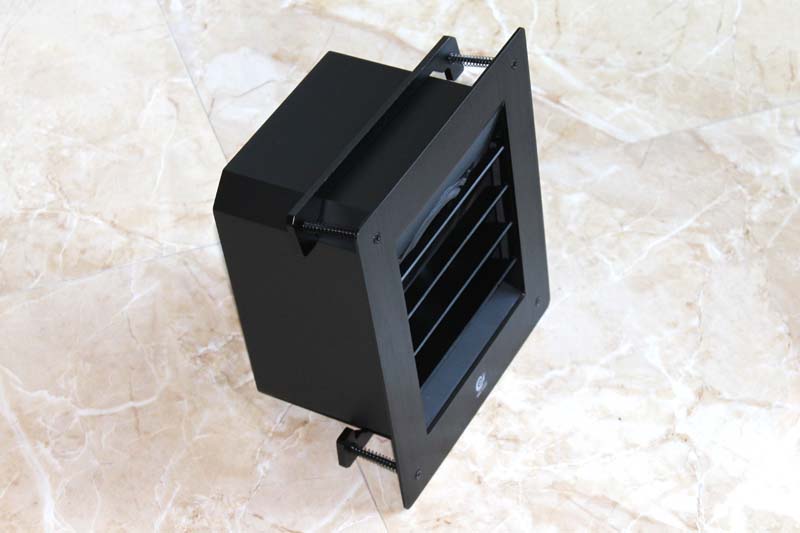
SNAIL POWER IW6 LCR
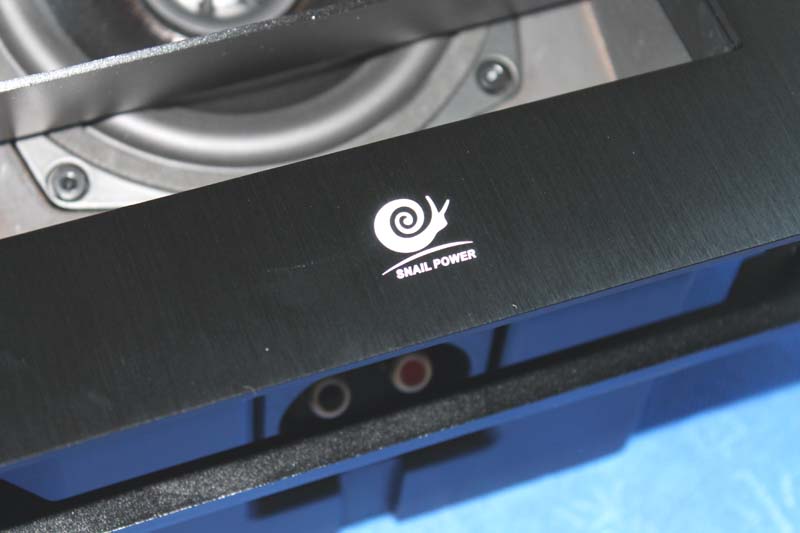
If you read my review of the new IW6 from SNAIL ("Unboxing Review of the New iw6 from Italy's Snail" http://www.hdav.com.cn/cp/yx/20170425_3944.html), you will have recognized it: the SNAIL POWER IW6 LCR is in fact a variant of the IW6, with added "shark gill" deflectors, an angled internal driver layout, and a larger cabinet.
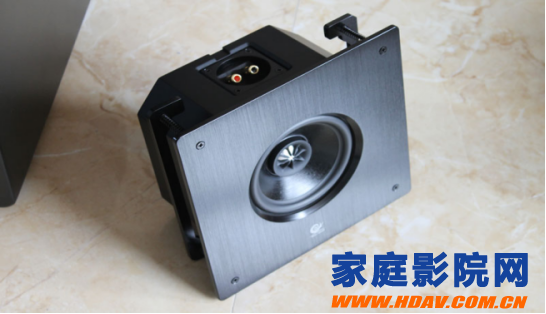
SNAIL POWER IW6 NEW
Most traditional home theater speakers are floorstanders or on-wall models, and neither can satisfy people who demand ultimate minimalism in a living room. In-wall speakers do exist, but you either have to cut a hole in the wall or build a bespoke surround for them, and each approach has its drawbacks: cutting walls is a big job, while custom millwork eats up a fair amount of usable space, which is hardly economical in a big city where every square meter counts. So ceiling installation, which leaves the home environment completely untouched and makes wiring and installation extremely simple, is drawing more and more attention.
What Sets This Ceiling Speaker Apart from the Others?
Unfortunately, ceiling speakers were originally designed mainly for public address, so they were basically just loud enough to be heard. Despite some improvements in recent years, most drivers under eight inches are still at background-music level, and most ceiling speakers are molded plastic with "minimal" materials — not up to any serious task.
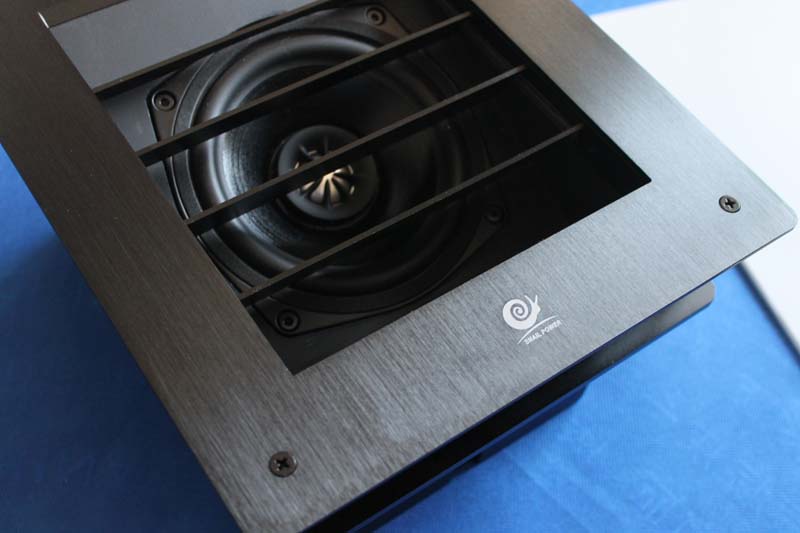
Still a favorite for metal lovers: a brushed-metal front baffle, metal mounting clamps, and a back box in MDF a full 20mm thick. One look tells you this is no commodity product.
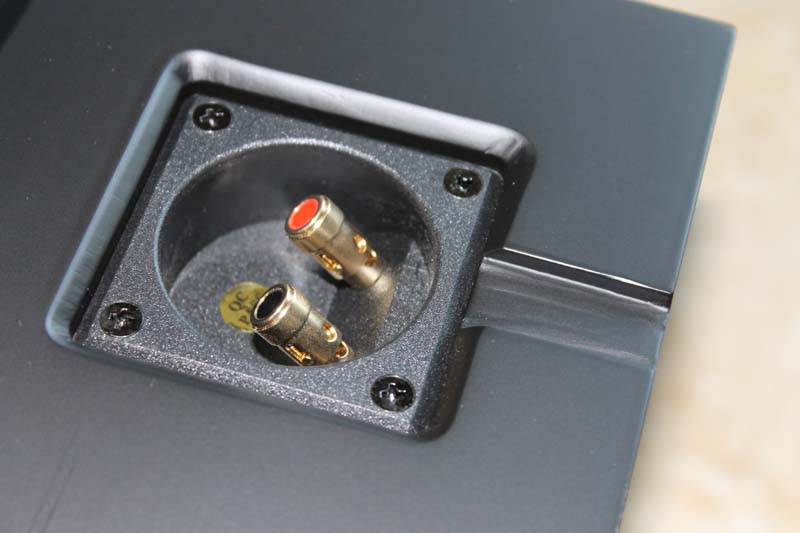
I have no idea what the designer was thinking with the binding posts. Did he know I am too poor to afford 4 mm² speaker cable? They are gleaming gold-plated, but the wire holes are still a bit small and you cannot insert banana plugs from the top. Thumbs down.
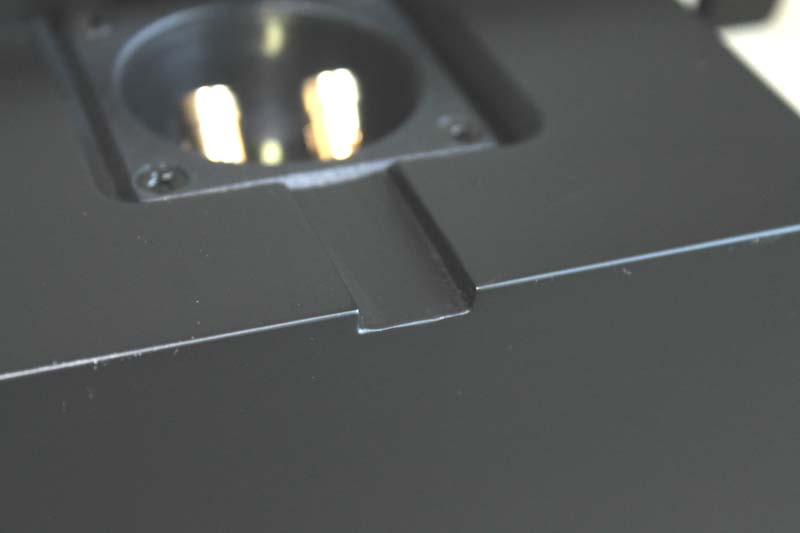
The details are thoughtful too: a recess in the back box for cable routing, which is especially practical for on-wall installation. A thumbs up.
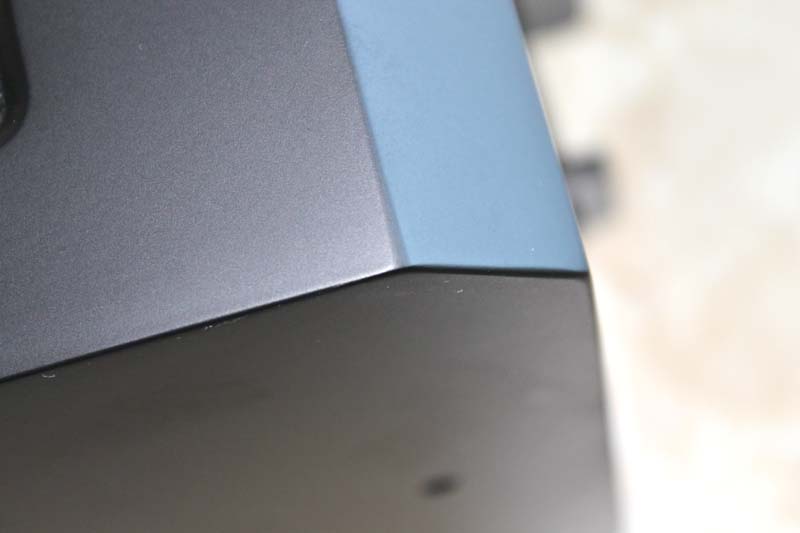
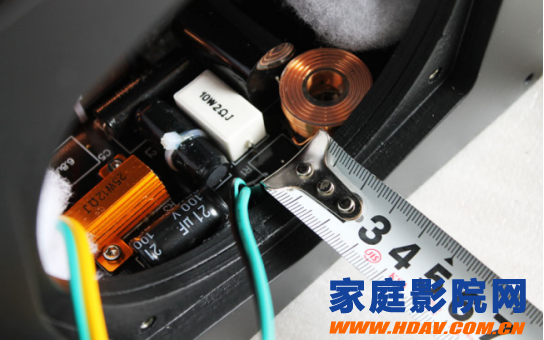
Let us also look at some well-known in-wall speaker products on the market; the difference in build quality is obvious at a glance.
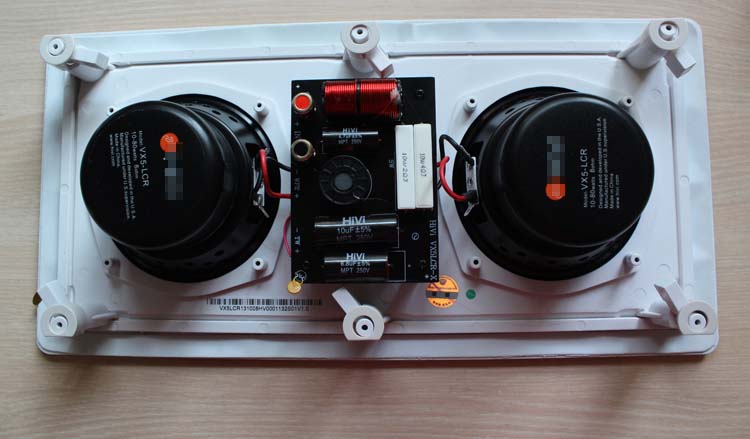
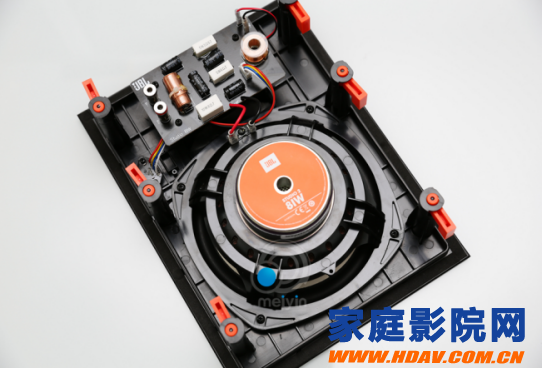
Some of you will ask: these are all ceiling-mounted speakers, so why do they perform so differently in a cinema? Old Snail, are you wearing tinted glasses?
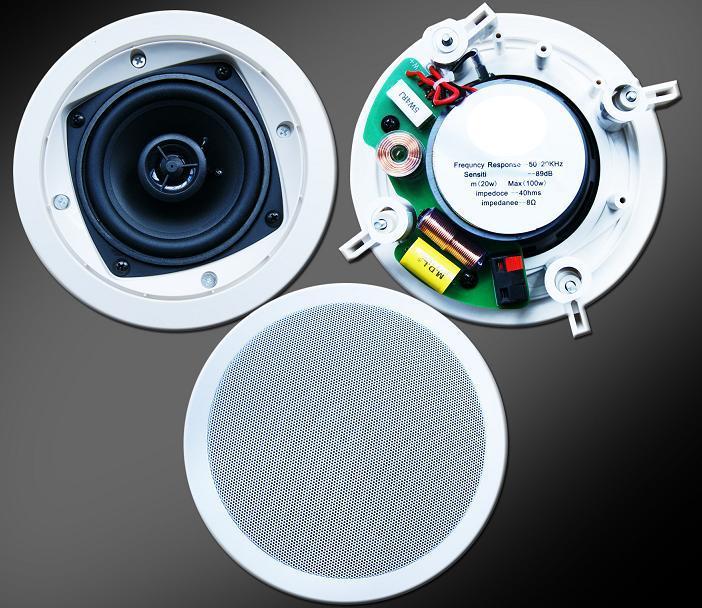
If you look carefully, you will notice that junk-grade background-music speakers are poor in both workmanship and materials, and that most ceiling speakers on the market also have a fixed angle. The SNAIL POWER IW6 LCR is not only well made with generous materials, it also uses a great many individual design touches, such as a coaxial layout similar to KEF's (my impression last time was of a very open, bright treble), an angled design, and an adjustable directivity acoustic waveguide (I could not find a name for it on the official website, so I made one up).
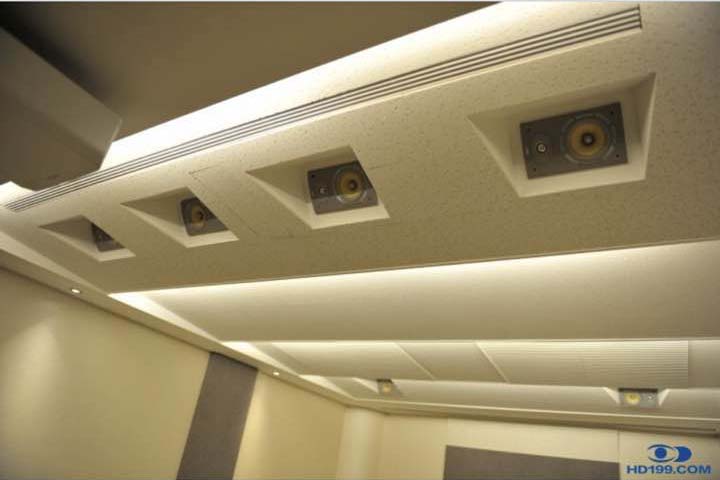
As the name suggests, the SNAIL POWER IW6 LCR is intended mainly for use as a front speaker in a home theater (center channel included). One of its hallmarks is the angled (adjustable) design. The idea itself has been around for a long time, as the image below shows, though that example still uses a conventional in-wall speaker. What is impressive is the designer, who had the bright idea of an angled mounting method, which achieves much the same result as the SNAIL POWER IW6 LCR (had he simply used the SNAIL POWER IW6 LCR, he could have saved a great many brain cells).
The purpose is clear: to obtain more precise directivity through a specific mounting position, reduce coloration, and widen the sweet spot.
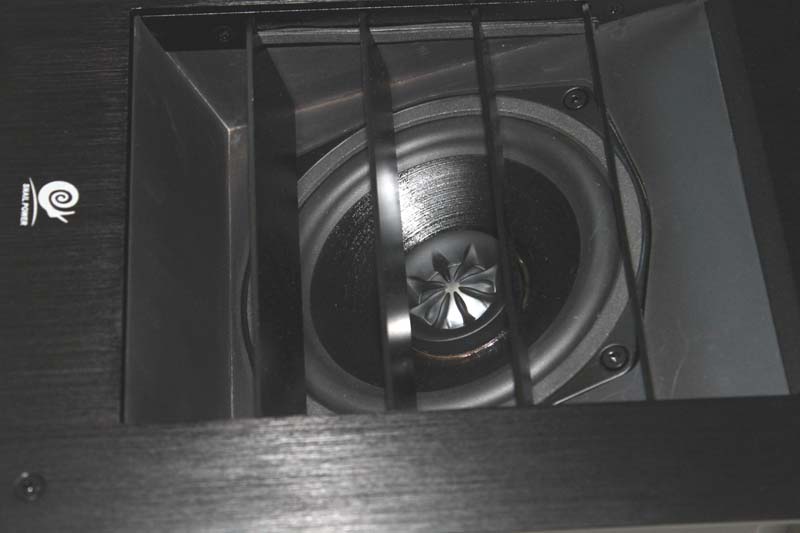
For installation and use, you can mount all three front speakers in the ceiling, then adjust the louver-style waveguide fins to aim the sound toward the audience. The benefit is that second-order reflections from the floor and ceiling are largely prevented from smearing the sound image, which raises the critical distance and improves accuracy and clarity. Of course, everything has two sides, and there is no shortage of drawbacks: this mounting inevitably shifts the sonic image, so the sound seems to come from a little higher than the actual scene on screen.
The way sound travels is roughly like this (please excuse the rough drawing):
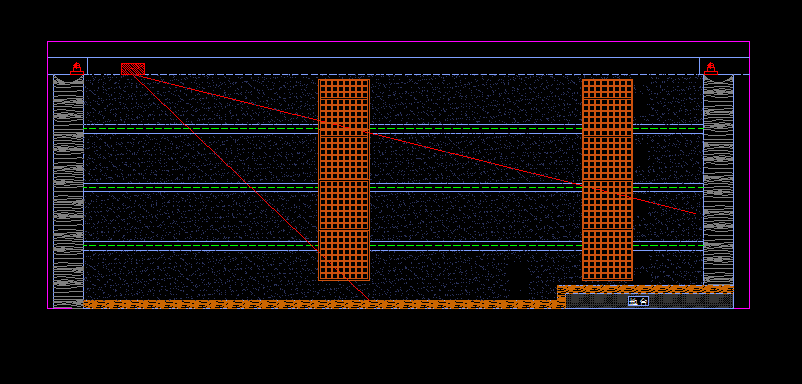
(Diagram of sound propagation with front speakers mounted in the ceiling)
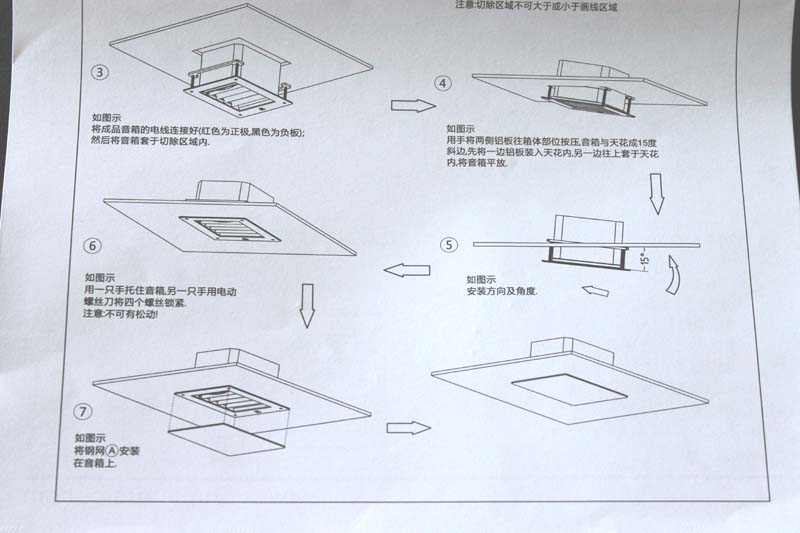
Ceiling Installation Guide
Surround speakers are even more flexible to install. You can turn the SNAIL POWER IW6 LCR sideways and mount it in the ceiling at the Dolby 5.1 placement angle, adjusting the angle so that it aims at the listening position, or recess it into wall millwork and adjust the angle. However you mount it, the benefit is the same as for the front speakers just mentioned: reduced comb filtering.
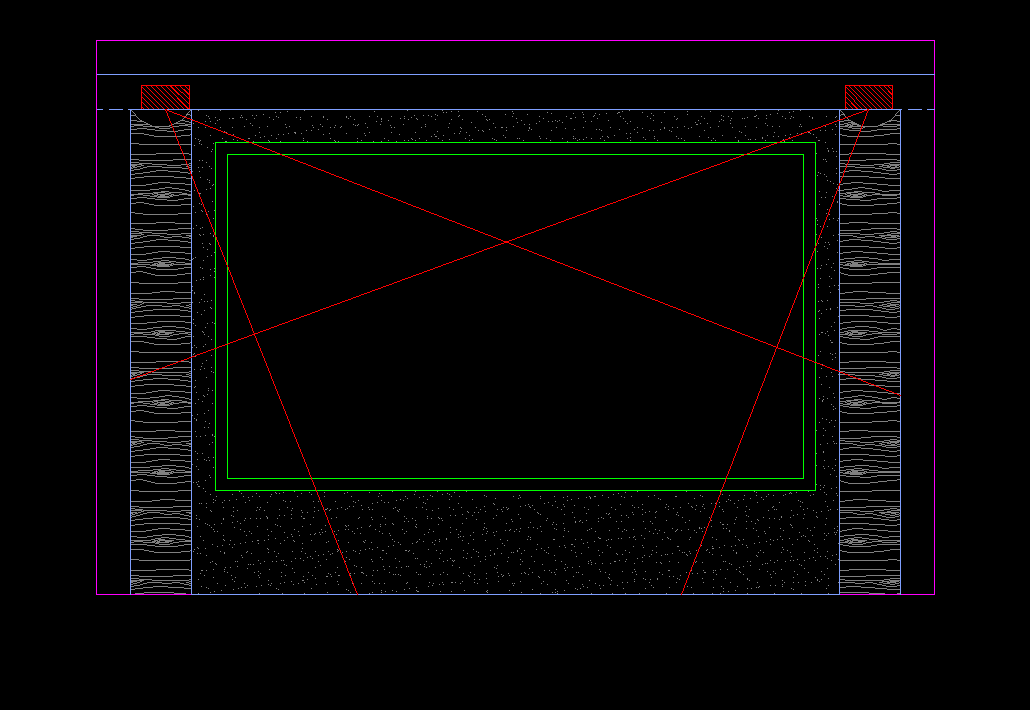
(Diagram of sound propagation with surround speakers mounted in the ceiling)
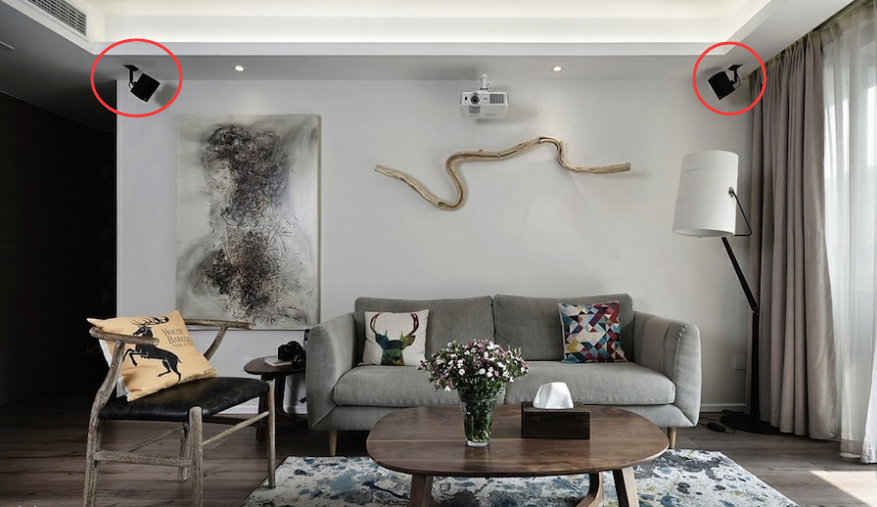
That is, recess the hanging speaker circled in red into the ceiling for a cleaner look.
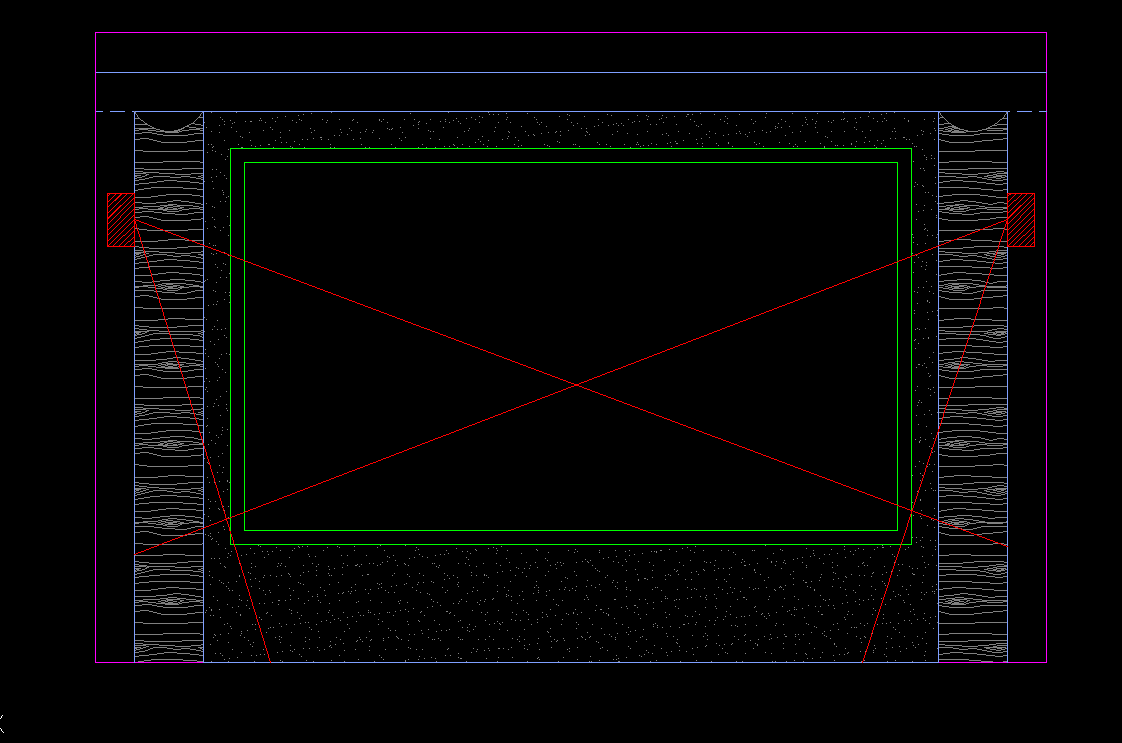
(Diagram of sound propagation with surround speakers recessed into the wall)
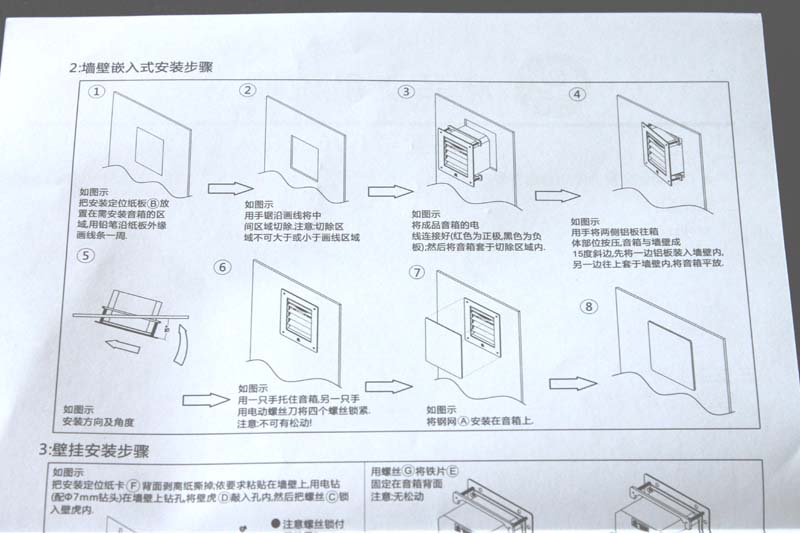
In-Wall Installation Guide
The front speakers can be mounted this way too, but what I want to say is that for ceiling installation alone, the sound is very good as well.
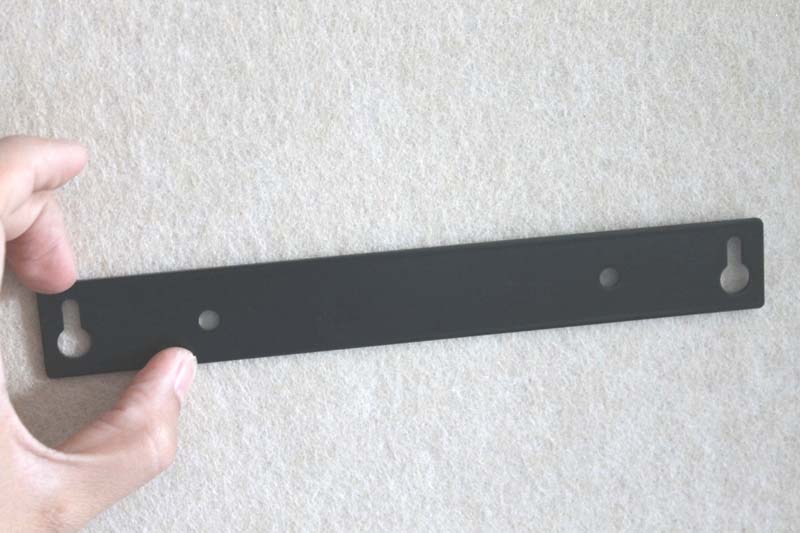
Why do I call this speaker user-friendly? Because many details were thought through in advance. The waveguide fins, for example, let you fine-tune the sound, so if for any reason the speaker cannot be mounted in the ideal position you can still correct it. This speaker also comes with its own back box (20mm MDF), so unlike other in-wall speakers you do not have to build one at installation time: just run the speaker cable, secure the outer panel with thick board, and the opening can then be cut and the speaker fitted directly — very convenient. And if you do not want to recess it, that is no problem either; the manufacturer has thought of that too and includes metal brackets for on-wall or suspended mounting.
The cutting and installation dimensions are clearly marked in the manual and easy to follow.
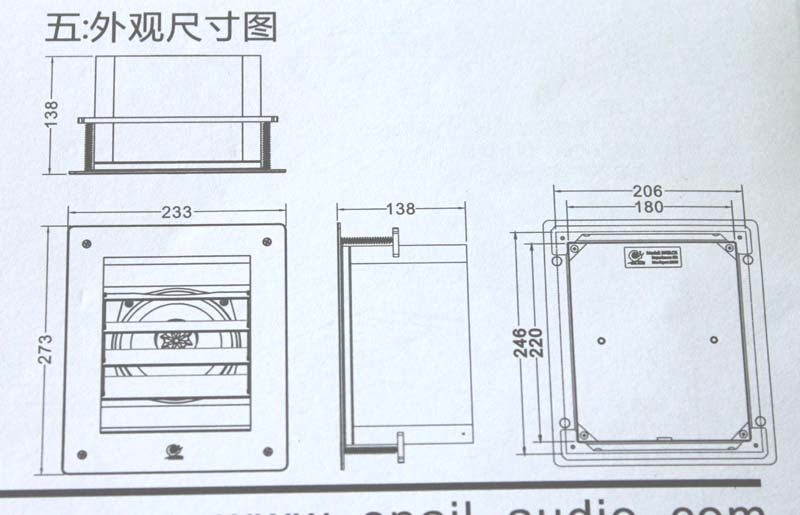
SNAIL POWER IW6 LCRCutout Dimensions

SNAIL POWER IW6 LCRIncluded Cutout Reference Template
For the Spec Sheet Crowd
For a user, the technical specifications can be understood simply like this: the driver is a coaxial unit made up of a six-inch mid-woofer plus a one-inch metal tweeter (covered in detail in my IW6 review last time — take a look if you are interested); the frequency response range is sufficient for standard home theater use. Coverage angle is a specification many home speakers do not publish at all: it describes the speaker's directivity, both horizontal and vertical, and is commonly used in professional sound reinforcement modeling. I will not go into it here, lest I once again try my utmost to translate complex jargon into easy concepts and still have beginners tell me they do not understand.
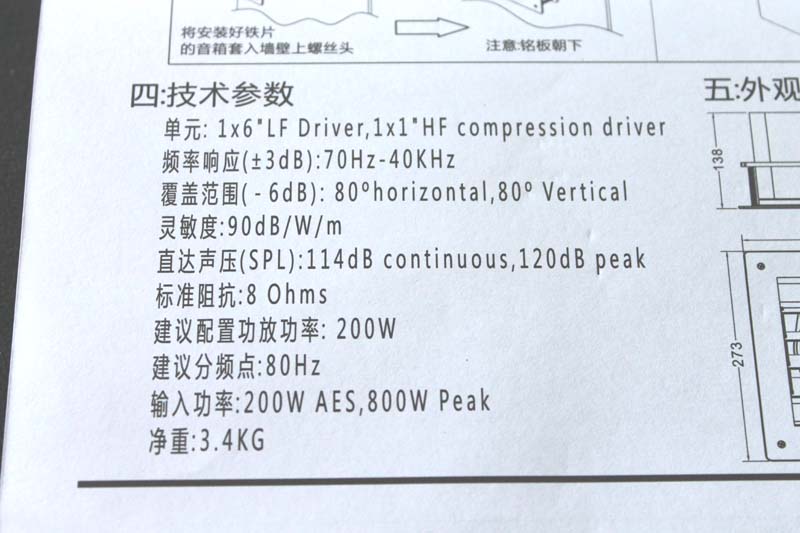
Sensitivity largely refers to how easy this speaker is to drive (not only that, of course — damping factor and the like matter too). When people say a certain speaker is hard to drive, or cannot be driven at all, you should look at sensitivity as well as power. In fact there is probably no speaker in the world that cannot be driven, only ones that are driven well or poorly. I digress. For the SNAIL POWER IW6 LCR, a sensitivity of 90dB is already high, and cinema speakers generally have higher sensitivity than hi-fi speakers, making it easier to get that explosive, larger-than-life feel. As for sound pressure, THX calls for 105dB, and this speaker clearly has no problem there either.
Power matching is not complicated either; what is complicated is the market (mainstream Japanese amplifiers rate power differently from international standards — divide the claimed figure by three and you are close to the real power). Just recall your high-school physics: power, impedance, voltage, current...
If that makes your head spin, do not worry about it. All you need to know is that this speaker asks for an amplifier that can deliver 200W per channel into an 8-ohm load; more power is even better, with a bigger gain in density and texture. Many people worry that too much power will damage the speaker, but in fact too little power is more likely to "fry" a driver. To avoid going off topic again, I will leave it there.
Crossover is a matter for equipment tuning later on. THX recommends a crossover point, though higher is not out of the question; it depends on the overall quality of the system. If your speaker only reaches down to 150hz, there is no point talking about an 80hz crossover — the whole 80-150 band would be lost. But a crossover set too high is strongly discouraged: it widens the band the subwoofer has to handle, and in the end the subwoofer can no longer hide itself, even turning muddy and smeared into one lump.
As for weight, I will spare you the translation...
Audition Experience
Having heard the IW6 from the same series before, I already know this speaker very well (I took one apart). I have shared my actual listening impressions as well, and if you are interested I still recommend looking up the IW6 review. What I want to talk about here is mainly how it sounds with ceiling installation. But because I only hung the speakers up and did not cut openings in the ceiling to recess them, the ceiling does introduce some boundary interference, so the speaker's true quality cannot be fully revealed.
Equipment (Cinema Section):
Egreat A10 UHD hard-disk player
DENON X4200W AV receiver
SA SOUND EX7 power amplifier
SVS PB2000 powered subwoofer
SNAIL POWER U204 surround speakers
So that the electronics would not hold the speakers back, I paired them with a SA SOUND 7-channel power amplifier rated at 250W per channel into an 8-ohm load — more than enough.

A still from Fast & Furious 8
After hearing home theaters put together from other ceiling speakers, the SNAIL POWER IW6 LCR sounds obviously different: solid and weighty without being muddy, loud and open without being harsh. You would not imagine the sound comes from six-inch drivers — it is more like an 8-inch. Although the speakers are mounted in the ceiling, the sound comes at you from every direction, especially in the blood-pumping sequence on the frozen Russian wasteland: earth-shaking explosions, the whine of bullets flying everywhere, cars roaring past... It feels as if you are not in a small living room at all but in a large cinema hall, and if you close your eyes, an even vaster snowfield spreads out in front of you.
What surprised me most was the dialogue. Compared with placing the speakers on a TV cabinet, the improvement in listening is large: the sound is more open and natural, with a stronger sense of space, though localization is weaker. Whoever is speaking on screen, the voice seems to rush at you head-on, and movement across left, center and right becomes very subtle. For veteran audiophiles that feels frustrating, but for ordinary users it feels wonderful — very much like the sound in a commercial cinema.
Final Thoughts: A Minimalist's Living Room Cinema
I watched several more films afterwards, and they sounded much like Fast & Furious 8, so I will not go on about them again. What I want to say is that some old ideas are slowly being broken down. Having taken part in a number of AV industry exhibitions in the past two years in particular, I feel this even more deeply: whether through the guidance of dealers or the changing user base, the traditional hi-fi industry is in decline, while companies that keep innovating around user needs and different application scenarios are thriving. You cannot cling to old experience forever; try new products more, and keep up with the times if you want to get the most out of a cinema.
Finally, I want to stress that as new products keep pouring out, the market is bound to be a mix of the good and the bad, with all kinds of hyped concepts and flag-waving "looks-good" audio products appearing endlessly. In the end, when you buy, seeing is not believing — hearing is. To build a supremely minimalist living room cinema, what you want is simplicity, but not something simplistic. Remember: just making noise does not make it a home theater!
By Old Snail, July 20, 2017, first draft